
Related videos:
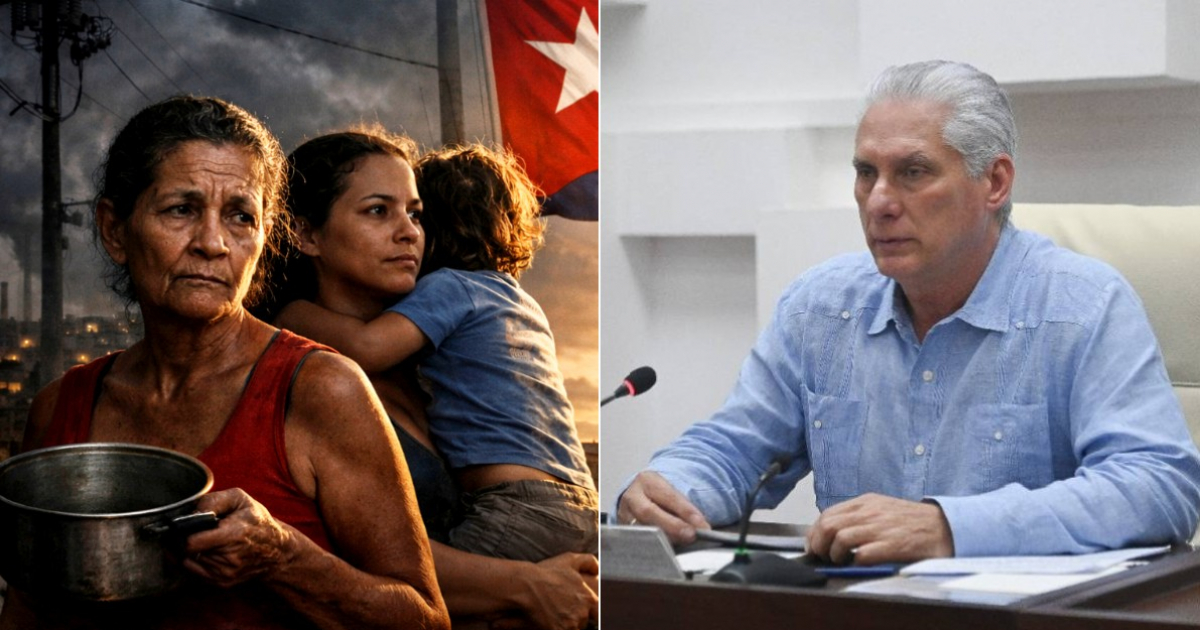
The Cuban leader Miguel Díaz-Canel once again stirred controversy on social media after posting a message on X where he praised the Palestinian mother as a symbol of resistance, while in his own country thousands of mothers are facing a profound economic and social crisis.
"On March 21, the start of spring in the northern hemisphere, we celebrate a woman symbol of resistance: the Palestinian mother. Her 'decision to continue giving life, even in the face of loss, displacement, and injustice,' as many of her children have recalled today on social media, deserves the recognition and admiration of everyone," he wrote.
The message was accompanied by an image of a Palestinian mother feeding her baby with a bottle, a scene that the leader used to reinforce his narrative of resilience.
The post sparked an avalanche of criticism from Cuban users, who pointed out the leader's disconnect from the reality that mothers on the Island face.
While Díaz-Canel talks about "displacement and injustice," in Cuba, thousands of women face daily shortages of food, power outages, unchecked inflation, and a lack of basic goods.
For Cuban mothers, resilience is not a distant symbol, but a daily struggle characterized by long lines, unaffordable prices, and the anguish of being unable to provide adequate food for their children.
In the comments of the tweet, many Cubans quickly reacted harshly.
Some criticized him for "looking outward" while the country is going through one of its worst crises in decades. Others were more direct, accusing him of ignoring the suffering of Cuban families and using international causes as a distraction from internal problems.
"Piece of rat, you have caused more than 2 million Cubans to be displaced around the world in search of a future and a dignified life for their families," wrote a user.
"You care about Palestinian mothers, but what about Cuban mothers? Those who should be your responsibility. No, let them suffer. Aren't you ashamed to see how the people are doing while you’re partying with those fools who came to flatter you?" said another.
"For example, the Cuban mother, struggling to provide for her children amid blackouts and not having to send them to school just for a snack," a third person recalled.
"Brave are the women you have locked up for asking for freedom. Those whom you deny the right to see and care for their children. Brave are the women who today have their children imprisoned in your jails..." stated a Cuban woman.
"And what about the Cuban mothers who are far from their children because of communism? Those don't matter to you, degenerate. The mothers of the more than 1,000 political prisoners, the mothers who lost their children at sea, those don't interest you..." expressed a doctor.
"There is no one more resilient than Cuban women. They have endured 67 years of hard work and need, and you come here to talk about Palestine," questioned another internet user.
"And where do you leave the Cuban mothers, whose children have to emigrate, and others in the worst cases, where their children are imprisoned just for thinking differently?" another one recalled.
The episode once again highlights the growing social discontent in Cuba, where each public intervention by the government on social media serves as a gauge of citizens' unease.
On this occasion, the attempt to project international solidarity ended up once again highlighting the divide between political rhetoric and the real life of Cubans.
Filed under: