
Related videos:
A 54-year-old Cuban identified as Maribel Batista Rodríguez died at the hands of her ex-partner in the province of Granma, as reported on social media by the Gender Observatory Alas Tensas (OGAT).
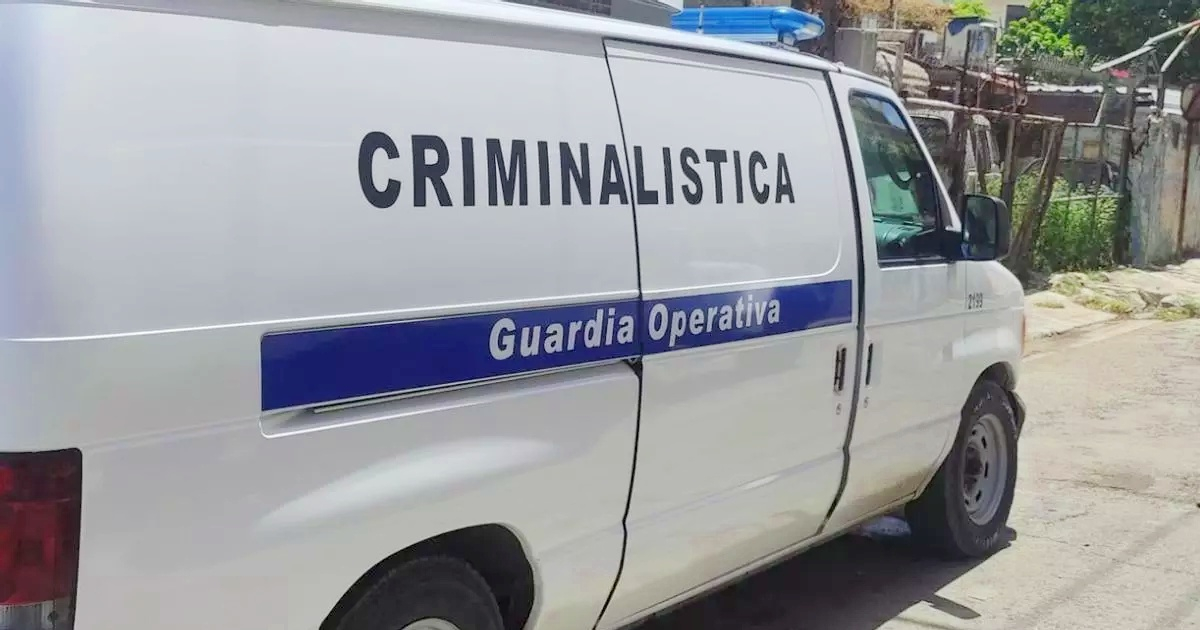
The femicide took place on March 14 in the Moscow neighborhood of the municipality of Manzanillo, according to the mentioned source in a publication where condolences were conveyed to the victim's family and loved ones.
The independent observatory also emphasized the difficulties it currently faces in documenting these events in the country.
"Every day it becomes more difficult to verify and complete the cases due to disconnections and blackouts in Cuba," they stated, while requesting civilian collaboration to obtain additional information, such as the possible existence of surviving children.
OGAT recalled that a large part of the data they collect is not made public with the aim of "protecting sources" and ensuring a minimum record that allows for the visibility of feminicide violence in Cuba, a phenomenon that lacks systematic official statistics.
According to the joint report by OGAT and the Yo Sí Te Creo en Cuba (YSTCC) platform as of March 25, a total of 13 femicides, 7 attempted femicides, and the murder of a man for gender-related reasons have been recorded.
"CITIZENSHIP, REPORTING THESE CRIMES IS NOT A CRIME," insisted feminist organizations, which rely heavily on public reports and local testimonies to document these events.
A context marked by gender-based violence
The case of Maribel Batista is not an isolated incident. It is part of a series of recent events that have once again raised alarms about gender violence on the island, including extremely grave crimes.
This Wednesday, the feminist observatories Alas Tensas and YoSíTeCreo in Cuba confirmed the violent death of a seven-year-old girl in Havana, classified as a child femicide.
The minor was allegedly a victim of a neighbor, according to independent sources.
The case, which has sparked immense outrage, once again highlights the vulnerability of victims and the lack of effective protection mechanisms.
Patterns that repeat
The analysis of the cases documented by independent observatories reveals persistent trends in femicides in Cuba:
In more than 90% of cases, the aggressor knew the victim, often as a partner or ex-partner.
The home or nearby spaces serve as the main setting for the crimes.
- Cold weapons are the most commonly used means.
In a significant majority of cases, high levels of cruelty are identified.
These elements correspond to what happened in the case of Maribel Batista Rodríguez, where the alleged aggressor had a prior relationship with the victim.
In Cuba, femicide -defined by UN Women as the killing of a woman for gender-related reasons- lacks official public statistics and a transparent recording system.
This absence has forced independent organizations to take on the documentation of the cases.
The observatories report that these crimes occur amidst "the humanitarian crisis that Cuba is experiencing, where […] the most vulnerable people are increasingly exposed.”
They also criticize the lack of effective prevention and protection policies, as well as the inadequate institutional response to misogynistic violence.
Filed under: