
Related videos:
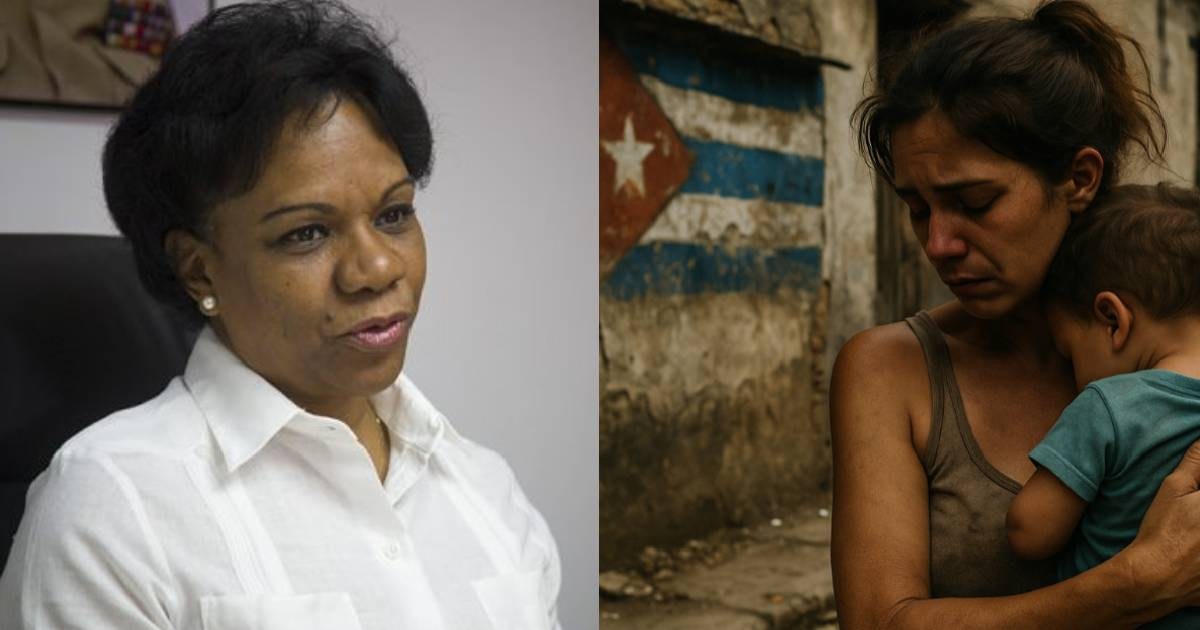
The Cuban Vice Prime Minister Inés María Chapman congratulated the women of the island this Saturday on International Women's Day, but her message on social media sparked critical responses calling for the release of women imprisoned for political reasons.
“On this March 8th, to all the women who love peace, who give love and kindness, our embrace,” wrote Chapman on her X account, who also referred to Cuban women as “brave women who carry on the legacy of Mariana, Vilma, and so many heroines.”
The message was accompanied by tags such as #InternationalWomensDay and #WomenInRevolution.
Among the most widely circulated responses was that of the Cuban journalist Ninoska Pérez Castellón, a resident of the United States, who challenged the official message and called for the release of women imprisoned following the massive protests on July 11, 2021.
"Release those who are unjustly imprisoned for July 11; they are also lovers of peace and peacefully demonstrated with the rightful demand for freedom," she wrote.
Other users also reacted with criticism to the official message. A user identified as Amely Covian remarked that if the government truly cares about women, it should address the situation of mothers who lack resources to feed their families or elderly women who live in precarious conditions.
The reactions occur in the context of recurring reports about the situation of women on the island.
In February, the Cuban poet and activist María Cristina Garrido Rodríguez was able to embrace her children for the first time in over four years thanks to a temporary prison pass, the first since she was incarcerated for participating in the protests on July 11th in Quivicán.
Garrido is serving a seven-year sentence for charges including public disorder, contempt, and assault, in a trial denounced by human rights organizations as part of the repression following July 11th.
Her sister Angélica Garrido, also arrested for the same protests and sentenced to three years, was released in 2024 and now resides in Miami.
Although the family reunion has been an emotional moment after nearly five years of imprisonment marked by reports of mistreatment, isolation, and harsh conditions of confinement, the leave is only temporary, and María Cristina will have to return to prison to continue serving her sentence.
Independent organizations such as the Gender Observatory Alas Tensas (OGAT) and YoSíTeCreo in Cuba have documented several femicides so far in 2026, in addition to investigating other cases reported by civil society.
In February, both organizations reported the murders of Yaniuska Barrero Machado, 38 years old, in the province of Granma, and Yaneisi Quiala Miranda, also 38 years old, in Guantánamo, both allegedly at the hands of their partners.
During 2025, feminist observatories recorded at least 48 femicides in the country, in a context where there are no public official statistics on these crimes nor a comprehensive law against gender-based violence.
On her part, the Cuban Doraiky Águila Vázquez, 48 years old and residing in the Lawton neighborhood of Havana, has been missing since March 15, 2025, when she left her home early in the morning and has not been seen since.
Her family, led by her mother Maura Vázquez, has been carrying out an intense campaign on social media and in the streets for months to seek public assistance, additionally highlighting the lack of progress in the official investigation.
This situation is compounded by the social crisis experienced by many women on the island, characterized by poverty, prolonged blackouts, food shortages, and economic difficulties that impact the daily lives of thousands of families.
In that context, Chapman's message for March 8 sparked a debate on social media about the real conditions faced by Cuban women in the country.
Filed under: