
Related videos:
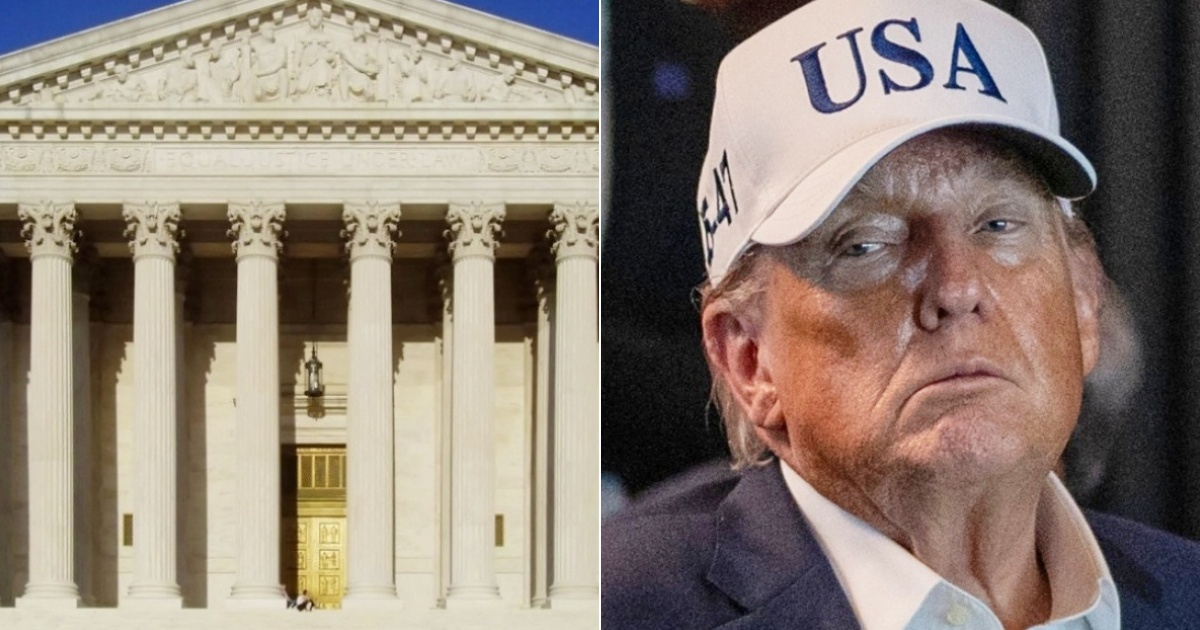
The Supreme Court of the United States cast doubt on Wednesday regarding President Donald Trump's attempt to restrict birthright citizenship, during a hearing marked by both the skepticism of the justices and the unprecedented presence of the president himself in the room.
During the debate, magistrates from different ideological currents questioned the legal foundations of the executive order, revealing serious concerns about its constitutionality.
A cross-cutting question from the court
The center of the debate is the order titled “Protecting the Meaning and Value of American Citizenship,” through which the government argues that children born in the United States to parents in irregular or temporary situations should not be considered citizens. However, the judges expressed skepticism regarding this interpretation.
For over two hours, the judges – both conservative and liberal – examined the measure that seeks to deny automatic citizenship to children born in the United States to parents who are undocumented or have temporary status.
Trump's presence, which lasted over an hour in court, broke with traditional norms and elevated the political profile of a case deemed vital.
Attorney General D. John Sauer faced "one skeptical question after another" as the judges examined both the legal basis and the practical implications of the measure.
The case reaches the high court after all the lower courts that have reviewed it concluded that the order is illegal and blocked its implementation.
In New Hampshire, federal judge Joseph N. LaPlante ruled that the measure "likely violates" the Constitution and federal law.
Trump doubles down on his rhetoric
After the hearing, the president was quick to respond publicly.
In a post on Truth Social, he described the current policy as absurd: “We are the only country in the world so STUPID as to allow citizenship ‘by birthright’!”
However, data from the Pew Research Center contradicts that claim: at least 32 countries maintain systems similar to the American one, while another 50 implement more restrictive versions.
The core of the conflict: The 14th Amendment
The litigation revolves around the interpretation of the Citizenship Clause of the 14th Amendment, which states that "all persons born or naturalized in the United States and subject to its jurisdiction" are citizens.
The Trump administration argues that individuals who are in the country illegally or temporarily are not "subject to U.S. jurisdiction," and therefore their children should not receive automatic citizenship.
This argument, supported by some conservative sectors, seeks to reinterpret a principle that has been established for over a century.
Sauer himself urged the court to correct what he described as "longstanding misunderstandings about the meaning of the Constitution," comparing the case to landmark rulings such as Brown v. Board of Education (1954) and District of Columbia v. Heller (2008).
But the opposition within the court has also been significant.
Judge Sonia Sotomayor had already described the attempt as "an impossible task in light of the text of the Constitution, its history, the precedents of this court, federal law, and the practices of the Executive Branch."
Potential impact: hundreds of thousands of children
Beyond the legal debate, the case has direct human consequences. According to estimates from the Migration Policy Institute and Pennsylvania State University, more than a quarter of a million babies born each year in the United States could be affected by the executive order.
Critics of the measure, including civil rights advocates, argue that it is a radical reinterpretation of the concept of citizenship.
“We have the President of the United States trying to radically reinterpret the definition of American citizenship,” stated Cecillia Wang, legal director of the American Civil Liberties Union.
Furthermore, the order would not only affect immigrants in an irregular situation but also individuals with temporary legal status, such as students or applicants for permanent residency.
A broader offensive against immigration
The attempt to limit birthright citizenship is part of a broader immigration policy promoted by Trump, which has included an increase in deportations, a reduction in the number of admitted refugees, the suspension of asylum at the border, and the elimination of temporary protections for migrants.
The case also represents a new test for a Supreme Court that has recently allowed the implementation of some restrictive immigration policies, even after they have been blocked by lower courts.
The Supreme Court will not issue an immediate decision. The ruling is expected to be known by the end of June, but its impact could be profound and lasting.
At stake is not only an executive order but also the interpretation of one of the cornerstones of the legal identity of the United States.
The decision could reinforce a historic principle or open the door to an unprecedented redefinition of who has the right to be considered a citizen.
Filed under: