
Related videos:
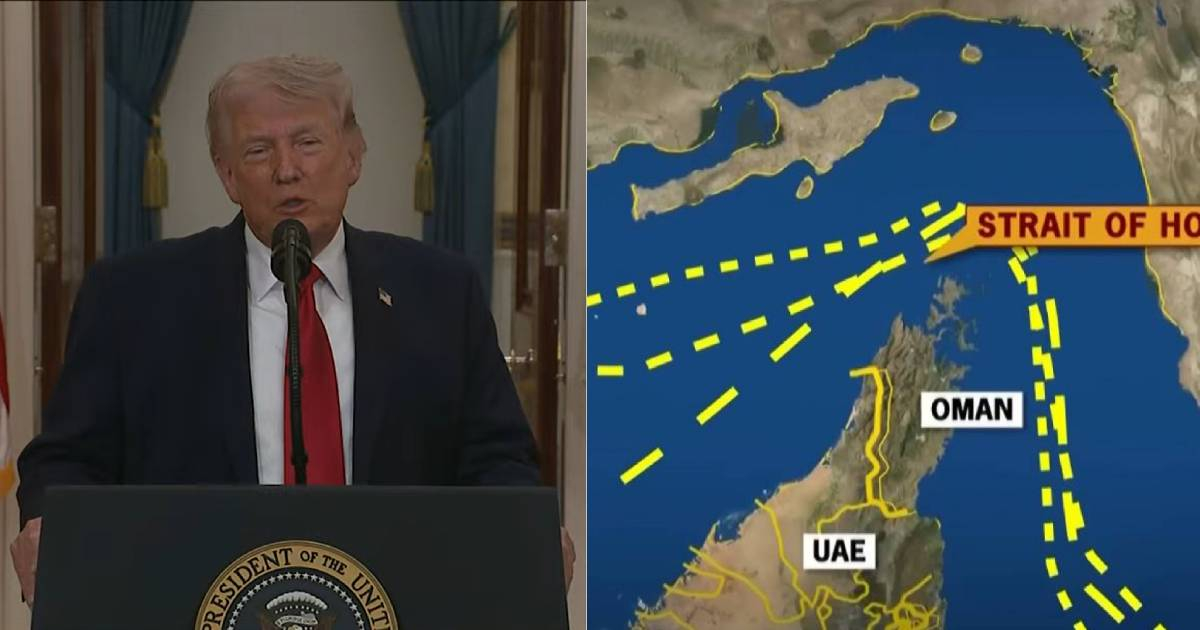
In the midst of the war with Iran, the President of the United States, Donald Trump, delivered a message that shakes the global energy landscape: his country does not need oil from the Strait of Hormuz and does not intend to take on the responsibility of protecting this critical route.
During a speech to the nation, the president insisted that Washington can do without the oil that passes through this strategic route—through which nearly a quarter of the world's oil circulates—and shifted the pressure onto other countries.
"The United States practically doesn't import oil through the Strait of Hormuz... We don't need it," Trump stated, distancing himself from a crisis that is already affecting international markets.
But behind that message lies a broader strategy. In recent months, Washington's energy policy has shifted towards the control and utilization of other sources, particularly in Latin America. Following the intervention in Venezuela and the stated interest in its oil industry, the White House has strengthened its narrative of energy self-sufficiency.
With that support, Trump raised the stakes with his allies. He urged them to show "courage" and encouraged them to act independently if they want to secure access to the oil blocked by Iran.
"Go for your oil," he said, in a phrase that reflects a change in stance: the United States no longer presents itself as a global guarantor, but rather as an actor that prioritizes its own interests and allows others to assume the risks.
The Strait of Hormuz, vital for the economies of Europe and Asia, remains virtually paralyzed following its closure by Iran, which has driven up oil prices and raised fears of a global energy crisis.
In that context, Trump offered two options: buy oil from the United States — "we have plenty," he assured — or intervene directly to ensure passage.
The message is not only geopolitical. It also redefines the global energy balance in the midst of war: while other countries are facing the impact of the blockade, Washington bets on its ability to source—and sell—oil from other regions, including Venezuela.
Filed under: