
Related videos:
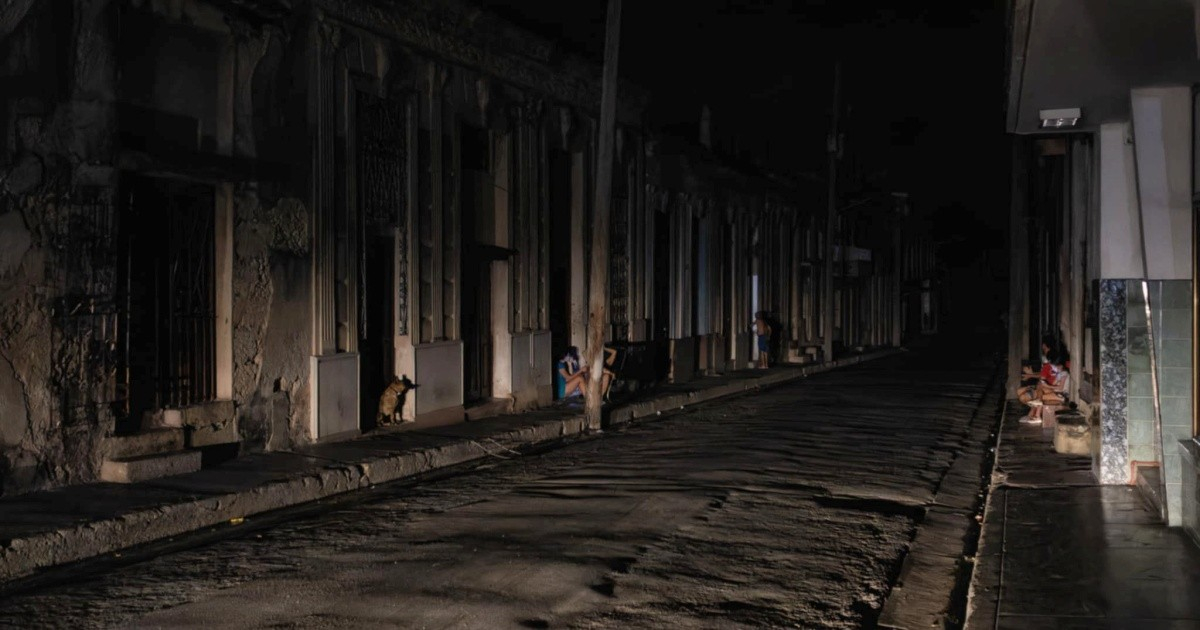
The Cuban government has once again announced a slight improvement in the energy crisis, but the reality remains critical: the forecasted electrical deficit for this Friday remains above 1,500 MW, a figure that confirms that blackouts will continue to impact daily life on the island.
According to the official report from the Electric Union (UNE), “service was affected due to a capacity deficit for 24 hours” on the previous day, and the situation has continued without interruption into the early hours of April 3rd.
The highest recorded impact was 1,609 MW at 7:10 PM, just below the extreme levels reported in recent days.
Less deficit, but without real relief
Although the authorities insist on highlighting a slight reduction in blackouts compared to previous days—when the deficit exceeded 1,700 and even 1,900 MW—the situation remains alarming.
For the peak hours this Friday, the UNE anticipates a capacity of 1,445 MW against a demand of 3,000 MW, resulting in a deficit of 1,555 MW.
As a result, an impact of up to 1,585 MW is forecasted, a figure that, in practice, implies massive and prolonged blackouts.
In the morning, the situation also shows no signs of relief.
At 6:00 a.m., the availability was 1,335 MW compared to a demand of 2,345 MW, with 1,004 MW already affected.
By midday, an impact of 1,050 MW is expected.
That is to say, although the official discourse speaks of an improvement, the power outages continue to be structural and practically constant.
A system collapsed due to breakdowns and lack of maintenance
The causes of the deficit remain the same and reflect the chronic deterioration of the Cuban electric system.
Among the main incidents reported is the breakdown of unit 2 at the Felton thermoelectric plant, one of the most important in the country. Additionally, several units are out of service for maintenance in Mariel, Renté, and Nuevitas.
In addition, the limitations in thermal generation keep 429 MW offline, further exacerbating the system's inability to meet national demand.
Although some units are expected to come online during peak hours—such as unit 6 in Mariel with 80 MW and a turbine from Energás with 30 MW—these contributions are insufficient in the face of a structural deficit that greatly exceeds 1,500 MW.
Solar energy: Figures that do not change the landscape
The official report also highlights the production of the 54 photovoltaic solar parks, which generated 3,303 MWh, with a maximum power of 563 MW during daylight hours.
However, this contribution remains marginal in comparison to the magnitude of the crisis.
Solar generation does not solve the problem during nighttime, when demand peaks and blackouts become more frequent.
The official narrative insists on presenting this data as signs of improvement, but the daily experiences of Cubans tell a different story.
In recent days, power outages have exceeded 20 hours in several regions of the country, affecting everything from food preservation to essential services.
The slight reduction in the deficit does not change the fact that the electrical system continues to operate well below demand.
Even external factors, such as the recent arrival of oil from Russia, barely provide temporary relief.
Experts warn that these supplies would only last for a few days of consumption, without addressing the structural failures of the system.
In this context, the repeated promise of "fewer blackouts" is seen more as a manipulation of figures than as a real improvement in the lives of the population.
Meanwhile, millions of Cubans remain trapped in a routine of uncertainty, where electricity—far from being a basic service—has become an intermittent privilege.
Filed under: