
Related videos:
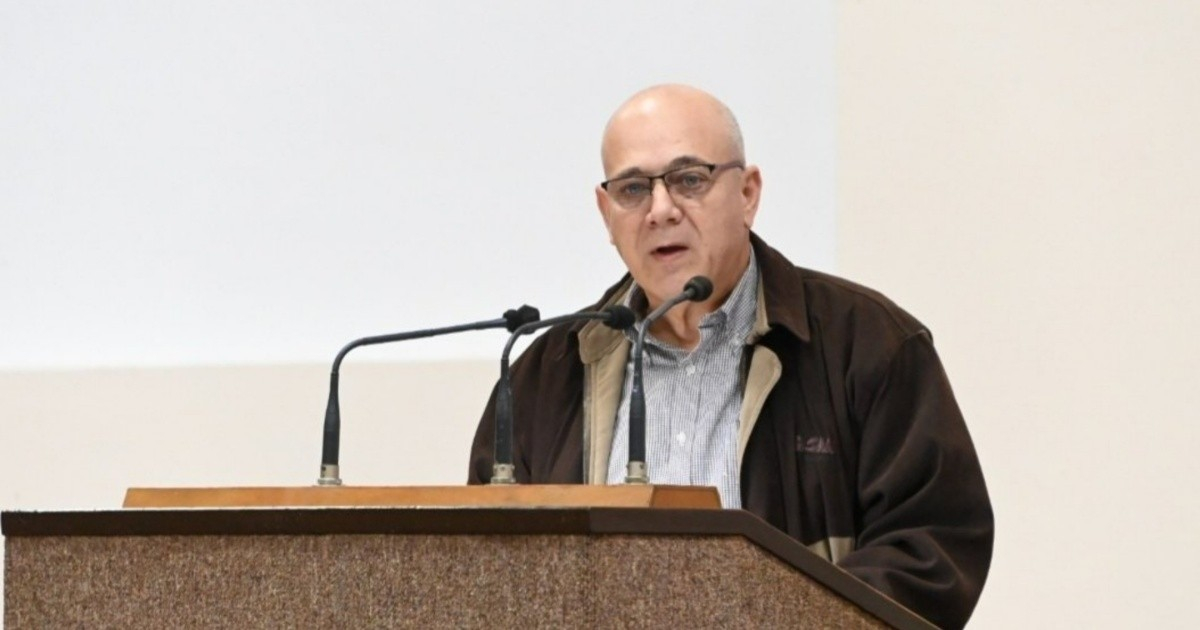
Roberto Morales Ojeda, member of the Political Bureau and Secretary of Organization of the Central Committee of the Communist Party of Cuba, published a message this Saturday on X calling on Cubans for "combat memory", as the island faces the worst economic crisis in its contemporary history.
The official wrote that "in the current context of economic challenges and the intensification of the blockade, April takes on even greater significance," and announced "days of reaffirmation and patriotism, of intense work and a battle of ideas."
The message, accompanied by a Soviet-style propaganda poster featuring the caption "April of Victories" and silhouettes of war tanks, asserts that "April will be a month of challenges overcome and unity in the face of any circumstance."
The contrast between that revolutionary epic and the everyday reality of Cubans is stark: power outages last up to 20-25 hours daily, with electricity generation deficits exceeding 1,945 MW during peak hours.
The minimum wage in Cuba is 2,100 pesos per month —equivalent to about four dollars at the informal exchange rate— while an onion costs up to 900 pesos, a package of chicken costs 4,850 pesos, and rice ranges from 280 to 350 pesos per pound.
The government itself acknowledged in March that "it is impossible to live on 6,000 pesos", and witnesses from Cuba report going up to three days without food, in a country where deaths due to malnutrition increased by 74% between 2022 and 2023.
The Economist Intelligence Unit projects a contraction of the Cuban GDP of 7.2% for 2026, which would amount to a decline of 23% since 2019, and 80% of Cubans believe this crisis is worse than the Special Period of the 1990s.
Morales Ojeda's call is part of a broader propaganda campaign carried out during the first weeks of April: last Thursday, young people from the Union of Young Communists traveled along the Malecón in Havana on bicycles and scooters —due to the lack of fuel— chanting slogans on the 64th anniversary of the organization.
The official's pattern on social media is consistent: they use X to attribute all of Cuba's problems to the "blockade" and "imperialism," avoiding any responsibility of the government.
In December 2024, Morales Ojeda the People's March against the embargo, a figure that analysts reduced to around 14,000 based on aerial videos.
In November 2025, when he accused the independent platform El Toque of "manipulating" the Cuban economy to serve the United States, users responded without hesitation: "The government doesn't need help to undermine the people's income", wrote one. Another was more direct: "Pure lies, the only ones to blame for the country's crisis are you."
The energy crisis worsened following the cutoff of Venezuelan oil—between 25,000 and 30,000 barrels daily—after the capture of Nicolás Maduro in January 2026, along with over 240 new sanctions imposed by the Trump administration.
While Morales Ojeda calls to "keep our history of struggle alive," Cuba is projecting a fiscal deficit of 74.5 billion pesos for 2026, with expenses totaling 550.59 billion and revenues of only 484.121 billion.
Filed under: