
Related videos:
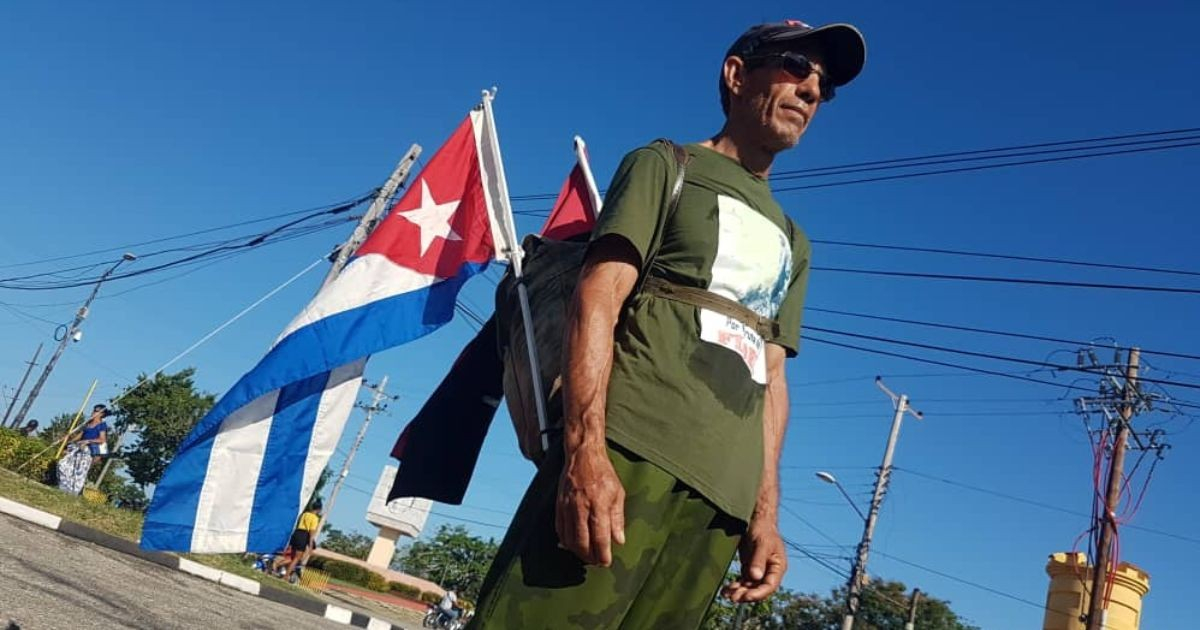
José Luis Pérez Balart, a combatant of the Ministry of the Interior (MININT) and former member of Fidel Castro's security detail, began a solitary walk of over 1,500 kilometers following the so-called "Fidel Route after Moncada," as part of the official celebrations for the centenary of the dictator's birth, reported TV Santiago.
The tour begins at Granjita Siboney —the historic starting point of the attack on the Moncada Barracks in 1953— and the Santa Ifigenia cemetery in Santiago de Cuba, and concludes at El Cacahual, a mausoleum located in Boyeros, Havana, where the remains of Lieutenant General Antonio Maceo and his aide, Captain Francisco Gómez Toro, rest.
According to TV Santiago , the total distance exceeds 1,500 km when combining approximately 1,200 km from east to west along with visits to key historical sites of the mambisa invasion and the final offensive of the Rebel Army.
The profile of Pérez Balart places him squarely within the Cuban state security apparatus: in addition to having been Castro's personal bodyguard, he carried out internationalist missions in Africa, worked in the security of the Gran Parque Turístico Baconao, and currently serves as a professor at the Higher Studies Academy of MININT.
He is also a Tai Chi Master and the founder of the project dedicated to recovering the true "Fidel's Route after Moncada," which transforms this journey into an initiative with institutional support, even though it is publicly presented as a personal challenge.
The walk does not include the 64.66 km from Guantánamo to Santiago de Cuba, but it does cover the 1,200 km from east to west and includes visits to numerous historical sites related to both the 19th-century wars of independence and the Cuban Revolution.
The Granjita Siboney was the headquarters from which 135 fighters departed on July 26, 1953 to assault the Moncada Barracks, an action that the regime considers the beginning of the Revolution.
The Cacahual, the final destination of the journey, was declared a National Monument on October 10, 1978 and houses the remains of Maceo and Gómez Toro, who fell on December 7, 1896.
The initiative is part of the "Year of the Centenary of Commander in Chief Fidel Castro Ruz", the official designation given by the Cuban government to 2026 to commemorate Castro's birth on August 13, 1926.
The regime has organized a comprehensive propaganda campaign that includes youth caravans, cultural events, the publication of 23 volumes of Selected Works of Castro, and the I International Colloquium "Fidel: Legacy and Future," scheduled for August 10 to 13 in the Havana Convention Palace, all amidst a deep economic crisis affecting the Cuban population.
Filed under: