
Related videos:
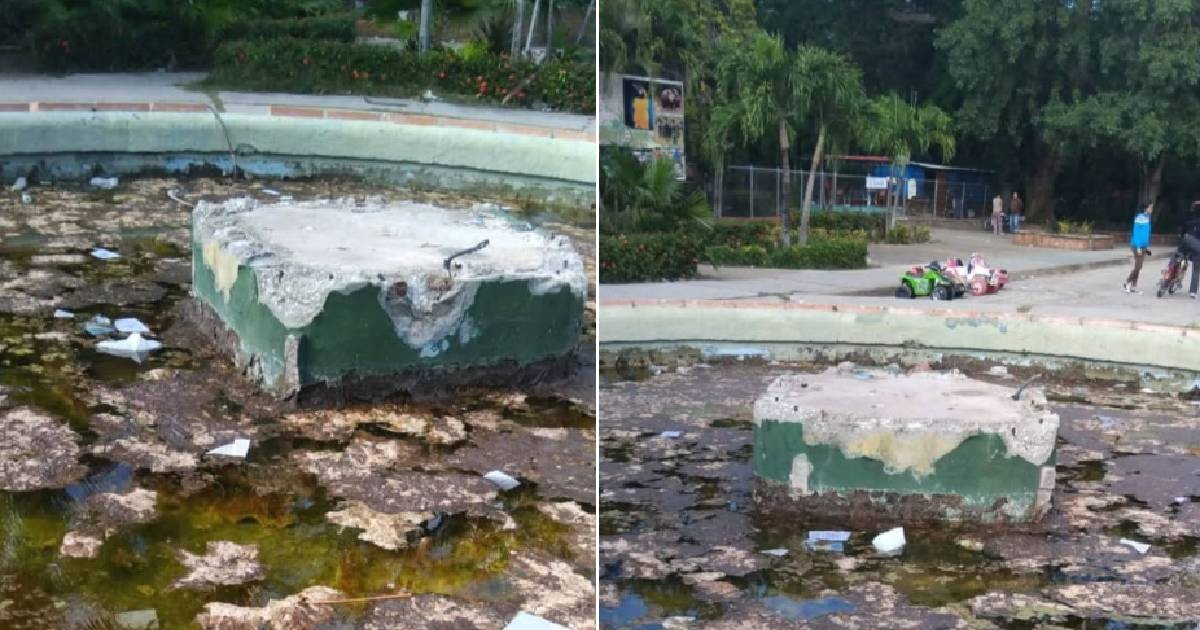
The fountain of the Casino Campestre de Camagüey, one of the most emblematic spaces of the largest urban park in Cuba, has become a repository of black water, trash, mud, and mosquitoes, according to a complaint published on Facebook by journalist José L. Tan Estrada under the hashtag #TanteandoCuba.
"Today it is a rotten hole filled with black water, trash, mud, and mosquitoes. The statue that crowned the center: destroyed, peeling, unrecognizable. The bottom is a broth of sludge where no one knows how many larvae of Aedes aegypti are growing right now," the journalist wrote in his post.
The park, which encompasses more than 131,500 square meters, inaugurated in April 1860, is regarded as one of the most important green lungs of the city and a symbol of Camagüey's heritage. Its progressive deterioration reflects the widespread neglect that public spaces in Cuba are enduring.
The affected structure is the flamingos' fountain, a ten-meter circular pond that was once one of the most photographed attractions in the park. Today, according to the complaint, there is no trace left of its former beauty.
It is not the first time that the facilities of the Casino Campestre have raised public alarm. The zoo of the Casino Campestre was reported on April 2 for the extreme neglect in which its animals are found, including lions in deplorable conditions.
In response to those criticisms, the zoo management labeled the allegations as manipulation and slander, without providing any concrete solutions or publicly acknowledging the shortcomings pointed out by citizens and journalists.
The situation is particularly concerning in the current health context. Cuba recorded 65 deaths and more than 81,900 infected in 2025 due to dengue and chikungunya, diseases transmitted specifically by the Aedes aegypti mosquito, whose reproduction is favored by stagnant water sources like the one described in the complaint.
Health authorities have confirmed active transmission in 14 provinces, including Camagüey, making the abandonment of the source a problem that goes beyond heritage deterioration and poses a direct risk to the health of the city's residents.
Filed under: