
Related videos:
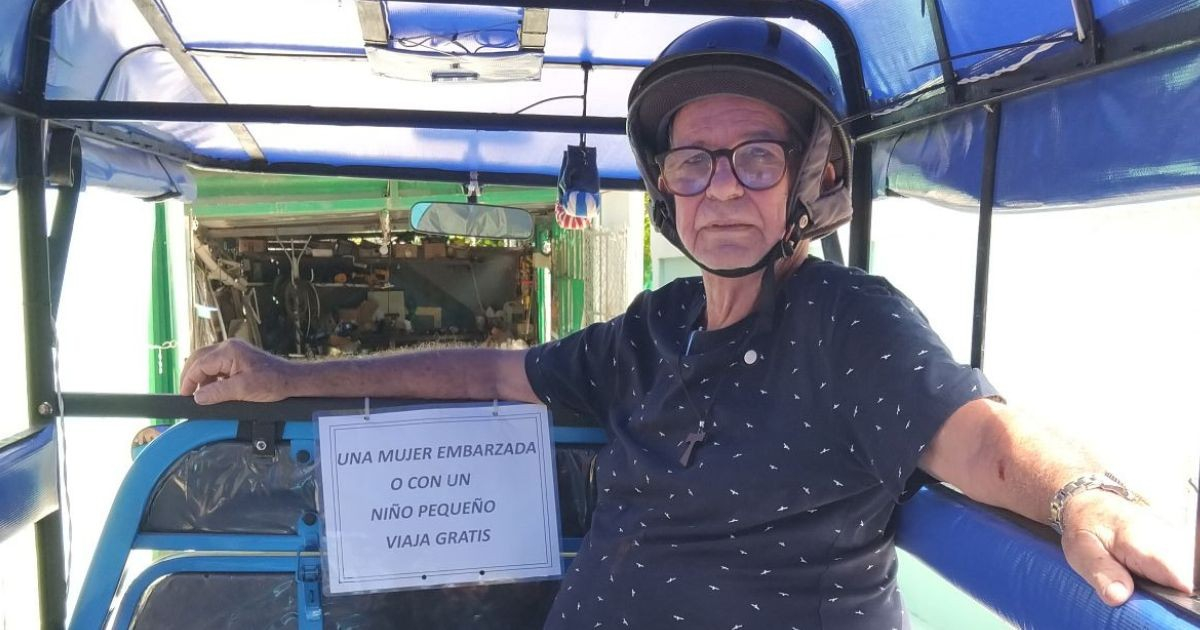
Víctor Rodríguez went viral on after posting a free travel offer aimed at pregnant women and mothers with small children in Havana, in a gesture that received a widespread positive response from users on the island.
The post, shared from the protagonist's personal profile, sparked a wave of comments highlighting the act of solidarity amid the severe transportation crisis that Cuba is experiencing, where the public system is practically collapsed and private transporters charge fares that can reach 500 pesos for short trips in Havana.
The gesture takes on special significance in a context where more than 32,000 pregnant women in Cuba face risks due to lack of access to emergency transportation, ultrasounds, and medical services, exacerbated by fuel rationing and blackouts.
Regarding the topic of electric tricycles in Havana, he said: "At 76 years old, I got on that wheel. I bought my tricycle, and on some afternoons more than others, I go out to 'solve' short trips in Guanabacoa. More than for financial reasons, it's because I can't just do nothing."
Additionally, she emphasized: "To make a difference, I put up a sign that says: Pregnant woman or traveling with a small child rides for free".
In his post, Rodríguez took the opportunity to highlight something currently happening in the capital: "Some time ago, I read the news that the processing of this service would be facilitated through a sticker even when one does not have a license plate."
However, although he was asked a few questions, his process did not have a happy ending: "They were still not carrying out the simple procedure."
His gesture, in addition to being admirable, holds special significance in the current Cuban context.
The Inter-American Commission on Human Rights (IACHR) reported in March 2026 a significant deterioration of essential services on the island, which has a direct impact on pregnant women, children, and other vulnerable groups, as reported by Infobae.
The crisis has reached alarming extremes: on March 18, a baby was born inside a bus on route 47 between Cotorro and Havana when a pregnant woman experienced sudden contractions, and in November 2025, another woman gave birth during an interprovincial trip between Havana and Santiago de Cuba.
The case of the Habanero falls into a pattern of individual initiatives that go viral in Cuba due to their humanitarian nature, contrasting with institutional neglect.
In May 2023, a bus driver in Santiago de Cuba went viral for transporting children, the elderly, pregnant women, and people with disabilities for free, even stopping the bus before the official stop to facilitate access for those groups.
In February 2026, Yander Jiménez Tamayo, in Banes, Holguín, offered free rides on a tricycle to the hospital for patients and medical staff, another gesture that circulated widely on social media.
The Ministry of Public Health of Cuba reported impacts on the maternal-child health program, with limited availability of ambulances and energy for hospitals, while 61,830 children under one year old are experiencing delays in vaccinations due to the energy crisis, reported EFE.
The Cuban community on social media has reacted to these gestures with emotion, seeing them as examples of spontaneous solidarity in the face of the service collapse that the regime has neither been able to nor willing to resolve for decades.
The CIDH emphasized that the deterioration of essential services in Cuba disproportionately affects the most vulnerable sectors of the population, including pregnant women and children.
Filed under: