
Related videos:
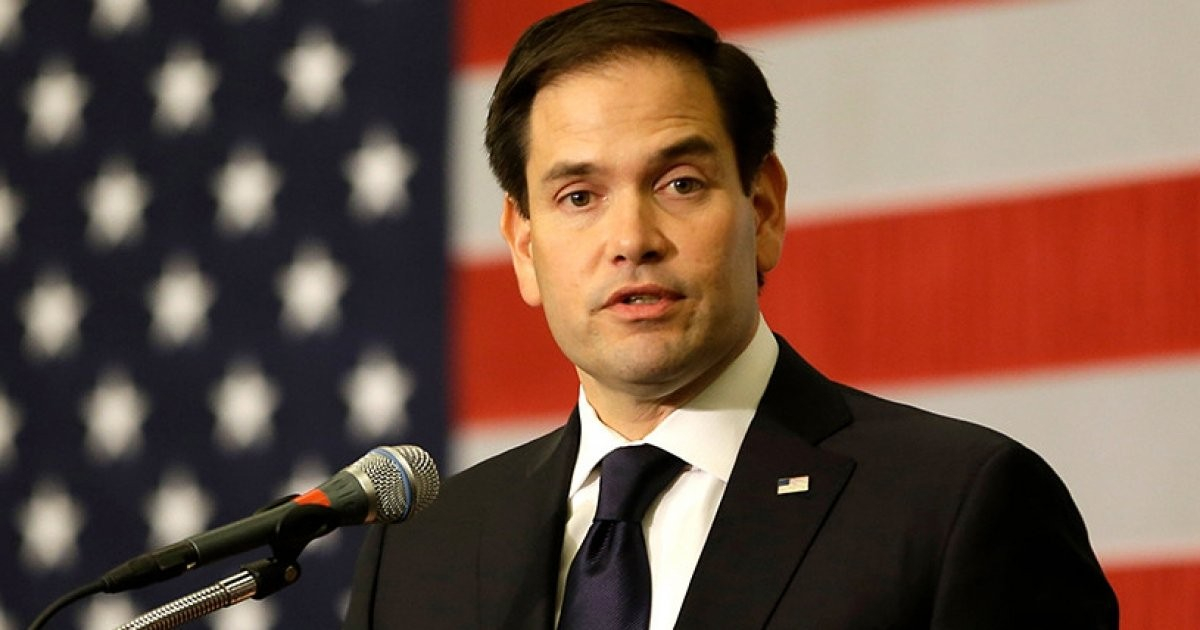
The U.S. Secretary of State, Marco Rubio, is participating this Tuesday in a process of talks between Israel and Lebanon in Washington, marking the first direct diplomatic engagement between the two countries in over three decades.
The meeting brings together the ambassadors of Israel and Lebanon in the United States, in an effort to open a political channel that will initially lead to a ceasefire and, subsequently, to broader negotiations to address the outstanding issues between the two nations.
In social media, commentator Eric Daugherty praised Rubio's performance and stated that he was "up to the occasion."
According to information published by the Associated Press, Rubio is participating in Washington alongside the Israeli ambassador to the United States, Yechiel Leiter, and the Lebanese ambassador in Washington, Nada Hamadeh Moawad, as part of a diplomatic effort driven by the White House to contain a war that has shaken Lebanon for weeks.
An open conflict with a strong humanitarian impact
The new diplomatic round comes amid escalating conflict between Israel and the Shiite group Hezbollah. According to data cited by AP, Israeli attacks in Lebanon have resulted in at least 2,089 fatalities, including women, children, and healthcare personnel, as well as thousands of injuries and over a million displaced individuals.
While the Israeli army conducts operations in the south of the neighboring country and seeks to neutralize Hizbollah's military capabilities, Beirut hopes that this new channel of dialogue will lay the groundwork to halt the war and restore institutional control over its territory.
Washington is trying to open a political avenue
The conversations taking place this Tuesday are viewed by the Lebanese government as an opportunity to pursue a diplomatic solution, although the landscape remains marked by deep differences. According to the EFE report, Beirut aims to agree on a ceasefire that would subsequently allow for the negotiation of more lasting solutions, while the Israeli delegation prioritizes the disarmament of Hizbullah and does not consider accepting a prior truce.
That gap explains part of the skepticism surrounding the meeting in Washington. Hizbullah has denounced the direct talks as an unacceptable concession to Israel, and its leader, Naim Qassem, has even described them as a humiliation for the Lebanese state.
First direct dialogue since 1993
The political significance of the meeting also lies in its historical nature. According to AP, these are the first direct diplomatic talks between Israel and Lebanon since 1993, positioning Washington at the center of a particularly delicate mediation in the Middle East.
Rubio's participation strengthens the weight of the United States in a regional crisis that also intersects with tensions with Iran. So far, there are no clear signs of an immediate agreement, but the mere opening of this channel already marks a significant shift after decades without formal dialogue between the two countries.
If the conversations manage to be sustained, they could become the first step toward a broader negotiation to ease tensions on Israel's northern border and open a new phase in its relationship with Lebanon, one of the most complex and volatile in the region.
Filed under: