
Related videos:
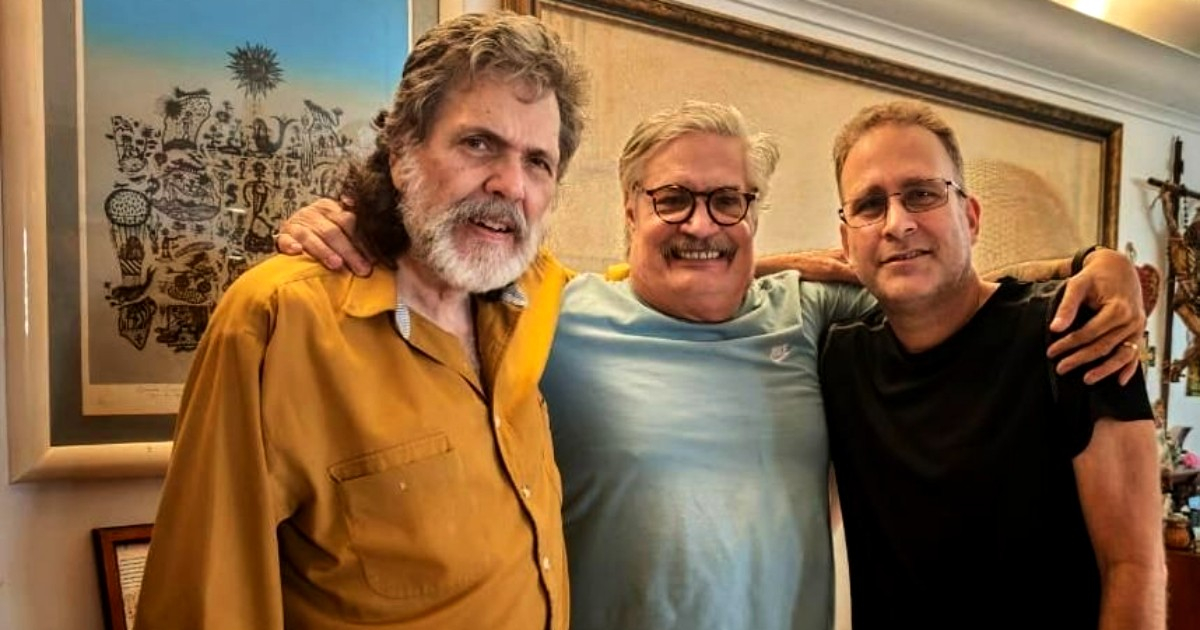
Abel Prieto, former Minister of Culture of Cuba and current president of the Casa de las Américas, posted on a photo alongside the troubadour Amaury Pérez and the official Luis Morlote —president of the Unión de Escritores y Artistas de Cuba— and recounted an emotional visit where they remembered John Lennon and his assassination in 1980.
In the text, Prieto recounts that Pérez told him how on December 26, 1980, 18 days after the musician's death, he celebrated his birthday amidst tears and rum: "He and his friend Pepe had placed a photo of Lennon on the wall with a black mourning ribbon and they drank, cried, and toasted to the disembodied spirit of John."
Prieto also took the opportunity to appropriate the legacy of the ex-Beatle for political purposes, stating that Lennon "would be an activist for peace today, opposing Trump, Netanyahu, and all the fauna of fascist genociders."
The scene was striking due to its hypocrisy: Prieto is one of the most representative figures of the cultural apparatus of the Cuban dictatorship, the very system that for decades banned the music of the Beatles as an administrative practice, accusing it of representing "ideological diversionism," according to research by Reporters Without Borders (RSF).
Cuban youths were discriminated against and sent to the Military Units to Aid Production (UMAP) — forced labor camps that operated between 1965 and 1968 — for listening to that music. Silvio Rodríguez himself was suspended from Cuban television for declaring his admiration for the Beatles.
Prieto was president of the Union of Writers and Artists of Cuba, served as Minister of Culture from 1997 to 2012, and was an advisor to Raúl Castro. During his tenure, he defended Decree 349, a regulation considered a tool of censorship that restricted critical artistic expressions and sparked protests from Cuban artists.
In 2019, Prieto offered an apology for the so-called Gray Quinquennium —a period of intense cultural repression from 1971 to 1976— but categorized it as a "contextual error" of former officials, denying direct responsibility from the government. The statement was widely criticized for downplaying the repression.
The official turn of the regime towards Lennon came on December 8, 2000, when the dictator Fidel Castro unveiled a bronze statue of the musician in Vedado Park in Havana, stating, "I regret not having known you earlier."
That symbolic rehabilitation was never accompanied by an apology to the generation of Cubans who were repressed for admiring him, but it opened the doors to the alcoholic tears of those who had to endure persecution and censorship from the very repressors they now nostalgically embrace.
On his part, the leader Miguel Díaz-Canel continued this appropriation by publicly declaring himself a fan of the Beatles, which critics interpreted as an attempt by the so-called revolutionary "continuity" to disguise its repressive past by appropriating figures that the regime itself once persecuted.
Pérez, for his part, also did not escape this logic: he was expelled from the Cuban New Trova Movement in the early eighties, and his album "Retrato de Navidad" was banned on Cuban radio and television, adding another layer of irony to the symbolic embrace Prieto offers him in the publication.
Prieto's post concludes with an anecdote in which Pérez's mourning that night in 1980 ended when his future partner arrived: "Our troubadour's eyes miraculously absorbed the tears, the mourning ended, and a beautiful love story began."
"Lennon would undoubtedly have approved of the happy ending of this fable," concluded Prieto, intoxicated by his fleeting fiction about the author of Revolution, a song that would have made "the spiritual leader of humanity" bleed from his ears and the "paradigm" that the censor with the mane sang while recalling the "stoic" dictator who was bothered by the "tight little pants, a guitar, and the Elvis-like attitudes" of the youth listening to the Beatles.
Filed under: