
Related videos:
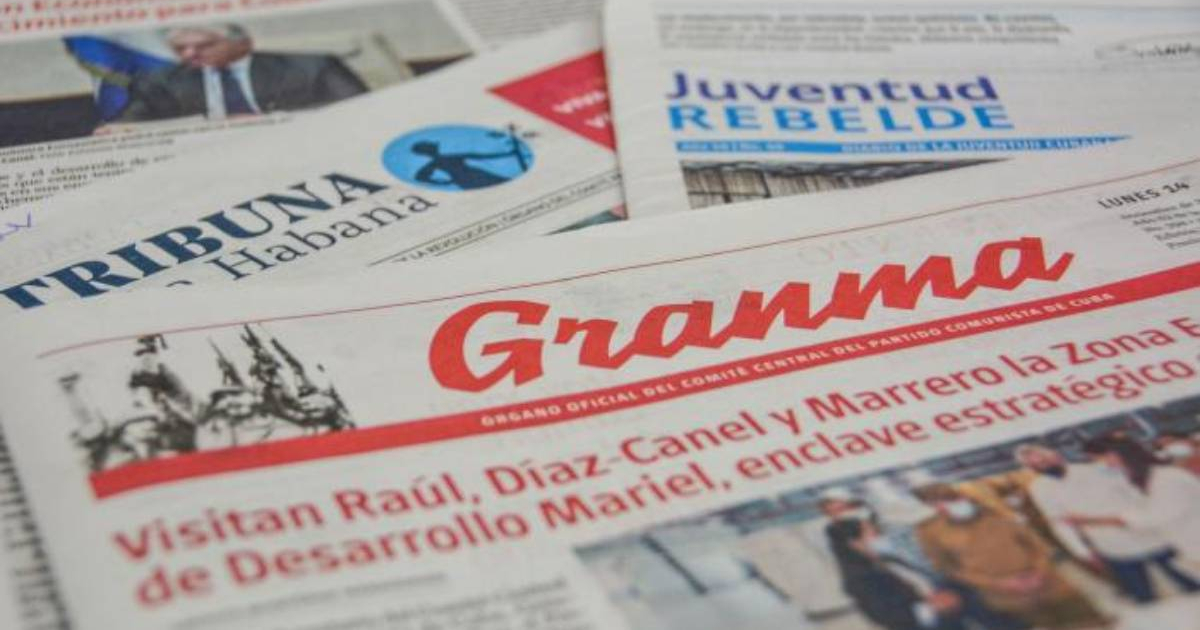
The Cuban government is celebrating this Tuesday the Cuban Book Day with speeches about reading as a means of empowerment, while the country has been without provincial newspapers for a month and its two national newspapers have been reduced to a single eight-page weekly edition due to a lack of paper and resources.
Abel Prieto, president of the Casa de las Américas, published a message on the social network X to commemorate the occasion, recalling Fidel Castro's phrase: We do not tell the people to believe! We tell them to read!. Prieto accompanied the tweet with an image of the first edition of Don Quixote published by the National Press in 1959 and added: "Books and not bombs."
The irony of the message did not go unnoticed: the regime celebrates the book and reading at a time when it has the least ability to produce them.
The 31st of March, 1959 saw the founding of the National Printing House of Cuba through Law 187 of the Revolutionary Government. Its first director was Alejo Carpentier and its inaugural publication was none other than The Ingenious Gentleman Don Quixote of La Mancha, in 400,000 copies sold at 25 cents, symbolizing popular access to culture. In 1981, this date was officially established as Cuban Book Day.
But the reality of 2026 stands in stark contrast to that foundational rhetoric.
On February 28, the Political Bureau of the Central Committee of the Communist Party announced drastic measures for the printed press due to a lack of resources. Starting March 2, the newspapers Granma and Juventud Rebelde will only be printed on Tuesdays, with just eight pages. The provincial newspapers have definitively ceased printed circulation.
The government attributed the measure to the "intensification of the American blockade" and the impact of an Executive Order from the Trump administration dated January 29, which affects fuel availability. However, the paper crisis in Cuba has structural roots that go back decades.
The paper industry was nationalized in the 1960s and never developed sufficient productive capacity, resulting in a chronic dependence on imports.
In 2020, there was no paper to print medical prescriptions. In 2021, there was a shortage of paper for producing supply notebooks for the following year. By 2023, the state plant Prosa prioritized toilet paper exclusively for tourism. In August 2025, a roll of toilet paper cost more than 1,200 pesos in the informal market, more than half of the minimum wage of 2,100 pesos.
The disappearance of provincial printed press particularly affects older adults who are not proficient with technology or do not own mobile phones, leaving them without access to the information they previously obtained in print. The regime announced as an alternative free access to newspaper websites via mobile data, a solution that precisely excludes those who relied most on the printed format.
Since its founding, the National Printing Office and its successor institutions have published approximately 70,000 titles. Today, the country that was founded with the promise that the people would read has no paper even to support its own official newspapers.
Filed under: