
Related videos:
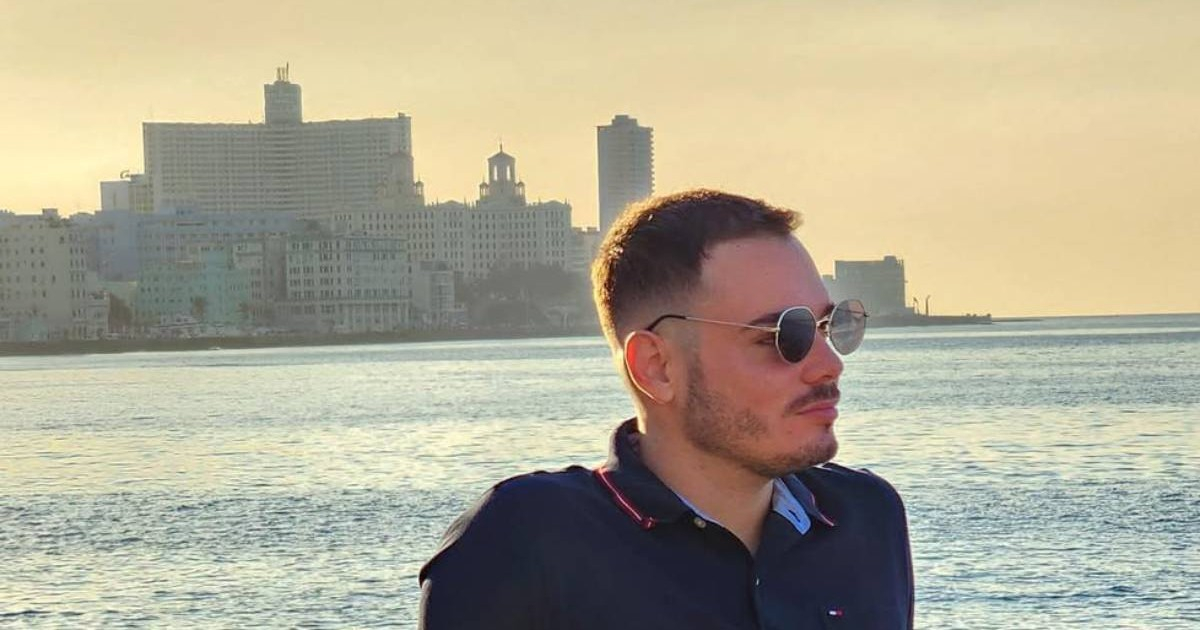
Sandro Castro stated that Cuba needs a free market, less bureaucracy, and a bit more democracy, in comments that openly contrast with the privileged lifestyle he leads as a member of the Castro elite.
In an interview with the NBC network, partner of Telemundo, Fidel Castro's grandson, who has over 150,000 followers on Instagram, expressed support for a capitalist transition: "Yes, I would support it, as would many, many others. Because there is a large private sector in Cuba," he stated.
And he went even further: "There must be a free market in order to grow more quickly."
Sandro also pointed to the internal management of the regime, in a notable turn coming from a direct descendant of the founder of the system he now criticizes. "Here we sometimes have a mental internal blockade that harms us tremendously. It almost harms us as much as the external blockade from the United States," he stated, thus equating the structural failures of the regime with the U.S. embargo.
Regarding the energy collapse, he pointed out that "we are truly facing significant difficulties with electricity, there are practically blackouts lasting 10 to 20 hours on certain days." He demanded "not just a change of government, but a change in mentality," with "less bureaucracy" and economic openness.
However, the common citizen discourse that Sandro builds clashes directly with his reality. While he claims to live in "a very modest one-room apartment" and have "only one car," he owns the Bar EFE on 23rd and F street in Vedado, whose establishment cost him 50,000 dollars -equivalent to decades of average Cuban salary, which is around 20 dollars a month-.
The venue charges an entry fee of 1,000 pesos and requires a minimum consumption of 15,000 pesos per table, which is more than two average salaries.
Sandro also resides in the Havana neighborhood of Kohly, historically reserved for military personnel and intelligence agents. During his interview with CNN on March 30, recorded in the midst of a blackout, he used his own electric generator, served cold beers, and wore designer sunglasses, while millions of Cubans endured the same outage without any resources.
Idalmis Menéndez, former daughter-in-law of Fidel Castro, was direct in her response: "Yes, you have privileges, Sandro, because you were born in the heart of power", recalling that she grew up in the Punto Cero complex surrounded by comforts inaccessible to the vast majority of Cubans, even during the Special Period.
In the same interview with NBC, Sandro distanced himself from his grandfather with a phrase that evades any historical responsibility: "They were different times, different moments in history, different generations. What he did at that time has already been done."
He invited the Cuban exile community to return and invest, and questioned the communication style of the U.S. president: "The Trump administration is confusing. He says one thing today and within a week says something else. It's hard to keep up." Although he supported his policy of lifting restrictions on the Cuban private sector.
Professor Rodolfo Bendoyro, a luso-Cuban, analyzed on CNN Portugal that Sandro's case highlights the hypocrisy of an elite that preaches equality while living in opulence, in a country where the average salary is less than 20 dollars a month.
These statements come in the context of the growing media presence of the so-called "new Castro generation": Raul Castro's grandson, Raul Guillermo Rodríguez Castro, known as "El Cangrejo", who met with the team of Secretary of State Marco Rubio in St. Kitts and Nevis at the end of February, fueling speculation about a possible repositioning of the family in a transitional scenario.
Filed under: