
Related videos:
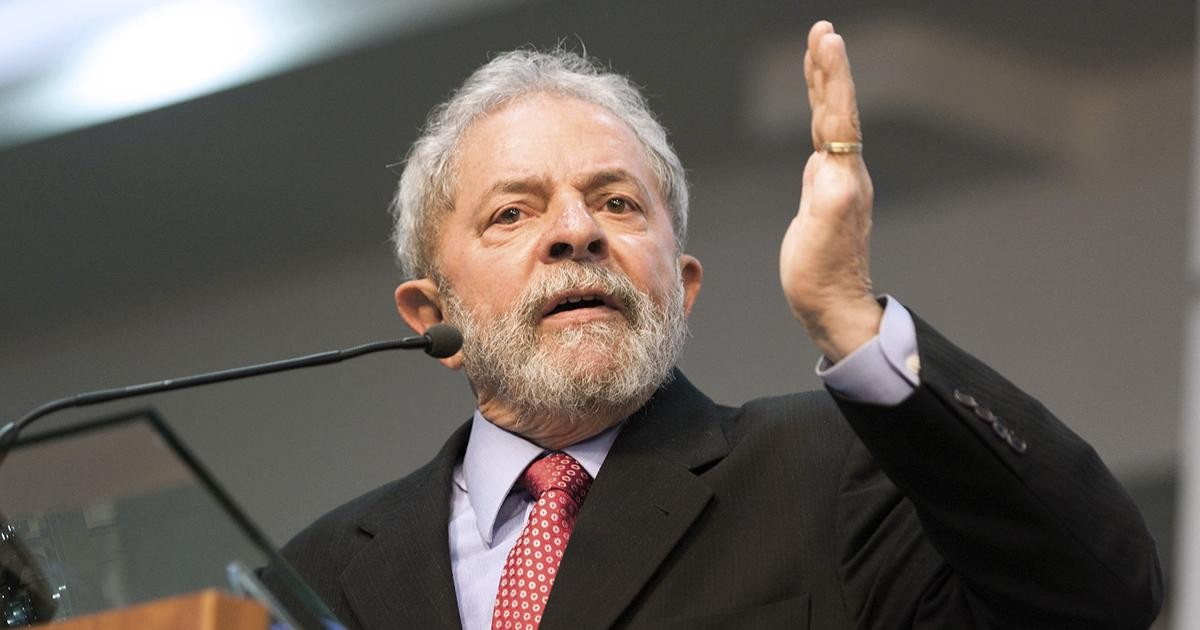
The Brazilian president Luiz Inácio Lula da Silva once again defended the Cuban regime this Thursday in an exclusive interview with El País, published from Brasilia, using the situation in Haiti as a shield to deflect any criticism of the Havana dictatorship.
In response to the direct question of whether the Cuban regime will fall, he replied: "Seventy years of blockade have no explanation. If those who do not sympathize with the Cuban regime were really concerned about the Cuban people, why are they not worried about Haiti, which does not have a communist regime?"
And he added: "Cuba needs a chance. How can a country survive without receiving food or energy?"
With that response, the leader shifted all responsibility for the Cuban crisis onto the U.S. embargo, without mentioning at any point the political repression, the political prisoners, or the decades of human rights violations documented by international organizations.
The argument is neither new nor original. On March 4th, during the opening of the 39th Regional Conference of the FAO for Latin America and the Caribbean in Brasília, Lula had already used the same comparison with Haiti to bolster the regime.
On that occasion, he stated: "Cuba is not suffering from hunger because it cannot produce or generate its own energy. Cuba is suffering from hunger because they do not want it to have access to the things that everyone should have the right to."
This pattern of argumentation—using the Haitian tragedy as a shield to protect the Cuban regime from any criticism—is a recurring tactic among certain sectors of the radical left.
Former Spanish Vice President Pablo Iglesias used the same rhetorical resource in October 2025, when he stated that if communism falls in Cuba, the country would become "a democracy like Haiti, with hunger, violence, illiteracy, and a complete absence of services."
What Lula systematically omits is striking: according to Prisoners Defenders, Cuba had a total of 1,250 political prisoners as of the end of March, including 131 women and 31 minors. From July 2021 until that same month, the regime has accumulated 2,026 political prisoners, averaging 14 new detainees per month so far this year.
On April 9th, the Cuban government announced the release of 2,010 inmates as a supposed "humanitarian gesture," but no political prisoners were included in that measure, as reported by Human Rights Watch, Prisoners Defenders, and Justicia 11J.
In March, additionally, the regime unleashed a wave of arrests in neighborhoods like Guanabacoa, in what activists described as a "real hunt" against protesters.
Lula's stance toward Cuba has a long history of complicity.
In August 2025, following the United States sanctions on the Mais Médicos program—which employs 2,659 Cuban doctors under conditions that Washington describes as "export of coercive labor," since the regime retains between 70% and 85% of their salaries—Lula urged the United States to accept that "it waged a war, lost" and to allow Cubans to "live in peace."
In January 2026, he came to Nicolás Maduro's defense following his capture by the United States, describing the operation as an "offense to sovereignty," without mentioning the Chavista repression.
Cuban-American Congresswoman María Elvira Salazar was straightforward in her assessment of this stance in August 2025: "It is becoming increasingly evident each day of Lula's deep admiration for the Cuban dictatorship and his true intentions to turn Brazil into another Cuba: without freedom of expression, imprisoning political dissidents, and crushing any opposing voice."
Filed under: