
Related videos:
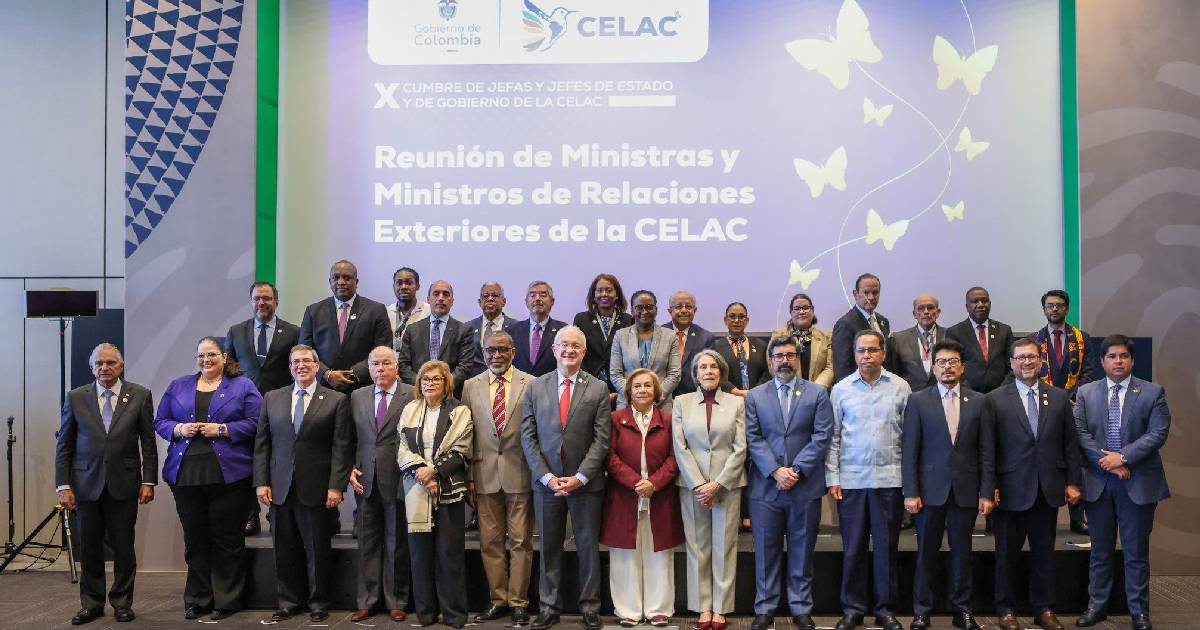
The summit of the Community of Latin American and Caribbean States (Celac) held this Saturday in Bogotá highlighted the fragility of the bloc, marked by low attendance from leaders and increasing divides among the countries in the region regarding the positions of Cuba and Venezuela.
Only four leaders participated in the 10th edition of this type of meeting held in Bogotá: the Colombian host, Gustavo Petro; the President of Brazil, Luiz Inácio Lula da Silva; the President of Uruguay, Yamandú Orsi; and the President of Burundi, Évariste Ndayishimiye, who attended on behalf of the African Union. The rest of the countries sent lower-level delegations, noted the Spanish newspaper El País.
During the meeting, the pro tempore presidency of the organization was transferred from Colombia to Uruguay for the next 12 months.
In his speech, Orsi highlighted one of the few consensus points still upheld by the bloc: that Latin America and the Caribbean remain a region free of armed conflicts between states.
"With only 8% of the global population, our region accounts for more than 30% of the world's homicides," warned the Uruguayan president, who urged for stronger regional cooperation against organized crime, drug trafficking, and the illicit arms trade.
The summit also served to inaugurate a high-level dialogue between Latin America and Africa, an attempt to project the bloc into new areas of international cooperation in a global context marked by wars, trade tensions, and a weakening of multilateralism.
However, the meeting reiterated the internal difficulties of Celac. Lula da Silva himself had warned days earlier that the organization is going through a phase of paralysis and that regional summits are increasingly seeing less presence of leaders.
"Our summits are empty, with the absence of the main regional leaders," affirmed the Brazilian president at a recent forum in Panama.
“The Celac is paralyzed and has not even been able to make a single statement against illegal attacks that affect our nations,” he lamented.
Colombian President Petro, for his part, defended the need for Latin America and Africa to “seek their own identity to communicate with the world,” in an international landscape that he described as characterized by armed conflicts, climate crises, and geopolitical disputes.
Petro also criticized the speech of U.S. Secretary of State, Marco Rubio, warning that his positions could push the world towards "a new era of conflicts."
Despite attempts to project an international agenda, the meeting reflected the political tensions within the bloc, where governments of both the left and right coexist with very different priorities and strategic visions.
Participation of the Cuban regime
From Cuba, Foreign Minister Bruno Rodríguez defended Havana's role within the organization and assured that his country will continue to promote "sovereign equality and collective independence" within CELAC.
In a social media post, the foreign minister once again accused the United States government of maintaining a policy of “war and economic persecution” against the island for more than six decades, pointing to the embargo as the main cause of the economic difficulties the country is facing.
The statements generated numerous critical reactions on social media, where several users questioned the official discourse of the regime and pointed out the contradictions between the rhetoric of sovereignty and the internal situation in Cuba.
Some comments accused the Cuban government of using the embargo as a recurring argument to justify the economic crisis, while others denounced the lack of political freedoms on the island and recalled the mass detentions that followed the large protests on July 11, 2021, after which more than a thousand political prisoners remain incarcerated.
The meeting in Bogotá thus left an ambivalent picture of the organization: while it tries to expand its international outreach with new partners like Africa, CELAC continues to face difficulties in consolidating a common agenda within an increasingly politically fragmented region.
Filed under: