
Related videos:
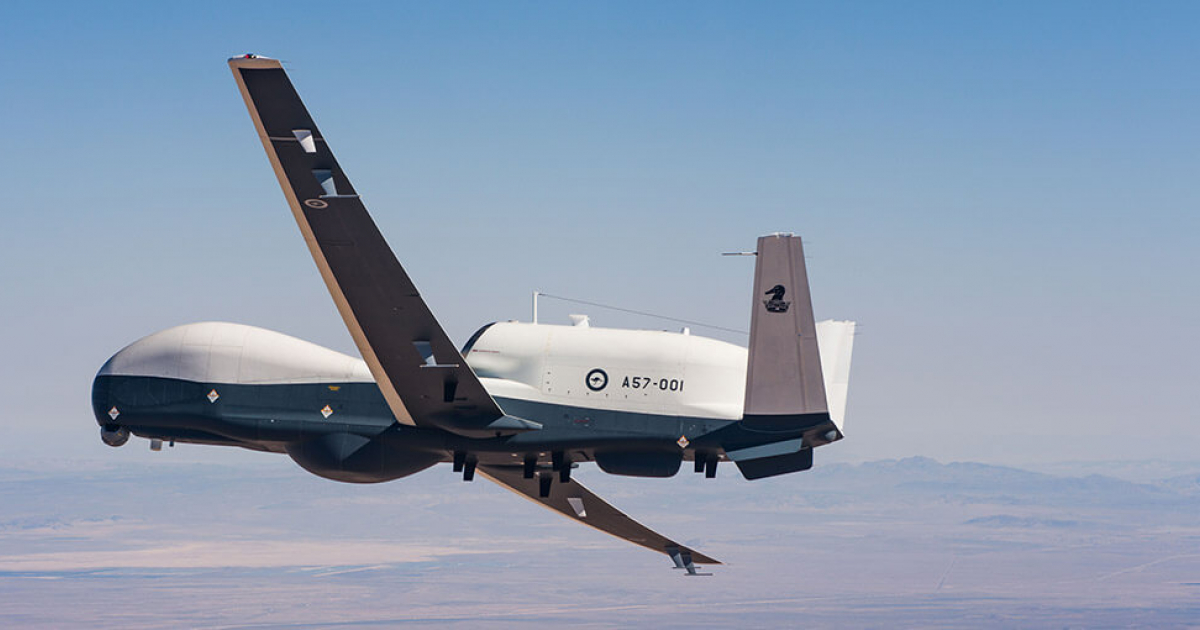
A surveillance drone from the United States Navy, the MQ-4C Triton with the call sign BLKCAT6, conducted a on Thursday night, flying over the southern coast of the island and subsequently the vicinity of Havana.
The flight was publicly tracked through Flightradar24 and reported by accounts specializing in open-source intelligence such as FlconEYES and OSINTtechnical.
The aircraft, registered with the number 169806 and manufactured by Northrop Grumman, operated at altitudes between 49,000 and 49,100 feet —approximately 15,000 meters— at cruising speeds of 308 knots, executing typical orbit patterns for intelligence, surveillance, and reconnaissance missions.
The tracker FlconEYES detailed that "the last ping before entering Cuban airspace suggests a straight line vector placing it crossing the West over Pinar del Río" and that the aircraft "made rounds south of Santiago de Cuba and the entire flight has been along the southern coast around the island and within the airspace."
At 1:12 UTC on Friday, the drone was positioned off the coast of Havana. The OSINTtechnical account confirmed that "a high-altitude surveillance drone of the U.S. Navy is continuing an extensive reconnaissance mission over Cuba tonight. The drone is now flying over the vicinity of Havana."
The flight also coincided with the close passage of the private jet of the Venezuelan regime, registration YV1776, although at a different altitude, according to reports from FlconEYES.
The MQ-4C Triton is a high-altitude, long-endurance maritime surveillance drone developed by Northrop Grumman for the U.S. Navy, capable of covering up to four million square nautical miles in a 24-hour mission.
This flight is not an isolated incident, especially when the United States conducts operations in the Caribbean Sea.
In February 2026, another MQ-4C Triton identified as BLKCAT5 had already been detected north of the Cuban archipelago, accompanied by RC-135V/W Rivet Joint and P-8 Poseidon spy planes.
Both operations fall under the Southern Spear Operation, launched in September 2025 under Southern Command with an estimated cost of 3 billion dollars.
The flight on Thursday took place on the same day that Díaz-Canel warned of a possible U.S. military aggression during the event marking the 65th anniversary of the Proclamation of the Socialist Character of the Revolution.
"The moment is extremely challenging and calls upon us once again just like on April 16, 1961, to be ready to confront serious threats, including military aggression. We do not desire it, but it is our duty to prepare to prevent it and if it is unavoidable, to overcome it," said the leader.
Filed under: