
Related videos:
The military deployment of the U.S. in recent months in the Caribbean is estimated to have cost around 3 billion dollars.
According to estimates from Bloomberg, the operational cost of the ships deployed near Venezuela reached 20 million daily at its peak, from mid-November to mid-January, up until Maduro's removal.
Similarly, combat operations, which include, for example, flight hours, weapons fired, and additional payments, contribute to that cost.
Bloomberg used information from the Pentagon regarding operational costs, ship tracking data, satellite images, and public deployment announcements for its estimates.
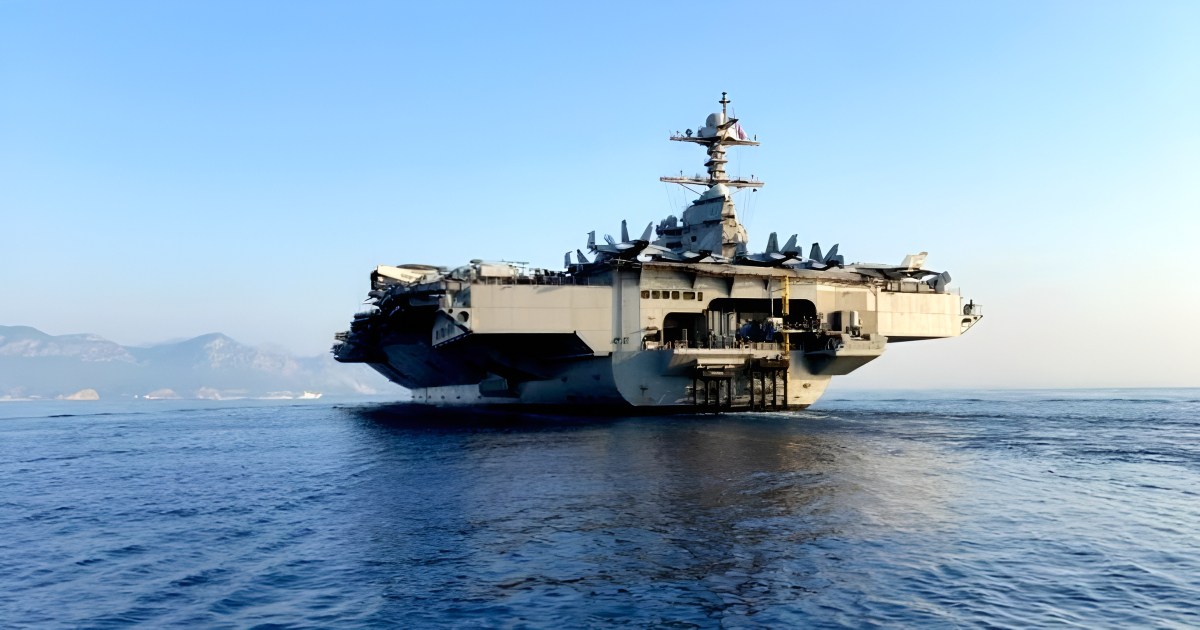
In this way, they estimate that, for example, the deployment of the aircraft carrier Gerald Ford, the largest in the world, would amount to 11.4 million dollars per day, taking into account its destroyers, submarines, and guided missile cruisers,
Also, the USS Iwo Jima, where Maduro and Flores were confined after their capture, the USS Fort Lauderdale, the USS San Antonio, and the 22nd Marine Expeditionary Unit cost $8.59 million daily.
"We estimate that Operation Southern Spear, which includes Operation Absolute Resolve, has likely cost around $2 billion since August 2025," Elaine McCusker, former Pentagon official and current senior researcher at the American Enterprise Institute, told Bloomberg.
Expenses will exceed what was anticipated in the fiscal year 2026 budget, said Mark Cancian of the Center for Strategic and International Studies, a bipartisan think tank.
"There is no contingency fund in the Department of Defense's budget for unforeseen operations. Conflicts come with additional costs," he added.
The deployment continues
The naval presence of the United States in the Caribbean continues to strengthen and, according to the map updated as of February 12, at least two major units of the U.S. Navy remain deployed in the region, amid a backdrop of high geopolitical tension and increasing strategic pressure on Cuba.
The most striking fact for Havana is the presence of the USS Gerald R. Ford (CVN-78) in the Caribbean area, under the command of the 4th Fleet. This is the most modern and advanced aircraft carrier in the United States Navy, leading a new generation of ships designed to project air, naval, and electronic power on a global scale.
In the deployment map of attack groups and amphibious groups of the U.S. Navy, the USS Gerald R. Ford is explicitly identified as “Caribbean, 4th Fleet,” confirming that its presence is not incidental, but rather part of a structured operation within the regional theater.
The second relevant element in the Caribbean is the USS Iwo Jima (LHD-7), marked on the map as part of the amphibious group under SOUTHCOM and also linked to the 4th Fleet.
The USS Iwo Jima is an amphibious assault ship capable of transporting Marines, vehicles, helicopters, and vertical takeoff aircraft. It is designed for amphibious operations
This deployment occurs alongside the intensification of maritime interdictions against the so-called "dark fleet" that was transporting sanctioned oil from Venezuela to Cuba, as well as the recent reconfiguration of the regional political landscape following the capture of Nicolás Maduro.
Filed under: