
Related videos:
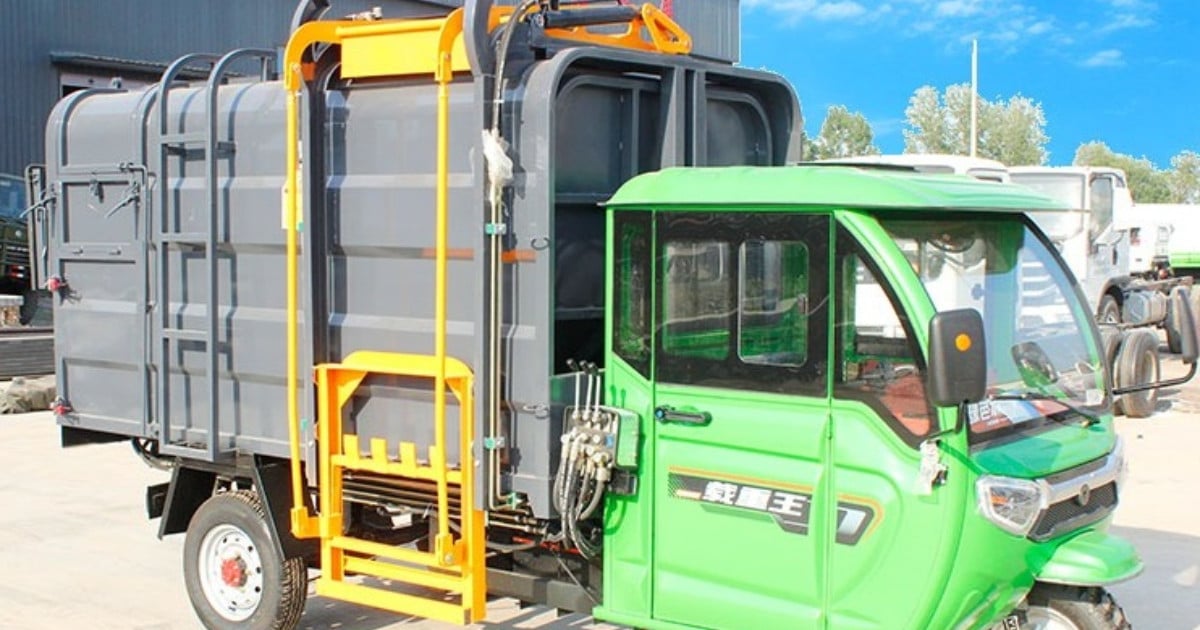
A local development project proposes to introduce electric tricycles to collect solid waste in the city of Guantánamo, where the accumulation of garbage in the streets has become a recurring concern for the population.
According to a report from the official newspaper Venceremos, the accumulation of garbage in the eastern city has become an increasingly visible problem for residents, with piles of waste appearing two or three times on the same block, leading to unpleasant odors and deterioration of the urban environment.
The situation is due to several factors that impact the waste collection service, including fuel shortages, challenges in managing the cleaning system, and a lack of public sanitation—an array of issues that have ultimately affected the city's image as a hygienic space.
In response to this situation, authorities and economic stakeholders are promoting an alternative aimed at alleviating the problem through a Local Development Project (LDP) called Alternative Energy to support the collection of solid waste in the municipality of Guantánamo.
The proposal suggests using electric tricycles specialized in waste collection, supported by solar panels that would allow for battery recharging, without relying on the National Electro-Energy System.
According to the project, these vehicles would have greater autonomy and operational capacity even amid the current energy limitations.
In addition to the integrated charging system in the tricycles, the plan includes installing solar panels on the roof of the vehicle parking area, with a generation capacity of 10 kilowatts and backup through batteries.
The project would be managed by the small and medium-sized enterprise R&R Soluciones Tecnoecológicas SURL (R&R Soltec), which is also involved in commercial activities such as hardware and cafeteria services.
The initial actions are planned for the central and central-south areas of the city, with the possibility of extending the service to other neighborhoods in later stages.
The initiative has been presented as a viable solution to alleviate the garbage problem in the provincial capital, in a context marked by economic limitations and the deterioration of several basic services.
However, the very design of the project also raises questions about its long-term viability.
One of the highlighted points is the potential dependence on a closed circuit for supply and maintenance, as the private entity involved would be the one providing spare parts, repairs, and other services related to the system.
In the event of price fluctuations in the international market or economic difficulties for the company, there is uncertainty about whether the costs could be passed on to the service or if the small and medium-sized enterprise would absorb those losses to maintain operations without impacting the community.
Another highlighted risk is the potential structural reliance of the project on the private actor driving it. If the company were to become unprofitable or encounter financial difficulties, the operation of the waste collection system itself could be compromised.
Resorting to electric tricycles for community services follows a trend widespread across several Cuban provinces. In February, in La Habana, 72 electric cargo tricycles were reorganized for solid waste collection, which increased the recovery of raw materials by 39 tons per week.
In the same month, Villa Clara incorporated 10 new electric tricycles to support waste collection in light of the diesel shortage.
Faced with the accumulation of waste, residents in several provinces have chosen to burn trash in public spaces, posing serious health risks such as the spread of respiratory diseases.
The Cuban government has responded with measures that highlight the severity of the crisis. In March, the Minister of Labor and Social Security announced the reassignment of workers on employment interruption to garbage collection tasks, a decision that sparked outrage among those affected.
Similarly, Prime Minister Manuel Marrero even asked Cubans to pick up the trash with the slogan "Let's keep fighting."
Specialists warn that the combination of a lack of resources, deteriorating equipment, container shortages, and a shortage of personnel makes sustainable waste management in Cuba impossible.
Filed under: