
Related videos:
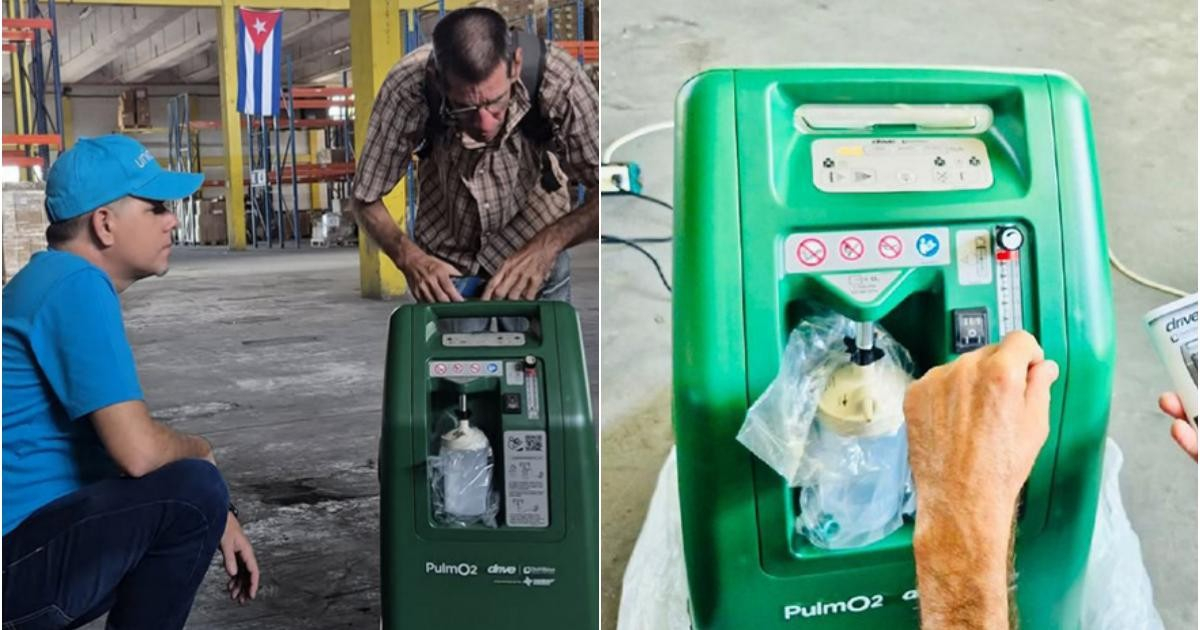
The United Nations Children’s Fund (UNICEF) began this week the distribution of 100 oxygen concentrators intended for the emergency services of the network of maternal and pediatric hospitals in Cuba, as part of its cooperation program to strengthen maternal and infant care on the Island.
According to a report by the Cuban News Agency, the first 50 devices have already been transported to seven provinces: Havana, Villa Clara, Sancti Spíritus, Ciego de Ávila, Las Tunas, Granma, and Santiago de Cuba.
The rest of the concentrators will be distributed in the coming days to the other provinces, along with spare components that include sensors and fans.
Sunny Guidotti, the representative of UNICEF in Cuba, stated that "every supply, medication, or piece of equipment that arrives in the country for a hospital institution is an opportunity to improve health services and save lives, as is the case with these concentrators."
The official reminded that the energy crisis facing Cuba "complicates healthcare access and puts at risk the babies and children who require access to oxygen."
Raimel Milán, a specialist in the Medical Gases Area of the National Center for Electromedicine, explained to ACN the technical characteristics of the donated equipment.
Each concentrator has a capacity of 10 liters per second and can be used in both hospital settings and a patient's home due to its easy maneuverability.
Milán specified that the devices internally contain a compressor with a filtration unit and a control board with sensors that purify the air and provide the required concentration of oxygen.
However, he clarified that "their benefits do not replace an oxygen tank," but that they are still feasible in the event of a medical emergency.
The donation arrives at a time of severe deterioration in the Cuban healthcare system, due to decades of mismanagement by the dictatorship and a structural crisis that has worsened in recent years.
The infant mortality rate in Cuba closed 2025 at 9.9 per thousand live births, nearly triple the 3.9 recorded in 2018, with Havana reaching the highest figure in the country: 14 per thousand live births.
The Ministry of Public Health warned in February that the energy crisis directly endangers 32,880 pregnant women and 61,830 children under one year old, as it hinders the carrying out of obstetric ultrasounds, childhood vaccinations, and ventilation for children with special needs.
Cuban hospitals have faced a chronic shortage of medical oxygen, with reports of families whose children needed the supply but could not find it available, and cases of oxygen tanks being stolen from hospitals.
Health Minister José Ángel Portal Miranda acknowledged an "unprecedented structural crisis" and announced the reduction of hospital staff and the limitation of surgeries to urgent cases.
Filed under: