
Related videos:
Havana records the highest infant mortality rate in the country, with 14 deaths per 1,000 live births, a figure unprecedented in over two decades and acknowledged by the regime's own authorities during the recent Plenary of the Communist Party in the capital.
The figure, which far exceeds the national average of 8.2 ‰ reported by authorities in July 2025, confirms the accelerated deterioration of the Cuban healthcare system, a victim of shortages, the exodus of medical personnel, and institutional disorganization.
During the party meeting held this Friday, the leader Miguel Díaz-Canel tried to gloss over the situation with a phrase that has been repeated to the point of fatigue: “even though there is a blockade on fuel, we will not let ourselves be defeated by the empire.”
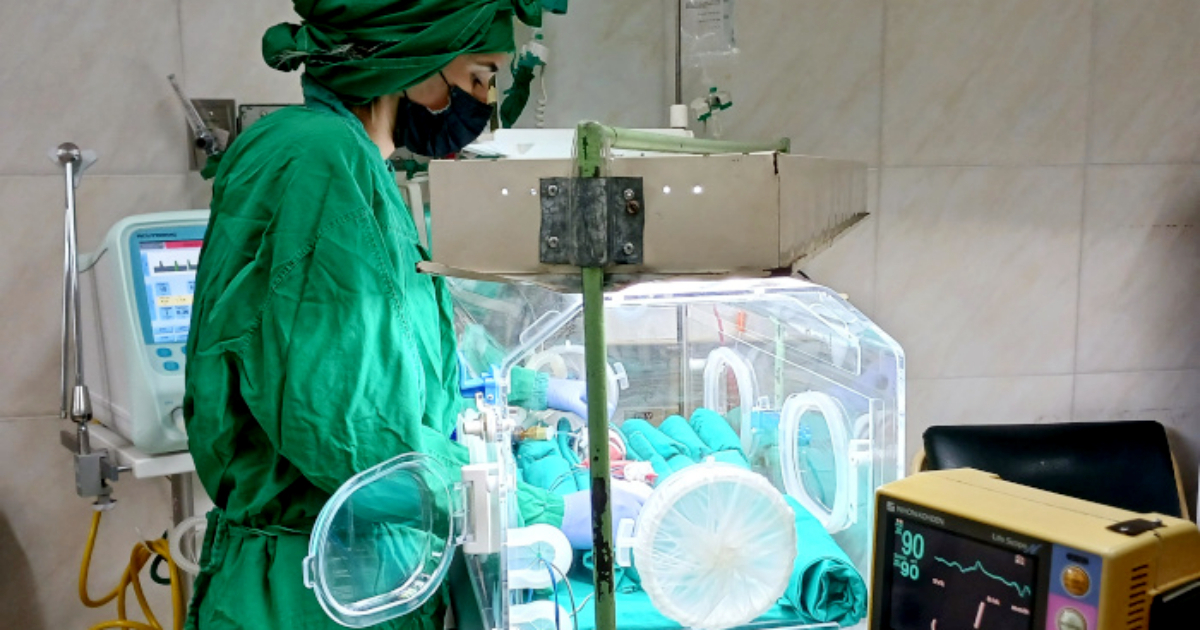
Beyond the hollow propaganda, the fact is that months ago the Ministry of Public Health (MINSAP) acknowledged a sustained increase in infant and maternal mortality, admitting that only 30% of the essential medicine supply is covered and that hospitals are operating with severe shortages of supplies, incubators, ambulances, and specialists.
In July 2025, Minister José Ángel Portal Miranda reported 8.2 infant deaths per thousand live births, compared to 7.4 the previous year, and a maternal mortality rate that rose to 56.3 per 100,000 live births, nearly double that of 2023.
The health deterioration has been worsened by the epidemics of chikungunya and dengue, which caused dozens of deaths, mostly among children, between November and December.
Only in the final phase of the outbreak, 63 minors were hospitalized in serious condition and 16 in critical condition, according to official figures provided by the epidemiologist Francisco Durán.
On her part, the Deputy Minister of Health, Carilda Peña García, went as far as to say on national television that "the Cuban system is better than that of many countries," while confirming the death of 33 people, 21 of whom were minors.
That contradiction, between propaganda and tragedy, has become the hallmark of a system that insists on denying its own collapse.
Nationwide, the figures confirm a historic setback. In 2018, Cuba had an infant mortality rate of 3.9 per thousand live births; today it is nearly tripled, while the regime continues to blame the "blockade" and refuses to acknowledge the impact of its centralized economic model, institutional corruption, and the lack of investment in hospital infrastructure.
In provinces like Guantánamo, in May 2025, the figure skyrocketed to 13.9, while the authorities responded by calling for "strengthening political work" in hospitals instead of sending medications or medical staff.
The demographic data paints an even more bleak picture. With the lowest birth rate in 60 years (fewer than 90,000 births in 2023) and an aging population, Cuba faces an unprecedented combination of health, migration, and social crises.
More and more doctors are leaving the country, obstetrics and pediatrics services are collapsing, and epidemiological outbreaks are spreading uncontrollably due to a lack of insecticides, transportation, and basic resources.
Meanwhile, official propaganda insists on talking about "social achievements" and "heroic resistance."
Díaz-Canel even claimed that Cuba achieves results “in social matters that the United States does not,” attempting to revive the old narrative of the "socialist model" as a guarantor of equality and justice. However, international indicators—from the Human Development Index to Freedom House and Reporters Without Borders—place the island far from that discourse: poorer, sicker, less free.
In the country that once presented itself as a "medical powerhouse," today more children are dying, fewer Cubans are being born, and hospitals are collapsing.
Infant mortality has become the most painful thermometer of an exhausted nation, where the regime prefers to talk about imperialism rather than face the empty incubators.
Havana, closer to Vietnam than to Cuba in infant mortality
The figure revealed by the regime—14 infant deaths per 1,000 live births in Havana—not only sets an internal record but places the Cuban capital at levels typical of countries with much lower human development.
According to the official series from the World Bank and the United Nations inter-agency group for child mortality estimation (UN IGME, UNICEF, WHO, and the World Bank), the national average rate for Cuba in 2023 (latest published data) was 6.6 per thousand live births, less than half of what is currently recorded in the capital.
This difference suggests an alarming internal gap within a country that for decades boasted about its "universal and free" healthcare system.
If the figures from MINSAP were confirmed, Havana would be closer to Vietnam (14.0), Suriname (15.2), or Morocco (15.5) than to its own national average. In contrast, countries with high human development such as Japan (1.8), Iceland (1.9), or Singapore (1.7) maintain rates that are nearly ten times lower.
The comparison is devastating because it dismantles the official narrative of "medical power." Cuba no longer resembles the welfare model it defended for decades; instead, it is regressing toward the indicators of nations with much more precarious healthcare systems.
And while the regime insists on blaming the U.S. embargo or a "economic war," the data shows a sustained deterioration that stems from internal causes: mass exodus of doctors, disinvestment in hospitals, lack of basic medications, and corruption in resource management.
The figures no longer allow for embellishment. The collapse of healthcare services, preventable deaths, and widespread poverty contradict the narrative of a "revolutionary health" that only survives in televised speeches.
The Cuban capital, once a showcase of the socialist model, has become the starkest reflection of its failure: hospitals without medicine, neighborhoods without water, births without incubators, and a child mortality rate that skyrockets compared to the national average.
In the global map of child health, Havana no longer competes with the numbers displayed by developed countries, but rather with those of those still struggling to survive.
Filed under: