
Related videos:
President Donald Trump announced this Sunday that U.S. naval forces intercepted and took control of the Iranian cargo ship TOUSKA in the Gulf of Oman, after the vessel attempted to evade the naval blockade imposed by Washington against Iran.
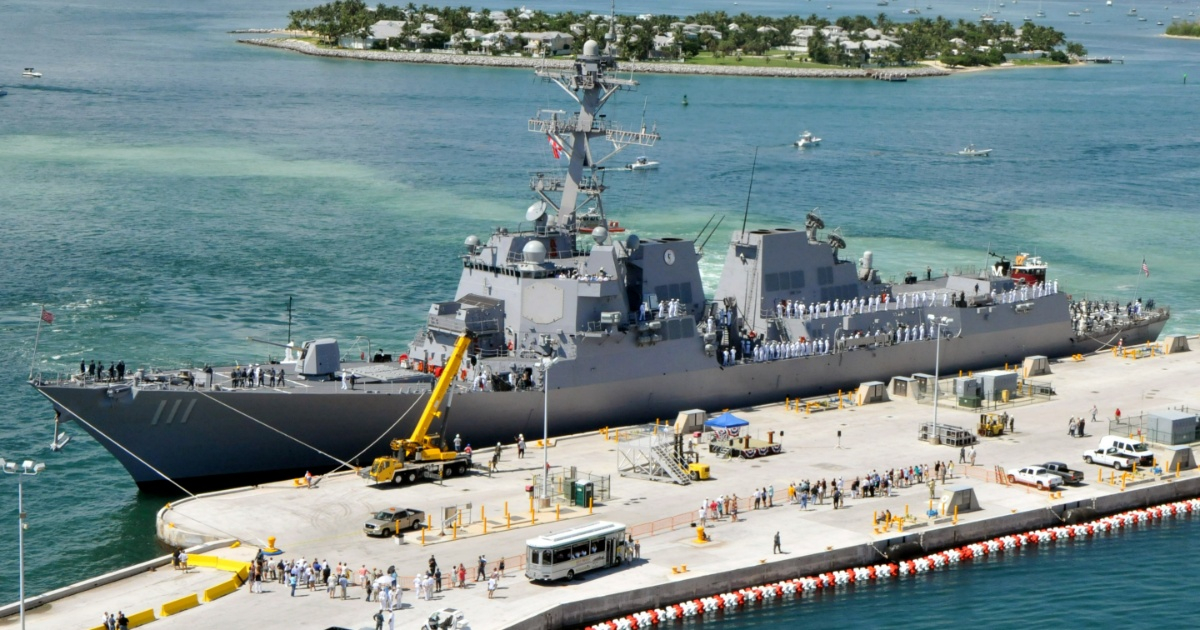
Trump described the operation in detail on his social media platform Truth Social: the guided missile destroyer USS Spruance issued a warning to the TOUSKA to stop, but the Iranian crew ignored it.
"Our Navy ship stopped him by opening a hole in the engine room," the president wrote, adding that the U.S. Marines have full custody of the vessel and that its cargo is being inspected.
The TOUSKA is a cargo ship nearly 900 feet long, with a weight comparable to that of an aircraft carrier, and is under sanctions from the U.S. Department of the Treasury due to its history of illicit activities, including its role in the Iranian ghost fleet involved in oil smuggling and sanctions evasion.
The incident occurs at a time of extreme tension between Washington and Tehran, with a bilateral ceasefire expiring on April 22 and nuclear negotiations on the brink of collapse.
The naval blockade was ordered by Trump on April 13, following the failure of talks in Islamabad where the U.S. demanded the total dismantling of Iran's nuclear program and a twenty-year moratorium on uranium enrichment, while Iran offered only five years and demanded 270 billion dollars in compensation.
Since the start of the blockade, at least 23 Iranian vessels turned back, according to the U.S. Central Command.
This Sunday, Trump also accused Iran of having fired on a French ship and a British cargo vessel on Saturday in the Strait of Hormuz, calling it a total violation of our ceasefire agreement.
The leader went further and threatened with severe consequences if Tehran does not accept the proposed agreement: "We are offering a very fair and reasonable deal, and I hope they accept it because if they don't, we will destroy every power plant and every bridge in Iran".
Iran, for its part, conditioned its participation in the new round of negotiations scheduled for this Monday in Pakistan on the lifting of the naval blockade.
The president of the Iranian Parliament, Mohammed Bagher Qalibaf, was emphatic: "It is impossible for others to pass through the Strait of Hormuz while we cannot," and warned: "If they fight, we will fight."
The vice president JD Vance, who will lead the U.S. delegation in Pakistan, summarized Washington's position: The ball is in Iran's court.
The Strait of Hormuz, through which a significant portion of oil exported globally passes, remains at the center of the conflict, with dozens of vessels awaiting authorization to cross the maritime passage and the ceasefire set to expire on April 22.
Filed under: