
Related videos:
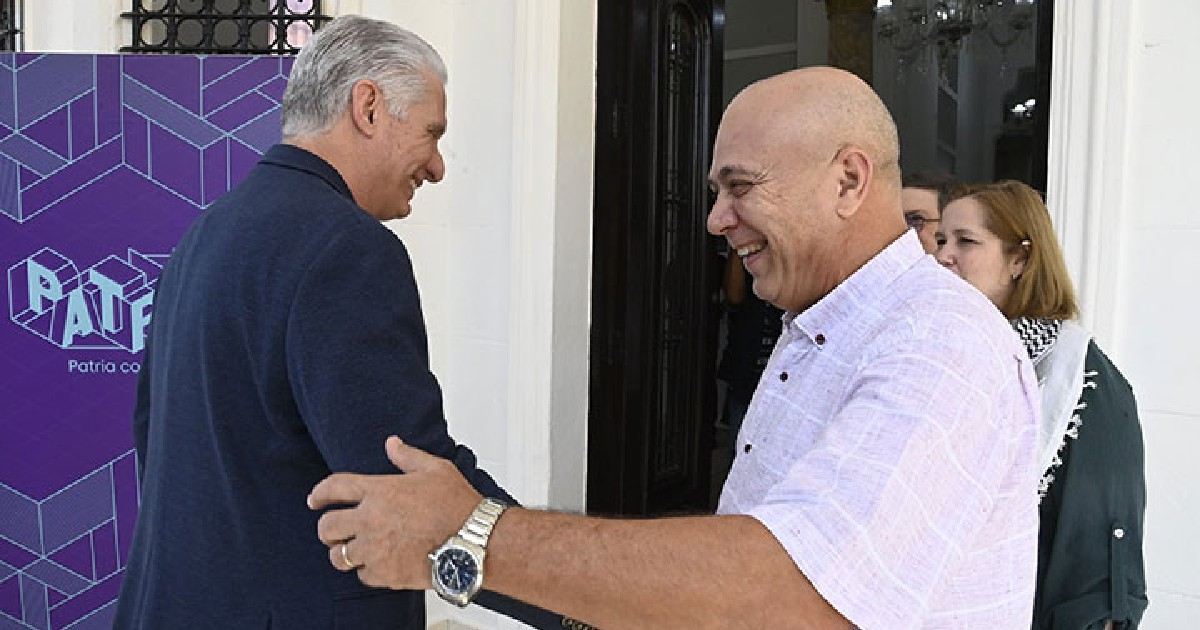
The Cuban regime inaugurated this weekend in El Vedado, Havana, the permanent headquarters of the International Patria Colloquium, a restored building that will serve as the headquarters for one of the government's main propaganda events, just as Cuba is facing the worst energy and economic crisis in its recent history.
The leader Miguel Díaz-Canel presided over the closing ceremony of the fifth edition of the event, held from April 16 to 18 at the Cultural Station of Línea and 18, in the Plaza de la Revolución municipality, which brought together around 150 international participants from 23 countries. Also in attendance were Roberto Morales Ojeda, Secretary of Organization of the Central Committee of the Communist Party of Cuba, and Bruno Rodríguez Parrilla, Minister of Foreign Affairs of the dictatorship.
"Now this is everyone's house and it must serve as the foundation for the coordination among all," declared Díaz-Canel during the event, in a speech that completely ignored the causes of the blackouts affecting 55% of the national territory just days before the event and the repression of citizens' demands for a more livable country.
Interestingly, the report from the Cuban News Agency does not specify the exact location of the property; however, it does clarify, citing journalist Rosa Miriam Elizalde, president of the organizing committee, that "the initiative to provide a permanent physical headquarters for the Patria Colloquium was a proposal from President Díaz-Canel." Elizalde also clarified that the space "will not have offices; it is a place to come, to be the home for everyone."
The report does not specify the dimensions of the property, the costs of restoration and furnishing, or the technological devices available. Even though it "will not have offices," its maintenance for operational purposes—so that it can serve as the venue for the colloquium year after year—represents yet another expense in advertising that the regime will presumably charge to public funds.
The colloquium, which is presented as a space for international debate, effectively served as a platform for legitimizing the Cuban government before foreign delegates. Among the most striking moments of the meeting was the display of a
During his tour of the event facilities, Díaz-Canel visited the Cubadebate booth, the main outlet of the IDEAS Multimedios group, and the official narrative into the international digital debate, in an exercise that critics described as media indoctrination.
The official speech at the colloquium emphasized, as in previous years, the distinction between a resilient real Cuba and a virtual Cuba of hate, a recurring narrative by the government to discredit the criticisms circulating abroad and on social media, while the population faces shortages of food, medicine, and electricity.
In the supposedly "revolutionary" press that convenes in Patria, the narrative presented is one that flatters the ears of the government, rather than the reality in which millions suffer unable to protest for fear of imprisonment.
This is not the first time that the leader has resorted to this type of rhetorical strategy. In previous instances, he downplayed internal protests by comparing them to those in other countries, in an attempt to relativize public discontent and divert attention from the underlying causes of the crisis.
The context in which this headquarters is inaugurated is particularly revealing. Cuba ranks 165th out of 180 countries in the World Press Freedom Index, according to Reporters Without Borders, highlighting the gap between the discourse of openness to debate promoted by the colloquium and the reality of independent journalism in the island nation.
Filed under: