
Related videos:
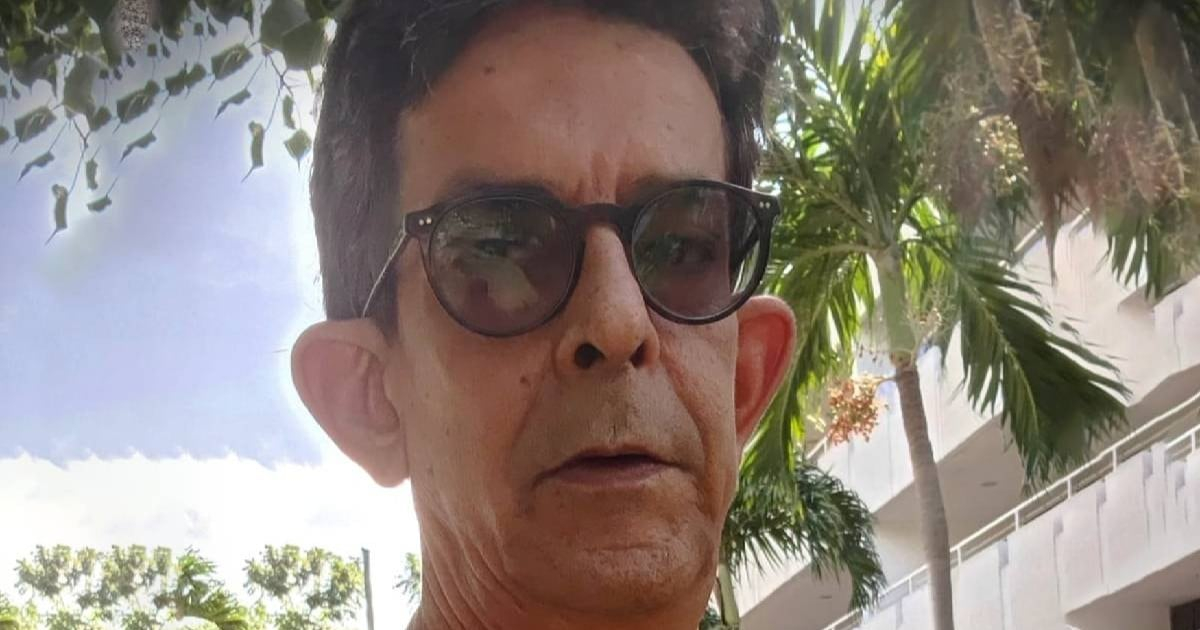
The Cuban comedian Ulises Toirac published a direct complaint on Facebook this Monday, detailing physical surveillance, photographic tracking, and the deployment of anonymous accounts on social media to attack him.
The message, addressed in the second person to "the companion who is attending to me" —an explicit reference to his State Security agent—, arrives one day after Toirac was banned once again from performing at a humor gathering at the Café Teatro Bertolt Brecht, in Vedado, Havana, an institution under the National Council of Scenic Arts and the Ministry of Culture.
"To the colleague who assists me: it seems to me that something is missing, that the shortages do not cease in material things," he opens his complaint before precisely enumerating the forms of harassment he reports.
Toirac指出,在社交媒体上,有人称他为“批评者”,这些人除了是“无知、粗鲁和粗野”之外,所有人都是限制账户,没有可见身份。
"That they are unanimously (as all votes here are) like this is more a sign of cowardice than of something I was taught since I was little: you confront things head-on," he wrote.
He also reports that people are sent to photograph him while he walks down the street and in front of his house.
With his characteristic irony, he offers to send the images himself: "You could ask me without spending a single penny of the budget that drains the economy, and I’ll send them to you via email. Not just from outside, but I’ll take photos of the rooms, the kitchen, and the bathroom (even without flushing the toilet if you're interested)."
The ban on performing live, Toirac points out, is not just an artistic restriction: it prevents him from "earning a living", directly impacting his economic livelihood.
In light of the quality of those who supervise him, he requests that "another staff be sent to carry out the tasks, as they did not pass the schools. Not even the general education ones."
The publication ends with a question that summarizes its complaint: "It seems to me that something is missing. And I no longer know if it is brains, guts, or the loyalty to the dispossessed that you proclaim so much and that seem to not exist for you. Or perhaps all three?"
A pattern of reprisals that repeats itself
The immediate background is the veto from last Sunday at the Café Teatro Bertolt Brecht, which Toirac described as part of a "list" that is "getting darker."
It's not the first time: in April 2024 he had already been prevented from performing in that same venue.
In July 2025, he achieved a reunion with the audience live, but the restrictions remained.
Similarly, in September of that year, he faced a pro-government troll campaign for having been treated in a state hospital.
The week prior to this publication was particularly active in criticisms of the regime. Last Wednesday, Toirac criticized on Facebook the official event of Díaz-Canel at 23 and 12 for the 65th anniversary of the proclamation of the socialist nature of the Revolution, calling it a "waste of resources" amidst blackouts of up to 1,872 megawatts in deficit.
This Monday, he also made light of the temporary improvement in electricity supply in Havana during the V Colloquium Patria, denouncing a deliberate manipulation.
The case of Toirac is not an isolated one. The First Comprehensive Report on Digital Surveillance in Cuba, published by Prisoners Defenders in January 2026 and based on 200 testimonies, reveals that 98.5% of the declarants faced reprisals for their activity on networks such as Facebook and WhatsApp, and that 88% were reprimanded directly for digital posts during summons and interrogations.
The Cuban Institute for Freedom of Expression and the Press reported 114 attacks on freedom of expression just in January 2026, a 67.6% increase compared to January 2025, placing Toirac's complaint within a rising trend of repression.
Filed under: