
Related videos:
The newspaper Granma celebrated on its X account the national distribution of derivatives from Russian crude, announcing "immediate benefits" for electricity generation, transport, health, and education, but the reaction of Cubans on social media was a mix of irony, skepticism, and frustration.
The official tweet described how diesel and fuel oil will allow the operation of distributed engine plants across the country, reducing service disruptions, and highlighted that liquefied gas would reach hospitals, schools, and detention centers.
The most emphatic response came from a user who captured the sentiment of many Cubans with a single question: "Raw? Are we cooking it to eat?"
Another internet user was more direct: "Where is the gasoline? Wait times of five or six months to get 20 liters, the gas attendants are millionaires, the organizers are multimillionaires, on the street it's 7,000 CUP per liter. They have a mafia to exploit the people."
One user pointed out that the fuel goes "mainly to the service stations of MININT for the Ladas, Gelis, and Suzukis of the henchmen," while another questioned the nature of the donation: "Russia sells on credit three or four times the normal price."
The backdrop of the announcement highlights the gap between official rhetoric and everyday reality.
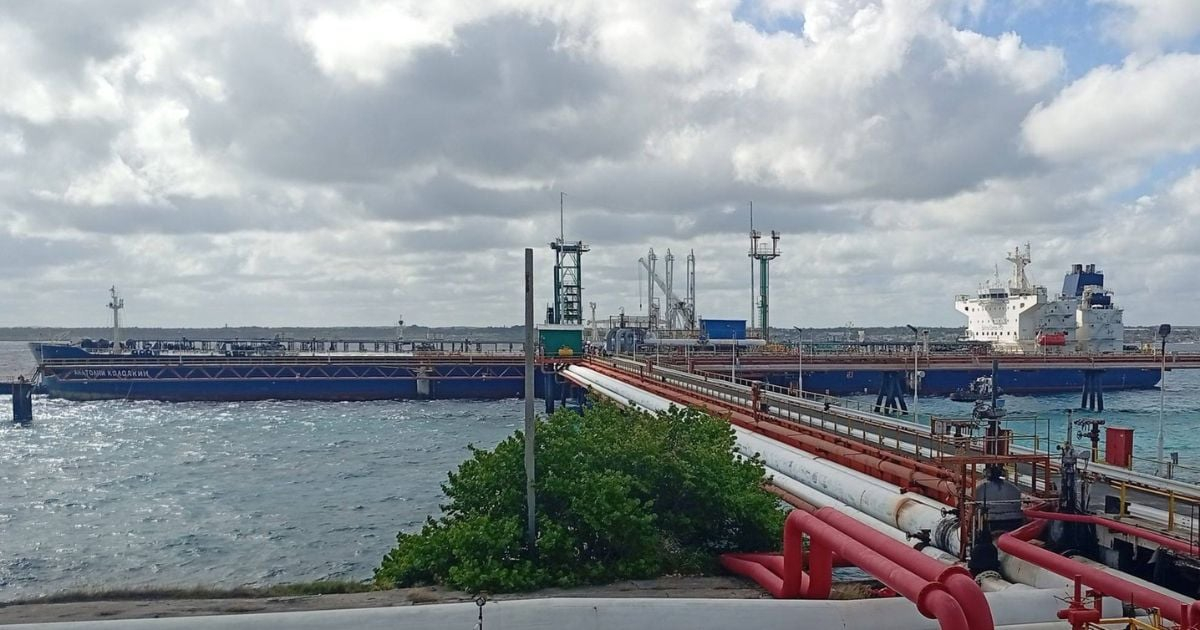
The Russian tanker Anatoly Kolodkin, from the state shipping company Sovcomflot,
The Camilo Cienfuegos Refinery, which had been shut down for four months due to a lack of supplies, processed the shipment in 12 to 15 days, and the national distribution began on April 19 using trucks, railways, and ships to all provinces, including the eastern region and the Isle of Youth.
However, that donation covers barely one third of the country's monthly demand, which requires between 90,000 and 110,000 barrels daily and produces only about 40,000.
Meanwhile, in the black market, gasoline is sold for between 4,000 and 7,000 CUP per liter —compared to an average salary of about 4,000 to 5,000 CUP monthly—, and Cubans report waiting five or six months at gas stations to access just 20 liters.
Cuba has experienced seven total collapses of the National Electric System in the last 18 months, and the electrical shortfall during peak nighttime hours reached 1,848 MW last Friday, leaving over 60% of the national territory without power.
A second Russian tanker, the Universal, carrying about 251,000 barrels of diesel is heading towards the Caribbean, with an estimated arrival on April 29, as announced by the Russian Minister of Energy, Serguéi Tsiviliov, who promised: "We will not leave the Cubans in trouble."
Filed under: