
Related videos:
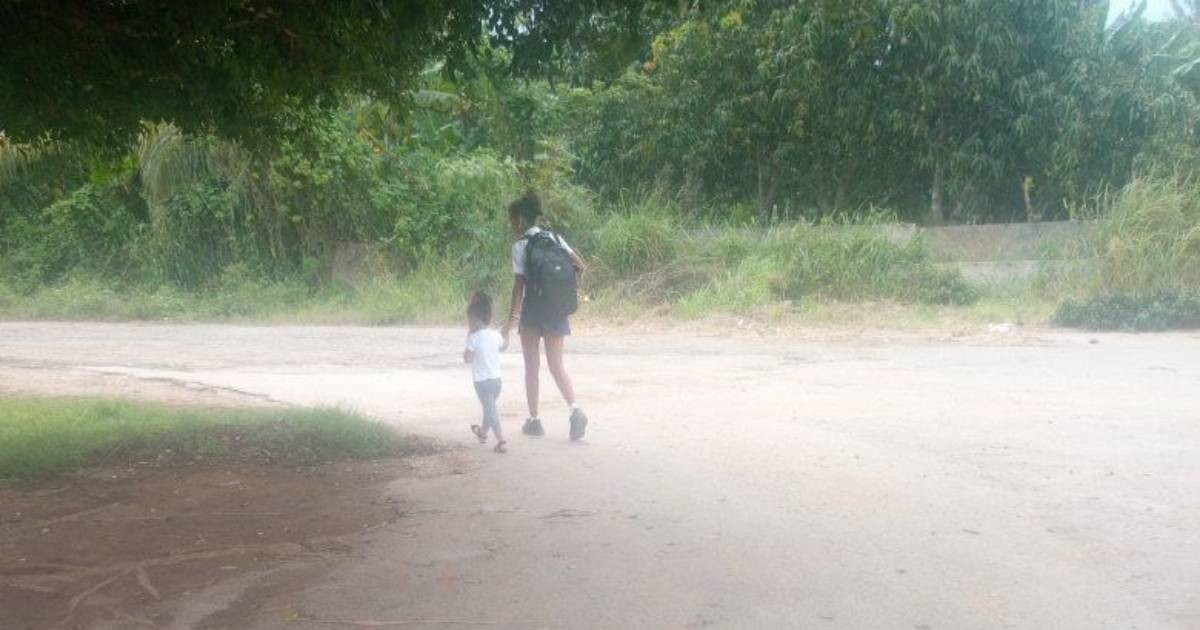
Two girls, one just five years old and the other twelve, spent hours under the sun at a bus stop on the outskirts of Havana, waiting for a ride that never arrived. The scene, described by a Cuban identifying himself as Fugitivo Kings on social media, reveals a harsh reality affecting many Cuban families: the precariousness of the transportation system and its direct consequences on the most vulnerable.
The testimony describes how the man, returning from the capital, stopped in the Valle Grande area after noticing the evident fatigue of the young girls. When he asked them where they were headed, they explained that they were going "a little beyond the UCI." They had been waiting at the bus stop since noon. It was already three in the afternoon.
She decided to take them in her vehicle. During the journey, the oldest told her that she was coming from school and that her sister was leaving a preschool. It was not an isolated situation. As she explained, many times they have to walk the same route due to the lack of transportation. This responsibility has, in practice, fallen on the oldest girl while their mother works.
The account aligns with an image that is seen in various parts of the country, where children walk long distances along dangerous roads to attend classes or return home. In this case, the driver claimed to have seen several more minors traveling on the same route.
The situation raises unavoidable questions about the real conditions of daily life in Cuba, especially for families with fewer resources. The mandatory school attendance, required by the authorities, contrasts sharply with the lack of basic guarantees such as safe transportation for students.
The same witness reported that shortly after, he came across a police checkpoint with several patrols stopping vehicles in the area. An image that, in his view, reflects priorities that have little to do with child protection.
Although no frontal images of the minors were released due to them being children, the testimony has sparked outrage on social media, where many Cubans identify with a reality they see as increasingly common.
Stories like this not only highlight material shortages. They also reveal the burden that the crisis has placed on the shoulders of the youngest, who are forced to take on risks and responsibilities that should not be a part of their childhood.
The situation of transportation on the island is critical. Recent data indicates that the state passenger transport nationwide has fallen by 93%, while buses are abandoned, rusting, and dismantled due to lack of parts in various parts of the country.
In some provinces, the situation is even more extreme. In Ciego de Ávila, for example, only two out of 135 bus routes are operational. The fuel shortage is paralyzing civil transportation, although, as many Cubans point out, there is fuel for repression, but not for ambulances.
The impact on Cuban children goes beyond the hours lost at a bus stop. International organizations have warned that , a figure that illustrates the depth of the crisis the island is experiencing.
Filed under: