
Related videos:
The possibility of the United States taking military action against Cuba has shifted from a distant idea to an urgent topic of debate in Washington. Amid this tension, Democratic senators are pushing an initiative to rein in President Donald Trump before he takes further action.
According to information from Reuters, the Senate will vote in the coming days on a resolution aimed at preventing Trump from launching any military operation against Cuba without Congressional authorization.
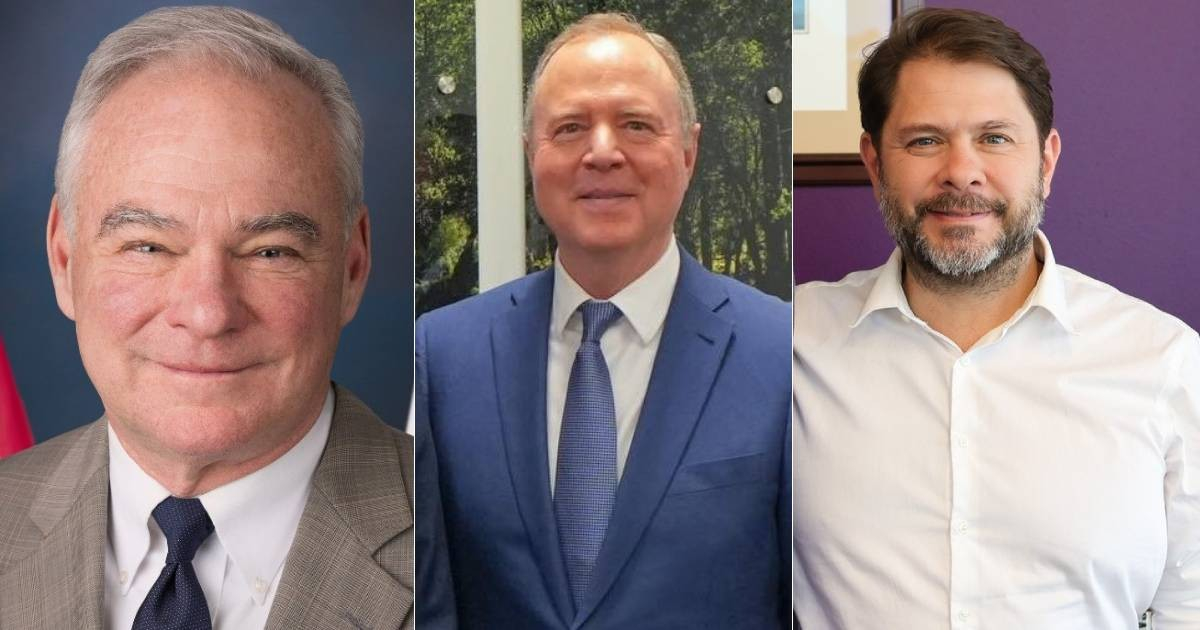
The proposal, led by Senators Tim Kaine, Adam Schiff, and Cuban-American Ruben Gallego, emerges as a response to the repeated statements from the president suggesting that the island could be his next target.
“The sound of sabers from the president towards Cuba makes it clear where he is now directing his focus,” Schiff warned while presenting the measure.
Although the exact date of the vote has not been announced, it is expected to take place before May 1st. However, the political landscape does not favor the Democrats, as the Republicans, who control both chambers, have blocked similar attempts in the past and have shown no signs of changing their stance.
Concerns do not arise in a vacuum. In recent months, Trump has shown a willingness to act without the approval of Congress. Under his administration, U.S. forces have carried out military operations in Venezuela— including the capture of Nicolás Maduro— and have engaged in hostilities against Iran, all without a formal declaration of war.
In that context, a phrase from the president himself has raised alarms: “Cuba is next.”
Although he has not specified what type of action he envisions, Trump has insisted that the Cuban government is on the brink of collapse, reinforcing a narrative that combines political, economic, and now also military pressure.
Since his return to power, the policy towards Havana has noticeably hardened. The White House has implemented sanctions aimed at energetically isolating the island, pressuring third countries not to supply it with fuel, which has exacerbated the internal crisis characterized by blackouts, shortages, and declining living conditions.
Trump himself has claimed that Cuba "will fall quite soon" and has even suggested that the United States could play a direct role in that outcome. In recent statements, he mentioned the possibility of doing "something very soon" with the island, without providing specific details.
At the same time, he has kept the door open for negotiations, urging the Cuban government to "reach an agreement," while describing the country's situation as a humanitarian crisis.
A key role in this strategy is played by Secretary of State Marco Rubio, one of the most influential voices advocating a hardline approach towards Cuba. Rubio has openly defended the need for political change on the island, going so far as to say that Cuba needs "new people in charge."
His stance has been consistent: maximum pressure, sustained sanctions, and strict conditions for any dialogue. Under his influence, U.S. foreign policy towards Cuba has aligned with a vision aimed at forcing a transformation of the system.
All of this is happening while the population in Cuba faces one of the worst economic crises in decades, with food shortages, prolonged blackouts, and an unprecedented wave of migration. For many Cubans, any military escalation is not an abstract issue, but a direct threat to their already fragile stability.
The resolution currently being debated in the Senate not only seeks to limit the president's power but also aims to prevent a new conflict from opening another chapter of uncertainty for an island that has been on the brink of collapse for years.
The outcome of this vote could mark a turning point: to contain Trump or to leave the door open to a scenario that, for Cubans, would be as unpredictable as it is devastating.
Filed under: