
Related videos:
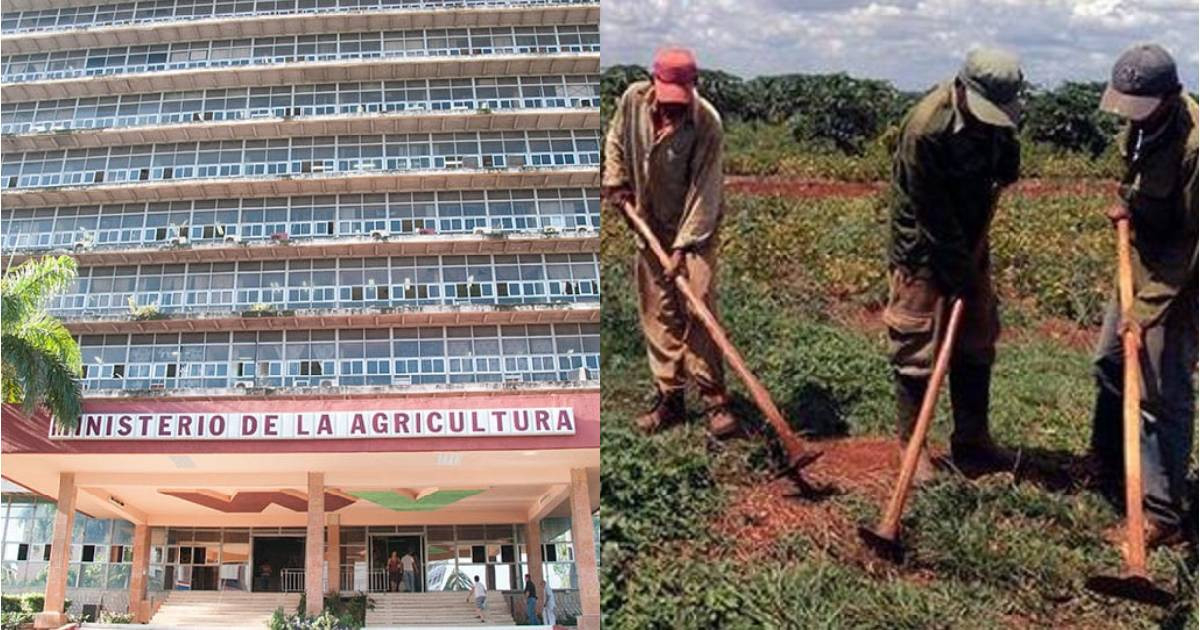
The private company Havana Agro SURL announced this Thursday that it will temporarily limit its operations in Cuba, after reporting repeated obstacles from the Agricultural Engineering Institute, an entity belonging to the Ministry of Agriculture (Minag), which it accuses of preventing producers from accessing agricultural equipment.
In a statement shared on social media, the company claimed that the management of the institute has created "repeated and intentional obstacles," interpreting legal norms "for their convenience" and complicating the necessary validation processes to introduce new machinery into the country.
According to the company, these obstacles prevent Cuban farmers from more easily accessing top-tier equipment at prices in national currency and, in some cases, with payment options through banking institutions.
As a result of that situation, Havana Agro SURL announced that it will limit itself to importing, assembling, and marketing only agricultural equipment that is already validated in the country or is currently in the validation process.
The measure, described as exceptional, will remain in place until conditions exist for pending processes to be handled in a “suitable, transparent, and productive” work environment, the company stated.
The company also assured that it has attempted to establish cooperation with the institute through joint work proposals that included economic benefits for the employees of that state entity.
However, he claims that these proposals have been systematically rejected or ignored by the organization's management, which has deteriorated the working atmosphere between both parties.
In its statement, the company asserted that the attitude of certain public officials not only impacts the relationship between the state and private sectors, but also harms the national economy, productive systems, and farmers in the country, especially amid the economic crisis that Cuba is experiencing.
Despite the conflict, Habana Agro SURL stated that it will continue to promote partnerships between state and private actors and defended the role of the private sector within the Cuban economic system.
The company emphasized that this sector "represents an economic player with its rightful place in the country's economic, legal, and administrative framework."
The announcement prompted numerous reactions on social media. In the comments on the post, several users noted that bureaucratic hurdles and state regulations have repeatedly hindered initiatives aimed at improving agricultural production, while others criticized what they see as an "internal blockade" that makes it difficult for those who work the land to access technology and financing.
Cuban countryside: between new norms and old results
On April 2nd Decree-Law 114 came into effect, a regulation introduced as a step toward enhancing cooperation between state-owned enterprises and non-state economic actors.
The Prime Minister Manuel Marrero Cruz stated that the provision would allow for the creation of new business models and "stimulate the economy" through partnerships between public entities and Mipymes or cooperatives.
The decree, approved by the Council of State in December 2025 and published in March 2026, establishes four forms of partnership between state and private enterprises, including the creation of joint ventures, state participation in existing private companies, or economic association contracts without the need to create a new legal entity.
However, all these operations require explicit authorization from the Ministry of Economy and Planning, which keeps state control as the central axis of the system.
Various economists received the measure with skepticism. The analyst Elías Amor warned that, as long as the general legal framework of business activity in Cuba is not modified, the private sector will remain subordinate to the State.
In a similar vein, the economist Ricardo Torres criticized the level of centralization and bureaucracy of the new scheme, while Daniel Torralbas suggested that the regulation might be more about bolstering state-owned enterprises than about a long-term development strategy.
Discussions on new regulations are also extending to the agricultural sector. Members of the National Assembly recently analyzed a draft law on Property, Possession, and Use of Land, presented as a tool to reorganize land ownership and exploitation in accordance with food sovereignty.
However, official reports on the debate focused on regulatory adjustments and legal principles without providing specific figures that would allow an assessment of whether these reforms have resulted in a real increase in food production.
These legal initiatives come amid a deep decline in the agricultural sector. The government itself has acknowledged significant drops in production: root vegetables decreased by 44%, eggs by 43%, and milk by 37.6%, according to official data released in 2025.
At the same time, the state procurement system, historically responsible for agricultural marketing, has accumulated millions in debt with producers, which has limited farmers' ability to purchase supplies, pay laborers, or sustain their harvests.
In this context, the government recently announced the formal end of the Acopio monopoly through Decree 143, which authorizes non-state small and medium enterprises, cooperatives, and other actors to participate in agricultural marketing.
However, the regulation maintains extensive mechanisms for state control over prices, product distribution, and production balances, which demonstrates that, despite announcements of opening up, the state continues to dictate the functioning of the agricultural sector.
At the same time, the authorities have proposed new strategies to attract investments to the agricultural sector, including the possibility of granting land in usufruct to Cubans living abroad and allowing them to participate as partners in productive projects within the island.
However, these proposals have also raised concerns among potential investors and members of the diaspora, due to the history of abrupt regulatory changes, confiscations, and closures of private businesses in the country.
Filed under: