
Related videos:
The announcement of the telenovela “Mujeres de café,” produced by Cubavisión, sparked a wave of mockery on social media, where many Cubans ironically pointed out the contradiction of producing a story about coffee in a country where coffee has virtually disappeared.
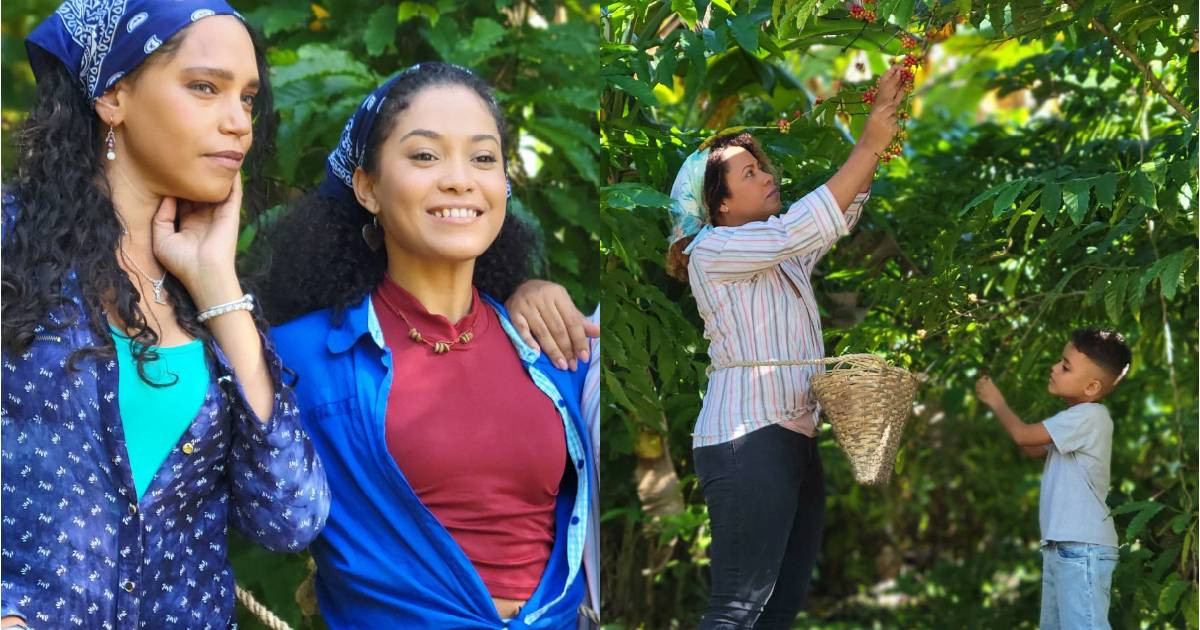
The state channel published this Friday on its Facebook page details of the production being filmed in the municipality of Bahía Honda, in Artemisa, in the foothills of the Sierra del Rosario, under the general direction of Ernesto Fiallo and co-direction of Rafael Noguera.
The telenovela will have 63 episodes, each lasting 45 minutes, and is based on the eponymous novel by Olga Montes Barrios, awarded the Fundación de la Ciudad de Matanzas Prize in 2023.
The plot follows the lives of four sisters in the fictional town of Mango Bonito and addresses themes of female empowerment, sexual diversity, and new masculinities, including the character of Alexa, a transgender woman portrayed by Yei Zubiaur.
However, what Cubavisión presented as a contemporary narrative endeavor was received by many users as an unintentional joke.
The comments on the official post quickly filled with sarcasm about the absence of the product that names the story.
"Jjj women of coffee, a good name for a novel on an island that has the least coffee jjjj," wrote Damaysy Salmeron.
Another user, Jorge Yanes, referred to the famous Colombian soap opera Café con aroma de mujer and questioned where the pea would come from “to achieve the aroma of the disappeared.”
Carlos Manuel Rodríguez Rodríguez joked about the price of the product: “I can’t wait for that soap opera to start. Let’s see if the price of coffee goes down… it’s already at 2,500 pesos.”
Dacier Otero summed up the popular sentiment with a phrase that was echoed in several comments: “Imported coffee women.”
The jokes reflect a productive crisis that has been dragging on for years. In the first half of 2025, Cuba only produced 23.7% of the national coffee plan.
In provinces traditionally known for coffee cultivation, such as Santiago de Cuba, compliance barely reached 65% of the target in 2025.
The decline of the sector has been attributed to the mass emigration of young people from the countryside, the low prices paid to producers, and the state's unpaid debts, factors that have drastically reduced production.
Meanwhile, coffee in the informal market exceeds 2,500 pesos per pound, an amount beyond the reach of most state salaries.
Even the coffee released in January 2026 in Las Tunas, sold at 300 pesos for 125 grams under the control of the ration book, sparked outrage among consumers.
The contrast becomes more pronounced when observing the export policy. Guantánamo closed the first quarter of 2026 with 370 tons of coffee exported, valued at over 72 million pesos, while the product continues to be absent from the tables of a large portion of the population.
In November 2025, the Cuban-Swiss joint venture Nescor introduced two new gourmet coffee brands —Don Robusto and Raíces—, greeted with the same indignation that the soap opera currently evokes.
Filed under: