
Related videos:
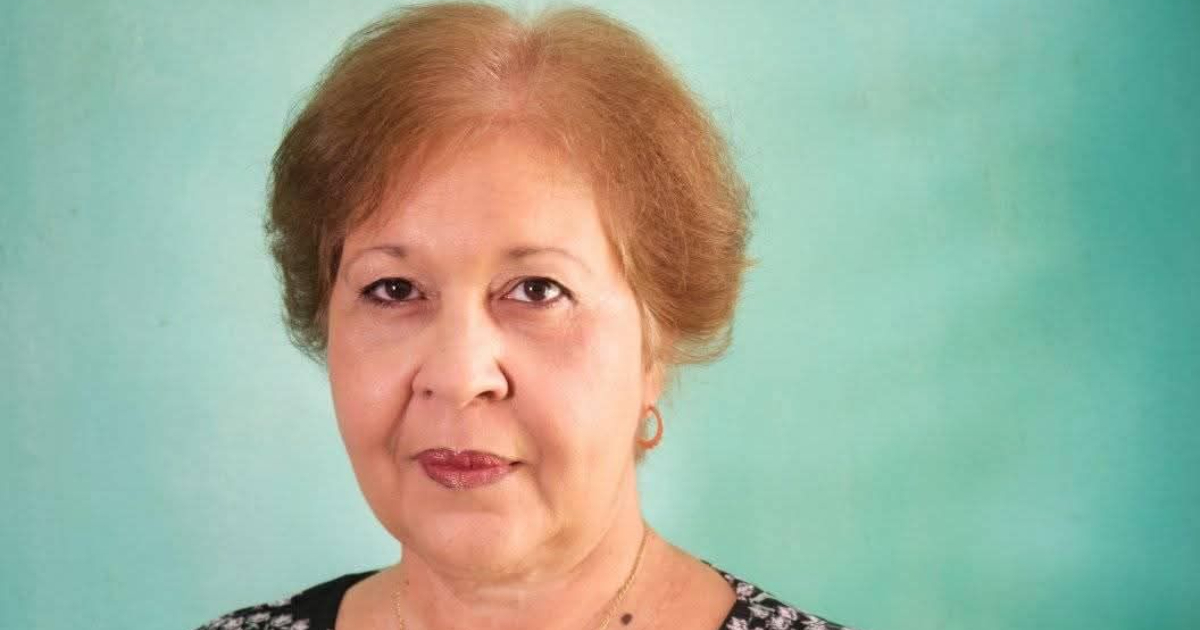
The historian and university professor Alina Bárbara López Hernández published an analysis on Facebook this Sunday in which she defends the legitimacy of the survey launched by a coalition of over 20 alternative media outlets, content creators, and independent Cuban activists, and she responds forcefully to the regime's attacks against this initiative.
The survey "Cuba: Political and Social Perspectives," driven by media outlets such as El Toque, Árbol Invertido, 14yMedio, Alas Tensas, Rialta, and Café Fuerte, was blocked by the Cuban regime on the same day it was launched. Despite this maneuver, as of this Sunday at 4:00 p.m., more than 22,400 Cubans have responded to it, with 58 percent participating from within the country, and many using virtual private networks.
Their results are devastating for the government: 94% express a strong dissatisfaction with the current system on the Island, and 82.3% identify "the lack of civil and political freedoms" as the main problem in Cuba today.
For López, the regime's hostile reaction confirms his main thesis: "For those who doubt that Cuban totalitarianism is in bankruptcy, this is a new and clear example of the breakdown of the monopoly on communications and public opinion, which has been the state's heritage for decades."
The Matanzas professor contextualizes her argument by emphasizing that in Cuba, this democratic instrument was hijacked by the single party after 1959: "The study of political opinions has been the exclusive domain of the Offices of Public Opinion, attached to the provincial directorates of the PCC. The Party is both judge and participant in the process, which undermines the reliability of the results, which are generally also not made public."
The complaint goes further: the methods used by those offices are not based on scientific questionnaires but rather on informants who gather comments at bus stops or while waiting in line. "Cuban social scientists cannot conduct opinion studies regarding the government and its policies. Even to carry out a large-scale survey related to leisure time usage or reading habits, we must be authorized beforehand," he warned.
As an illustration of this control, López recounts the case of a professor from the University of Matanzas whose doctoral thesis on popular participation was halted for three months by the National Assembly of People's Power, despite having gone through all the established institutional channels.
The academic calls for reversing that situation: "We need to restore the management of surveys that are conducted anonymously. We must have access to real opinions; shouting mobilizations, slogans, public signature collections, and collective statements are not enough." She adds: "All of this shows us that, in Cuba, understanding what people think about the government was the exclusive task and domain of it... until independent media and social networks began to function as a social barometer."
The researcher, a member of the Academy of History of Cuba, acknowledges that the survey is improvable —she suggests that some items should have been formulated as open questions— but defends its historical value. The numbers from the survey are overwhelming: 79.7% prefer transitioning to a model of liberal democracy and market economy, and among preferences regarding the political system, only 0.1% supports maintaining the current model. President Miguel Díaz-Canel receives an average rating of 1.1 out of five, which indicates that the overwhelming majority assigns him the minimum score.
The analysis comes just a week after López was detained for nearly ten hours at the National Revolutionary Police in Playa, Matanzas, accused of violating a precautionary measure of house arrest. The professor, expelled from the Union of Writers and Artists of Cuba for her civic stance, has been conducting peaceful protests on the 18th of each month in the Parque de la Libertad in Matanzas since March 2023.
"The true challenge is for them to be representative, as not everyone in Cuba has access to the internet," concludes López, highlighting the path that remains to better reflect the voice of the entire Cuban people through these instruments.
Filed under: