
Related videos:
The deployment of U.S. military assets in the vicinity of Cuba has entered a new phase with the activation of the exercise FLEX2026, an official operation currently underway that coincides with the sustained increase in drone flights, intelligence aircraft, and naval presence detected in recent weeks around the island.
The U.S. Naval Forces Southern Command and the Fourth Fleet confirmed the start of these maneuvers through their official channels, specifying that they take place over seven days —from April 24 to April 30— in Key West.
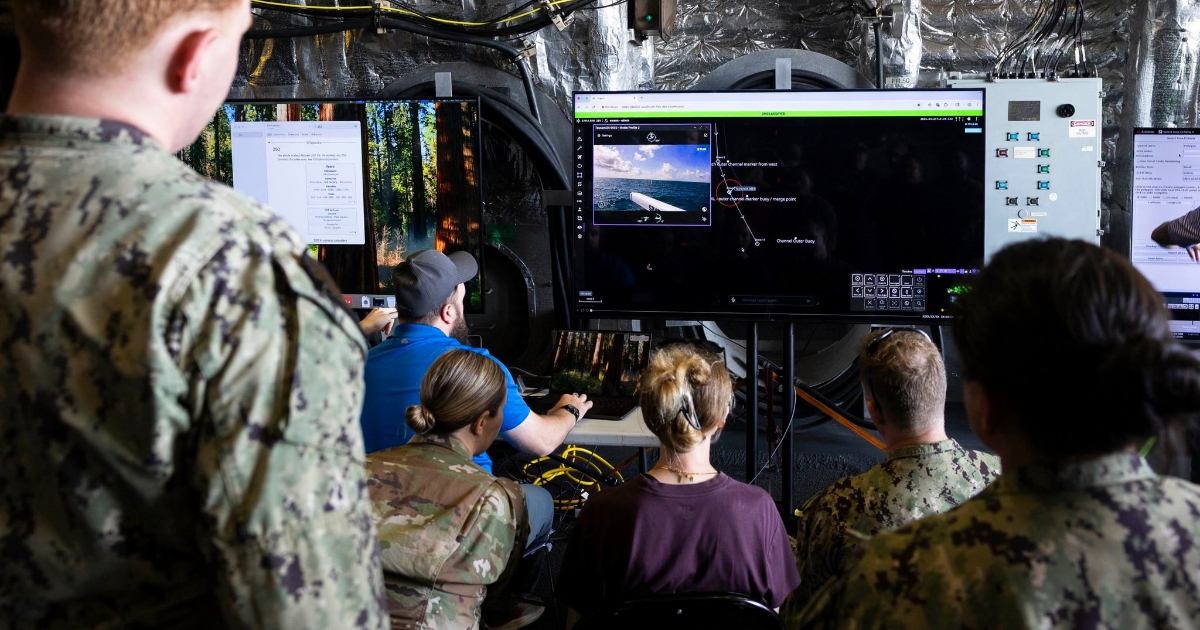
According to the institution, the exercise combines artificial intelligence, unmanned systems, and traditional naval forces in an integrated environment with the goal of accelerating the incorporation of real operational capabilities in complex maritime scenarios.
This is not just experimentation, they emphasized in their communication, highlighting that the tests aim to quickly bring these technologies into operational use to confront threats such as transnational organized crime and to enhance surveillance over vast areas of the Caribbean.
This announcement aligns with a series of military movements that CiberCuba has been documenting since mid-January. Notably, it includes high-altitude MQ-4C Triton drone flights, designed for long-endurance surveillance missions.
On April 16, one of these devices conducted an extensive mission around Cuba, including areas close to Havana and the southern coast, with reconnaissance patterns typical of intelligence operations.
Days later, another Triton was detected north of the island, in the Gulf of Mexico, confirming the continuation of these operations. These platforms are joined by specialized aircraft such as the RC-135 Rivet Joint, focused on electronic intelligence, and the P-8 Poseidon, used for maritime surveillance and anti-submarine warfare.
More recently, the presence of an E-2D Advanced Hawkeye has also been reported, an early warning aircraft capable of coordinating air and naval operations in real-time, as well as MH-60R Seahawk helicopters.
Together, these means reflect a multi-domain surveillance environment encompassing air, sea, and advanced digital capabilities.
The FLEX2026 exercise also incorporates unmanned surface vehicles (USVs) operated even by civilian contractors, highlighting the increasing integration between the military sector and the technology industry.
According to official information from the U.S. Navy, these maneuvers allow for the rehearsal of a “full chain of action,” which includes detection, tracking, and interception of targets, in this case, vessels associated with drug trafficking.
In naval terms, the presence of the littoral combat ship USS Wichita strengthens the maritime component of the deployment, consistent with previous movements of U.S. units in the Caribbean since late 2025.
Although Washington frames these operations as part of the fight against criminal networks, the context in which they unfold adds an evident political component. The deployment occurs after weeks of pressure from the United States on the Cuban regime and amid internal warnings from the Havana regime about potential confrontation scenarios.
In this scenario, the combination of active military exercises, advanced technology, and a sustained presence around the island points to a strategy of enhanced surveillance and operational readiness.
Beyond the official discourse, the message is clear: Cuba's geopolitical environment is being constantly monitored with increasingly sophisticated capabilities.
Filed under: