
Related videos:
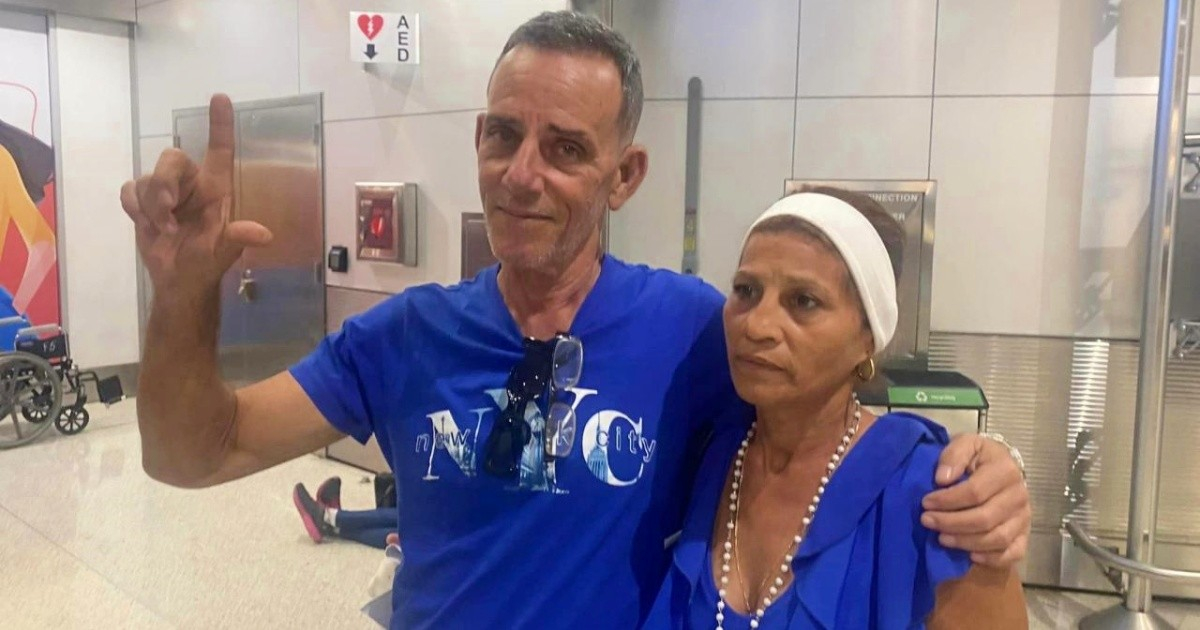
Eralidis Frómeta, wife of the independent journalist and former Cuban political prisoner Lázaro Yuri Valle Roca, posted on Facebook an anguished message denouncing that the couple is living in complete helplessness in the United States, without documents and without a work permit.
"We feel as if we are in Cuba, afraid of being undocumented. We can no longer endure this, not even having a work permit. What was the point of fighting so hard and risking our lives? My husband and I are completely helpless and without protection," Frómeta wrote.
The activist noted that many in Cuba followed their actions, but once they left the island, they ceased to be "productive" for those who had previously supported them: "What good does it do us to have left Cuba if we have no way to survive here due to a lack of documents?"
In another post, Frómeta was even more direct in denouncing institutional neglect: "I wonder where the human rights organizations are that do not provide us with safe protection in the USA."
He also claimed that the images of the repression they suffered "continue to circulate around the world," while they remain without legal protection, and expressed a phrase that encapsulates his desperation: "Thrown into oblivion. It is clear that we have stopped being money-making machines at the expense of our pain and suffering."
Valle Roca was detained on June 15, 2021 after filming and sharing a video in which activists threw pro-democracy leaflets from a rooftop in Havana, and was sentenced in August 2022 to five years in prison for "continued enemy propaganda."
He spent almost three years in the Combinado del Este, Cuba's maximum-security prison, where he suffered torture, beatings, and severe physical deterioration: he dropped from 80 to 53 kilograms, lost hearing and partial vision, and developed kidney stones and aortic sclerosis.
In June 2024, thanks to Frómeta's efforts with the U.S. embassy in Havana, Valle Roca was forcibly exiled to Miami, where he arrived emaciated and in a state of confusion.
The dramatic turn occurred with the Trump administration: in March 2025, the Department of Homeland Security notified the couple of the revocation of their humanitarian parole and ordered them to leave the U.S. before April 24 of that year, in accordance with Executive Order 14165, which eliminated the parole programs for Cubans, Haitians, Nicaraguans, and Venezuelans.
In response to that threat, the couple began the process of seeking political asylum and sought support from congress members, senators, Secretary of State Marco Rubio, and activist Rosa María Payá.
In May 2025, Human Rights Watch formally requested the U.S. government to protect 13 Cuban dissidents in a similar situation, including Valle Roca and Frómeta, due to the risk of deportation.
Almost a year after those efforts, Frómeta's publications reveal that the couple still has not resolved their immigration status, trapped in a legal limbo that turns their sacrifice into a bitter paradox: they fought against the Cuban dictatorship, paid the price with years of prison and torture, and today live in the U.S. with the same fear they felt on the island.
Frómeta summarized it bluntly in his statements to EFE last year: "If we are deported to the country where we have been persecuted for so many years, they will feel more justified in attacking us."
Filed under: