
Related videos:
The non-governmental organization Human Rights Watch (HRW) has issued an urgent appeal to the United States government to allow a group of 13 Cuban dissidents to apply for asylum, given the imminent risk of being deported to a country where they would face repression and systematic abuses.
The request from HRW comes after a letter sent by 14 exiled Cuban opponents addressed to U.S. officials and members of Congress, in which they express their fear of being forced to leave the country.
Most arrived in the U.S. fleeing the brutal repression enforced by the Havana regime against critical voices, especially following the historic protests of July 11, 2021.
El Funky, a symbol of protest art, among those affected
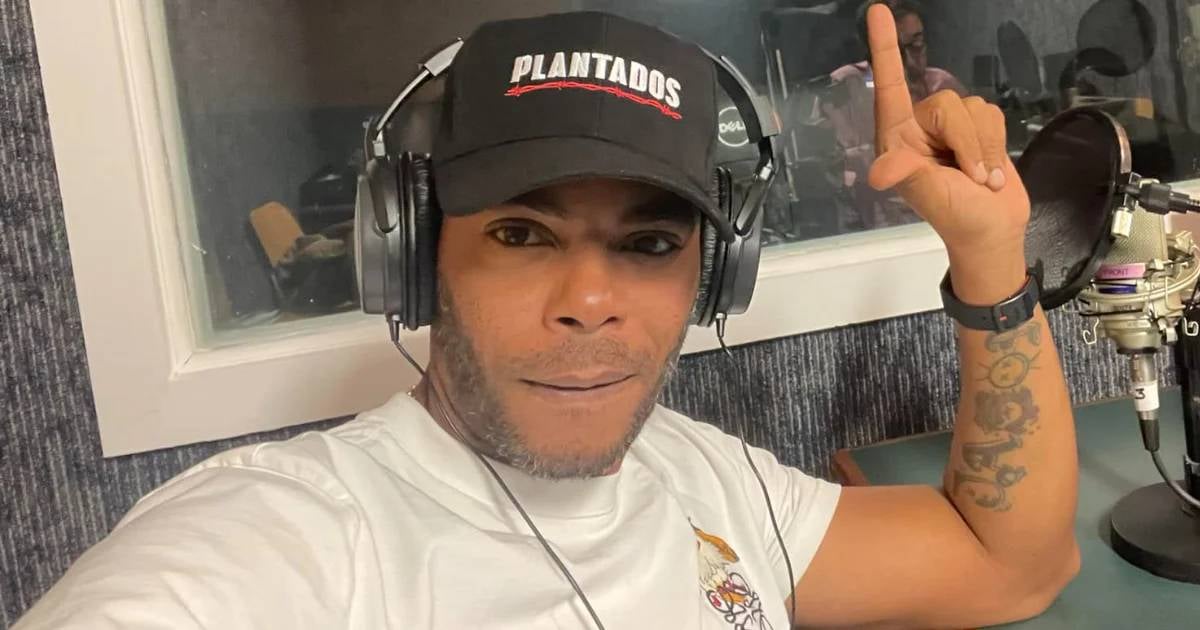
One of the signatories is Eliexer Márquez Duany, artistically known as El Funky, co-author of the song "Patria y Vida," which became an anthem for Cuban protesters and a direct challenge to the official slogan "Patria o Muerte."
Although El Funky managed to go into exile, his companions in the song, Luis Manuel Otero Alcántara and Maykel Castillo Pérez (Maykel Osorbo), remain imprisoned in Cuba under sentences of five and nine years respectively, handed down after tainted trials that are contrary to international human rights standards.
Two weeks ago, it was reported that the U.S. Citizenship and Immigration Services (USCIS) denied permanent residency to the rapper under the Cuban Adjustment Act, arguing that he had a criminal record in the island.
For HRW and human rights advocates, using the criminal records of the Castro regime to deny protection to political prisoners is a moral and legal aberration, given the lack of judicial independence and the use of law as a tool for repression in Cuba.
Today, El Funky has a deportation order against him.
Journalists and defenders are also in danger
Among the signatories are journalist Lázaro Yuri Valle Roca and activist Eralidis Frómeta, who received orders to leave the United States in just 26 days. Both were affected by the cancellation of the humanitarian parole program under the Trump administration, which provided immigration relief to nationals from Cuba, Venezuela, Nicaragua, and Haiti.
Valle Roca was imprisoned in Cuba in 2021 after filming and publishing a video with pro-democracy pamphlets. As he reported, he was a victim of beatings and solitary confinement, highlighting the high risk he would face if deported.
List of exiles at risk of deportation
Martí Noticias made public the list of the 13 Cuban exiles supported by HRW:
Eliexer Marquez Duany "El Funky", winner of two Latin Grammys for the song Patria y Vida and a member of the San Isidro Movement.
Daniela Patricia Ferrer Reyes, the seven-year-old daughter of José Daniel Ferrer García, leader of the Patriotic Union of Cuba, and singer Lietis Rachel Reyes Tur.
Oscar Antonio Casanella Saint-Blancard, a Cuban scientist and activist with an extensive background in humanitarian projects and civic actions, was a victim of systematic political repression between 2013 and 2021 and was one of the hunger strikers from San Isidro.
The marriage of independent activists and journalists Lázaro Yuri Valle Roca, also a political prisoner, and Eralidis Frémeta Polanco.
The marriage of political opponents and former political prisoners José Rolando Casares Soto and Yamilka Abascal Sánchez, who have a long history of defending human rights in Cuba.
Esteban Lázaro Rodríguez López, independent journalist, activist, and political prisoner from Cuba. He participated in the San Isidro Barracks event among other civic protests.
The veteran opposition figure and former political prisoner Julio César Góngora Millo.
Alexeys Blanco Díaz, a political activist with a long history of defending Human Rights in Cuba.
Anamely Ramos González, a Cuban academic and activist, member of the San Isidro Movement, is banned from entering Cuba.
Omara Isabel Ruiz Urquiola, academic, founder, and lead researcher of the Academic Freedom Observatory (OLA) and the Observatory of Cultural Rights (ODC).
Yaneris Redondo León, a demonstrator in the protests of July 11, 2021 in Cuba, has been sentenced to seven years of imprisonment.
Mariana de la Caridad Fernandez León, a protester in the demonstrations on July 11, 2021, in Cuba, has been sentenced to four years of house arrest.
A call for political coherence
Human Rights Watch reminds that the U.S. has a moral and legal obligation not to return individuals to countries where they may face persecution. “Returning to Cuba would be suicidal,” said El Funky. The organization urged the government to provide a fair pathway to asylum and protection.
The call is also directed to Secretary of State Marco Rubio, the son of Cuban immigrants, who —according to HRW— “should understand better than anyone what is at stake” for those fleeing authoritarian regimes.
Frequently asked questions about the asylum application of Cuban opponents in the U.S.
Why does Human Rights Watch seek asylum for Cuban dissidents in the U.S.?
Human Rights Watch (HRW) has requested that the U.S. government allow 13 Cuban dissidents to apply for asylum because they face the risk of being deported to Cuba, where they would suffer repression and systematic abuses. These dissidents escaped the brutal crackdown in Cuba, especially following the protests on July 11, 2021, and are seeking protection in the U.S. due to the use of the law as a tool of repression in Cuba.
Who is El Funky and why is he facing possible deportation?
Eliexer Márquez Duany, known as El Funky, is a Cuban rapper and co-author of the song "Patria y Vida," an anthem of dissent against the Cuban regime. He faces a possible deportation from the U.S. because his residency application was denied due to having a criminal record in Cuba. These records are viewed by human rights organizations as politically manufactured, as the Cuban regime uses them as a tool of repression against opponents.
What risks do Cuban opponents face if they are deported to Cuba?
Cuban opposition members face significant risks of political repression, persecution, and imprisonment if they are deported to Cuba. The conditions in Cuban prisons are harsh, and these opposition members have already been victims of arbitrary detentions, torture, and mistreatment. The human rights situation in Cuba has been described as "calamitous" by HRW, with reports of systematic violations.
How does U.S. immigration policy affect Cuban dissidents at risk of deportation?
The recent implementation of more restrictive immigration policies in the U.S., such as the revocation of humanitarian parole programs, has put many Cuban dissidents at risk. This has generated fear and concern among exiles, who now face possible deportation without guarantees of protection. Human rights organizations are urging U.S. authorities to reconsider these measures and provide protection to those fleeing authoritarian regimes.
Filed under: