
Related videos:
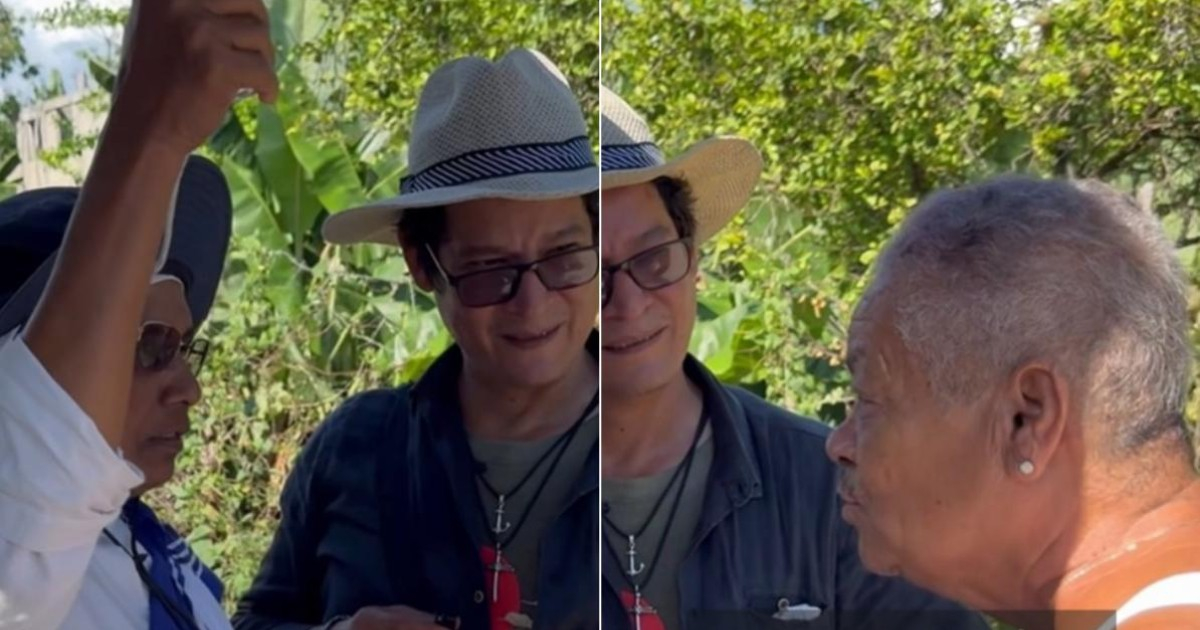
The Catholic priest Leandro NaunHung, pastor of the San José Obrero parish in Santiago de Cuba, publicly reported the theft of kitchen utensils from his community dining hall, which feeds children and vulnerable families in the area.
According to a resident involved in food preparation, the thieves jumped over the property fence and stole two basins, a large container for drinking water, and the pot used for cooking rice for the neighborhood children.
"I left it behind in the house but it had never been broken into before, because we thought it was well secured. But they jumped the fence...", the elderly woman explained to NaunHung in a video posted on Facebook.
Despite the seriousness of the situation, the priest chose to remain calm and maintain his sense of humor, although he did not hide his discomfort.
"Could it have been sabotage at your children's cafeteria?" to which the lady replied, "That's right, Father."
Despite everything, NaunHung committed to finding a solution: "We will get another pot. It's not easy."
The parish priest supports the solidarity initiatives of his parishioners, urging them not to succumb to passive resistance and emphasizing the importance of resilience and change as responses to adversity.
On his social media, he often shares videos of how the members of the Church, who are also very humble people, work on projects that assist children and vulnerable individuals in the Santiago fields.
NaunHung emphasizes resilience as the key to overcoming difficulties, distinguishing it from resistance, which he believes leads to burnout: "Resistance ultimately leads to an explosion... It's not about enduring, but about changing."
The theft of the cauldron used to cook the children of his community encapsulates, in a single incident, the state of social decay that 67 years of communist dictatorship have brought to Cuba: a priest who compensates with voluntary work for what the State does not guarantee, becoming a target of crime that grows unchecked while the regime looks the other way.
After Hurricane Melissa in November 2025, the priest shared a reflection in which he held structural poverty - and not the cyclone - responsible for thousands of families becoming homeless.
Last March, it documented the wood-burning stoves installed on building balconies in Santiago de Cuba due to the complete lack of electricity and domestic gas, in an image that encapsulated the severity of the energy crisis.
The robbery in your community is not an isolated incident. Santiago de Cuba is experiencing an unprecedented wave of crime, which includes the looting of a private daycare center on April 1st, and the assault on the Tropicana cabaret on March 24th, where a security guard was injured and the warehouses were emptied.
According to the Cuban Observatory of Citizen Audit, in 2025 there were 2,833 verified crimes recorded in Cuba, a 115% increase from 2024, with theft being the predominant crime: 1,536 cases.
Santiago de Cuba was the fourth most affected province in the country, with 323 recorded crimes. The police have displayed systematic inaction, with delays of up to 10 hours in responding to emergency calls, while prioritizing political repression over public safety.
Filed under: