
Related videos:
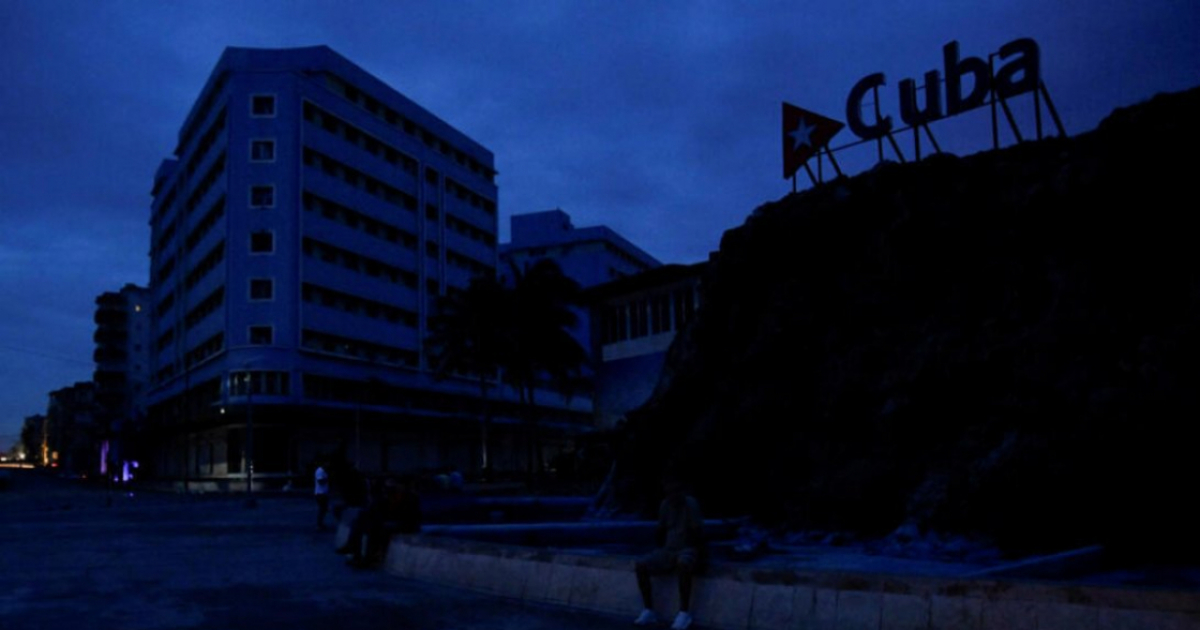
The National Electric System (SEN) of Cuba recorded an extremely severe energy crisis this Thursday: the highest impact on Wednesday reached 1,502 MW at 7:50 PM, according to the official informational note from the Electric Union, exceeding the planned output following the emergency shutdown of unit 2 at the Santa Cruz thermoelectric plant.
The service was interrupted for 24 hours on Wednesday, including the early morning, without any relief for the Cubans. At 6:00 AM on Thursday, the system's availability was only 1,480 MW against a demand of 2,460 MW, with 990 MW affected at that time.
The outlook for the night is even more bleak. During peak hours, a supply of 1,652 MW is expected against a maximum demand of 3,100 MW, resulting in a deficit of 1,448 MW and an estimated disruption of 1,478 MW during that time.
Among the units out of service due to breakdowns are unit 6 of the Máximo Gómez CTE, unit 2 of the Ernesto Guevara De La Serna CTE, unit 4 of the Carlos Manuel de Céspedes CTE, unit 2 of the Lidio Ramón Pérez CTE, and unit 5 of the Antonio Maceo CTE. Additionally, there are 393 MW out of service due to limitations in thermal generation, with three other units undergoing maintenance.
The only partial relief comes from the 54 photovoltaic solar parks, which produced 4,395 MWh with a maximum power of 641 MW during daylight hours, a figure insufficient to offset the structural nighttime deficit.
April has been a catastrophic month for the Cuban electrical system. The largest deficit of the month was recorded on April 1st with 1,945 MW, and on April 16th, 62% of the national territory was without power simultaneously, leaving more than 200,000 Cubans without access to drinking water.
Provinces such as Holguín, Granma, Santiago de Cuba, and Moa experienced power outages of up to 24 hours daily throughout the month, while Matanzas reported outages lasting up to 48 continuous hours in specific circuits.
The root of the collapse is the critical fuel shortage. Cuba needs between 90,000 and 110,000 barrels of oil daily but only produces about 40,000.
Even Díaz-Canel acknowledged that the country went four consecutive months without receiving fuel from abroad: "We went four months without receiving a drop of fuel. Four months, four months without receiving anything, working with our reserves."
The only shipment received was from the Russian tanker Anatoly Kolodkin, which delivered 730,000 barrels of Ural crude oil donated by Russia, docking in Matanzas on March 31.
The Minister of Energy Vicente de la O Levy warned on April 23 that Cuba only had fuel until the end of the month: "With just this ship, we have fuel until the end of this month. That means we have only a few days left."
A second Russian tanker, the Universal, carrying 251,000 barrels of diesel, was estimated to arrive on Wednesday, but changed course in the Atlantic and reduced speed, raising doubts about its arrival.
Meanwhile, in Mayarí, Holguín, more than 400 families have been without electricity for 29 days due to the theft of dielectric oil at a substation, an image that summarizes the dire state of Cuba's electrical infrastructure after 67 years of dictatorship.
Filed under: