
Related videos:
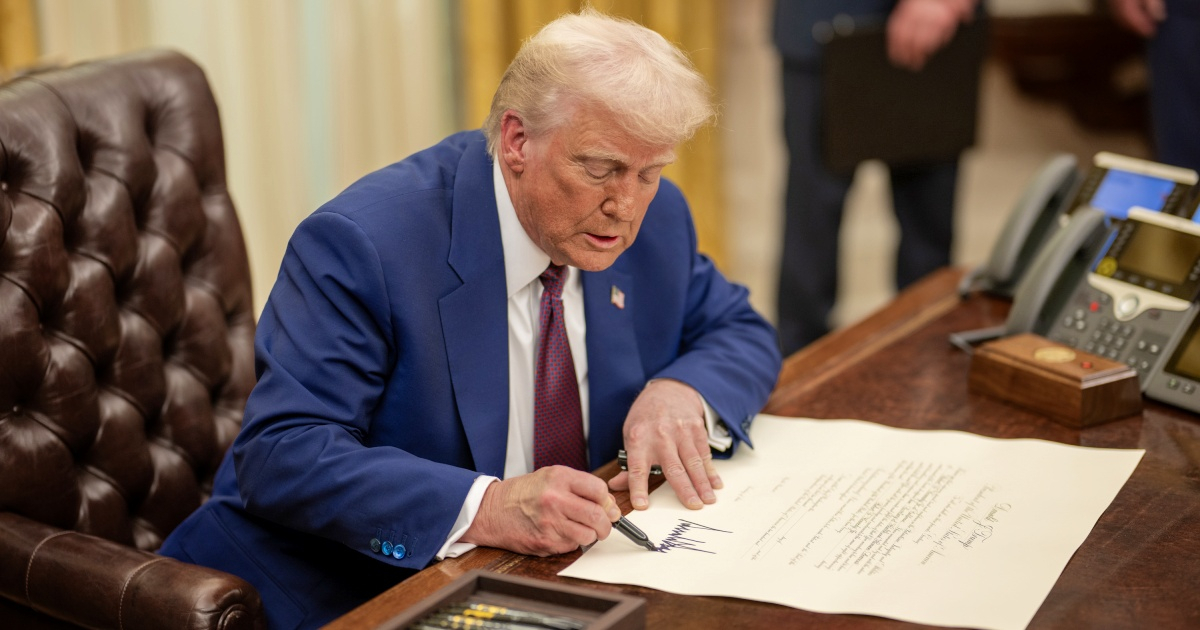
President Donald Trump signed this Thursday the law that ends the longest partial shutdown in the history of the United States Department of Homeland Security, after 75 days without regular funding for the agency.
The House of Representatives approved a few hours earlier, through a voice vote and without individual recording, the bill that the Senate had unanimously supported at the end of March, bringing to an end a political standoff that had partially paralyzed the DHS since February 14.
The law funds the operations of agencies such as the Federal Emergency Management Agency (FEMA), the Coast Guard, the Transportation Security Administration (TSA), and the Secret Service until September 30, the end of the fiscal year.
However, the regulation does not include new funds for the Immigration and Customs Enforcement (ICE) or for the Border Patrol, whose funding Republicans will seek to secure separately through the budget reconciliation process.
The legislative action took place against a critical deadline: the Secretary of DHS, Markwayne Mullin, had warned that if Congress did not act before Thursday, emergency funds would run out and thousands of workers would be left without their salaries.
The unlocking was made possible thanks to a strategic move by the Speaker of the House, Mike Johnson: on Wednesday, the House passed a budget resolution by a vote of 215-211 that paves the way for allocating up to 70 billion dollars to ICE and Border Patrol for approximately three years.
With that assurance in hand, Johnson —who had described the Senate bill as a "joke" in March— allowed the vote to proceed.
"I believe that yesterday's approval of our budget resolution was a very important step, and we must ensure without a doubt that those two fundamental agencies—the immigration control agency and the border agency—have full funding, and we Republicans must do it on our own," Johnson told reporters.
The shutdown had begun on February 14, when Democrats blocked funding for the DHS, demanding reforms to ICE tactics, including the mandatory use of body cameras for agents and limiting raids in sensitive locations such as schools and hospitals.
During the 75 days of closure, more than 1,100 TSA agents resigned and lines at airports reached wait times of up to four hours, compromising security in terminals across the country.
The closure also resulted in estimated economic losses of 2.5 billion dollars as of April 1, according to data from the legislative tracking dossier.
The Congress also approved on Thursday a 45-day extension of the foreign spying program known as Section 702 of the Foreign Intelligence Surveillance Act (FISA), which was set to expire that same day, before the legislators went on a one-week recess.
Trump has requested that the legislation to fund ICE and the Border Patrol is on his desk before June 1, a date that marks the next critical deadline for the immigration policy of his administration.
Filed under: