
Related videos:
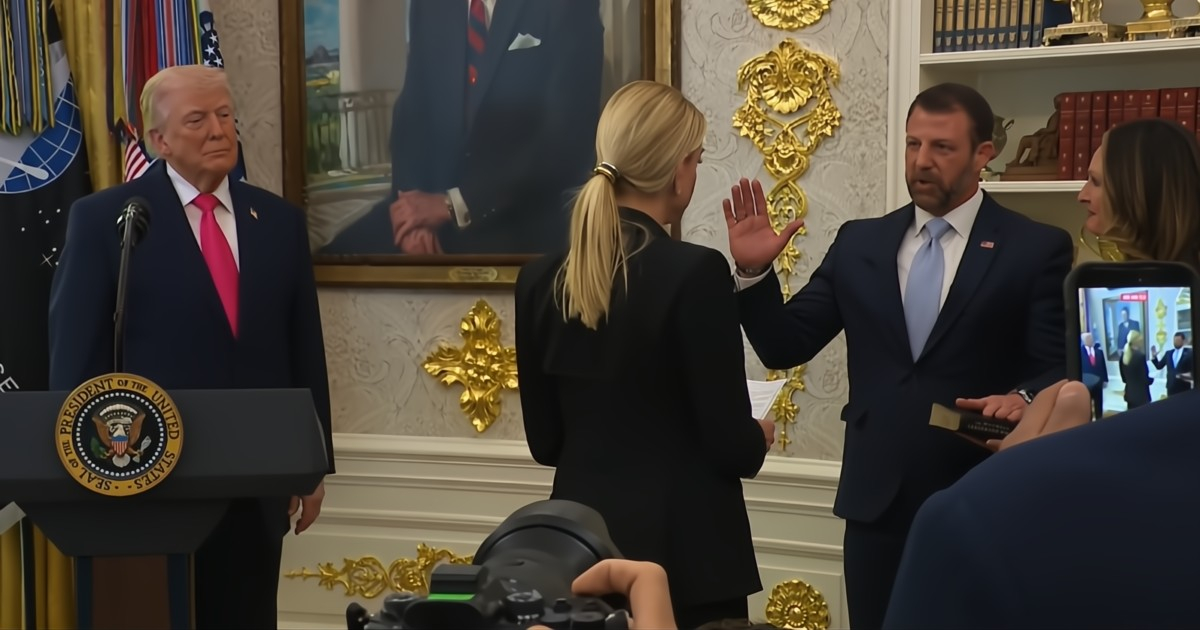
Former Republican Senator Markwayne Mullin was sworn in on Tuesday as the Secretary of Homeland Security of the United States, at a time marked by the internal crisis within the Department of Homeland Security (DHS) and increasing tensions surrounding immigration policy.
The agency EFE reported that Mullin was sworn in at the White House during a ceremony led by President Donald Trump, after being confirmed by the Senate the day before with 54 votes in favor and 45 against.
Its arrival comes in a particularly delicate context: the DHS has been without funding since February 14, which has caused staff shortages, long lines at airports, and thousands of federal employees working without pay for over a month.
“The job is to protect everyone equally,” said Mullin after assuming office, emphasizing that he will not make political distinctions in his management, according to EFE.
Crisis in airports and pressure on the immigration system
The operational deterioration of DHS is already having visible consequences. Absenteeism at the Transportation Security Administration (TSA) has exceeded 11% nationwide, with peaks of up to 40% in key airports, resulting in delays of several hours.
In response to this situation, the Trump administration ordered the deployment of Immigration and Customs Enforcement (ICE) agents to at least 14 airports to perform basic functions, a move that has been strongly criticized by civil organizations and political figures.
Although migration operations have not halted—thanks to previously approved funds—the closure has highlighted the fragility of the system and increased pressure on key agencies such as ICE and the Border Patrol.
A transition amidst controversies
Mullin replaces Kristi Noem, who wasa dismissed in early March after a tenure characterized by a harsh and controversial immigration policy, including mass raids in Minneapolis that resulted in the deaths of two American citizens.
Noem was later appointed as the special envoy for the “Shield of the Americas” initiative, focused on regional cooperation against drug trafficking and irregular migration.
The new secretary thus inherits a department battered by both budgetary crisis and political weariness.
A profile close to Trump and under scrutiny
A close ally of the president, Mullin leaves behind thirteen years in Congress, where he was regarded as a key negotiator within the Republican Party.
However, his confirmation was not without controversy. During his hearing, he faced criticism for his temperament and past statements, as well as scrutiny over his handling of recent incidents related to federal operations.
Nevertheless, some Democrats supported his appointment, arguing that he could play an independent role within the administration.
Mullin has promised to mark a change in tone compared to his predecessor and reduce the media exposure of the DHS. “My goal in six months is that we are not in the headline every day,” he stated during his confirmation hearing.
Uncertainty for thousands of workers... and migrants
While negotiations in Congress remain stalled, over 250,000 DHS employees continue to work without receiving a paycheck, adding a human dimension to the institutional crisis.
For thousands of migrants —including Cubans both inside and outside the United States— the change in leadership comes at a time of uncertainty, with immigration policies under review and a system facing unprecedented political and operational tensions.
The direction Mullin takes in the coming weeks could not only define the future of DHS but also have a direct impact on migrant communities that closely monitor every decision from both inside and outside the country.
Filed under: