
Related videos:
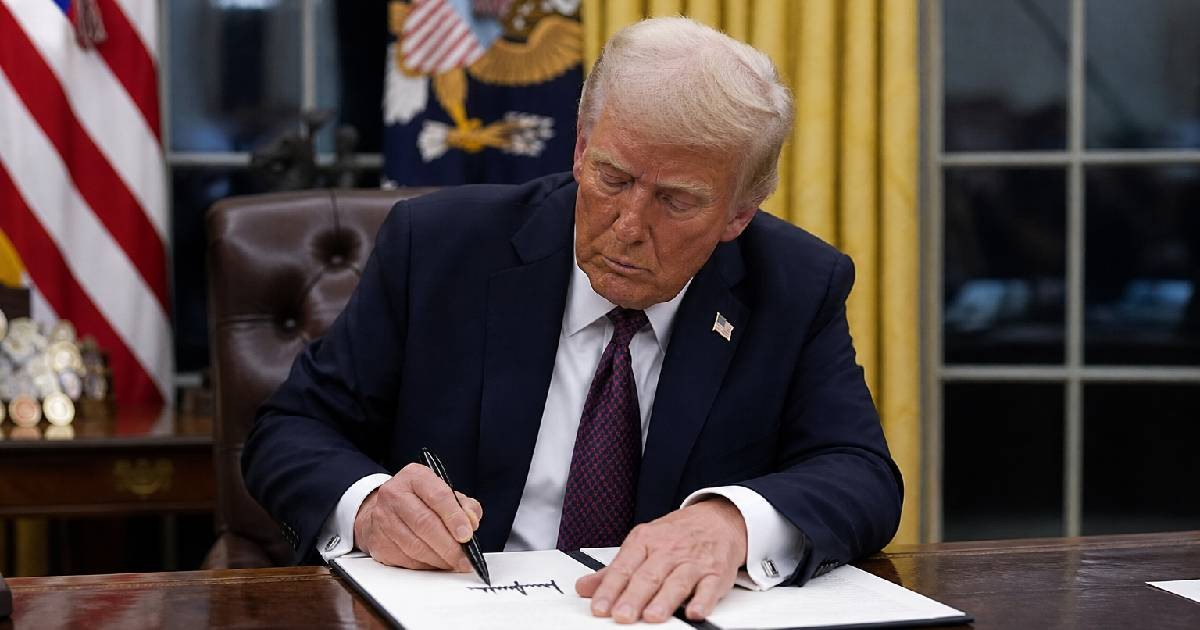
The president Donald Trump signed a new executive order this Friday that expands and strengthens sanctions against the Government of Cuba, deeming its actions to continue posing "an unusual and extraordinary threat" to national security and U.S. foreign policy, according to The White House.
The measure is based on the national emergency previously declared in January of this year and directly targets key sectors of the Cuban economy, such as energy, defense, mining, financial services, and security.
The order allows for the blocking of all property and interests in U.S. territory belonging to individuals and entities linked to the Cuban government or that provide material, financial, or technological support to it.
The objectives of the sanctions include current and former officials of the regime, state entities, as well as individuals involved in serious human rights violations or acts of corruption related to the island.
Additionally, the regulations prohibit the entry into the United States of the designated individuals, except for national interest exceptions, and authorize sanctions against foreign financial institutions that facilitate transactions with the sanctioned individuals.
The document also reinforces the prohibition on conducting transactions or donations in favor of designated individuals or entities, and establishes that prior notification will not be required to implement these measures, in order to prevent the immediate transfer of assets.
The Department of the Treasury and the Department of State will be responsible for implementing and overseeing the provisions, as well as providing periodic reports to Congress on their execution.
The U.S. administration maintains that these actions are in response to threats against its interests as well as to the defense of democratic values and human rights.
A White House official warned Reuters that "Cuba provides a permissive environment for hostile operations by foreign intelligence, military, and terrorists less than 100 miles from US territory."
Since January 2025, the Trump administration has imposed over 240 sanctions against the Cuban regime and intercepted at least seven tankers headed for the island.
The impact on the Cuban economy has been devastating: power outages of up to 25 hours daily in more than 55% of the territory and a projected economic contraction of 7.2% for 2026, according to the Economist Intelligence Unit.
Trump has stated multiple times that "Cuba is next" after Venezuela and Iran, although he has not specified what concrete actions he plans to take against the island.
On March 30, the president stated that Cuba "will fail in a short time" and that the United States "will be there to help it."
The Secretary of State Marco Rubio has also warned that Washington will not allow any foreign security apparatus to operate with impunity within 90 miles of U.S. territory.
The United States has historically demanded that Cuba open its economy, pay reparations for properties expropriated under Fidel Castro, and hold free and fair elections; the regime has responded that its socialist system is not up for negotiation.
The White House has insisted that the Cuban regime is destined to fail and that the new executive order signed this Friday represents an additional twist in that strategy of maximum pressure.
Filed under: