
Related videos:
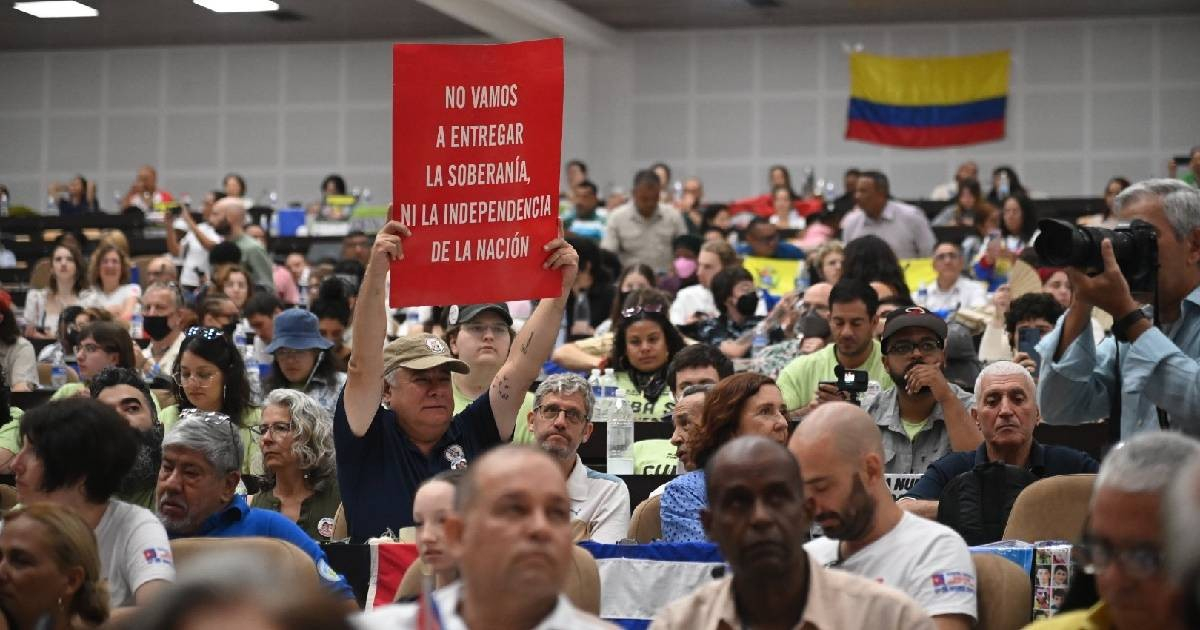
While the Trump administration intensified its threats against the Cuban regime on Friday—including a new executive order of sanctions and statements about a possible naval deployment—766 delegates from 152 organizations in 36 countries gathered in Havana for the International Meeting of Solidarity with Cuba under the slogan “For a world without blockade, active solidarity in the centenary of Fidel.”
The ruler Miguel Díaz-Canel led the event alongside other members of the Political Bureau: the president of the National Assembly Esteban Lazo Hernández, Prime Minister Manuel Marrero Cruz, and the Organization Secretary of the Central Committee Roberto Morales Ojeda.
The event, held at the Convention Palace in Havana, is the culmination of a wave of ideological tourism that has characterized the early months of 2026 and that the regime uses as a tool for international legitimization under the hashtag #CubaNoEstáSola.
The official account of the Cuban Presidency summarized the tone of the meeting: "With deep emotion, and above all with the commitment to maintain the global movement of support for Cuba, the participants say no to the aggression against the Island, to the blockade, and to the hostile policies of the U.S. government."
This meeting is not an isolated event. In March, the Convoy Nuestra América arrived in Cuba with up to 650 activists from 33 countries, including former British Labour leader Jeremy Corbyn, Spanish politician Pablo Iglesias, and U.S. Democratic Congresswoman Rashida Tlaib.
On April 26, a second convoy from Italy arrived with 60 activists from various countries, coordinated by Michele Curto, who received recognition from the Cuban Institute of Friendship with the Peoples (ICAP).
On April 29, the NGO Open Arms organized a new mission to Cuba with stops in several countries, adding to the series of visits that the regime showcases as international support.
All these initiatives are taking place as Cuba faces blackouts of up to 25 hours a day affecting more than 55% of the territory and a projected GDP contraction of 7.2% for 2026, according to The Economist Intelligence Unit.
The contrast with the reality experienced by the Cuban people is stark. Díaz-Canel turns the Island into a communist theme park for foreign visitors while the population endures an unprecedented crisis exacerbated by the loss of Venezuelan oil supplies following Nicolás Maduro's capture in January.
In parallel, the pressure from Washington continues. This Saturday, Trump signed an executive order titled "Imposing Sanctions on Those Responsible for Repression in Cuba," which freezes assets linked to human rights abuses and corruption, one day after blocking all assets linked to the regime in U.S. territory.
In a private dinner held this past Saturday in West Palm Beach, Trump stated that the U.S. "will take control of Cuba almost immediately" after concluding operations against Iran, and mentioned the possibility of sending the USS Abraham Lincoln aircraft carrier to 100 yards off the Cuban coast.
Since January 2026, the Trump administration has imposed over 240 sanctions against Cuba and intercepted at least seven oil tankers, marking the first such instance since the Missile Crisis of 1962, according to The New York Times.
While international delegates waved flags of Venezuela, Palestine, and Puerto Rico at the Palace of Conventions, a poster inside summed up the regime's stance: "We will not surrender the sovereignty or the independence of the nation."
Filed under: