
Related videos:
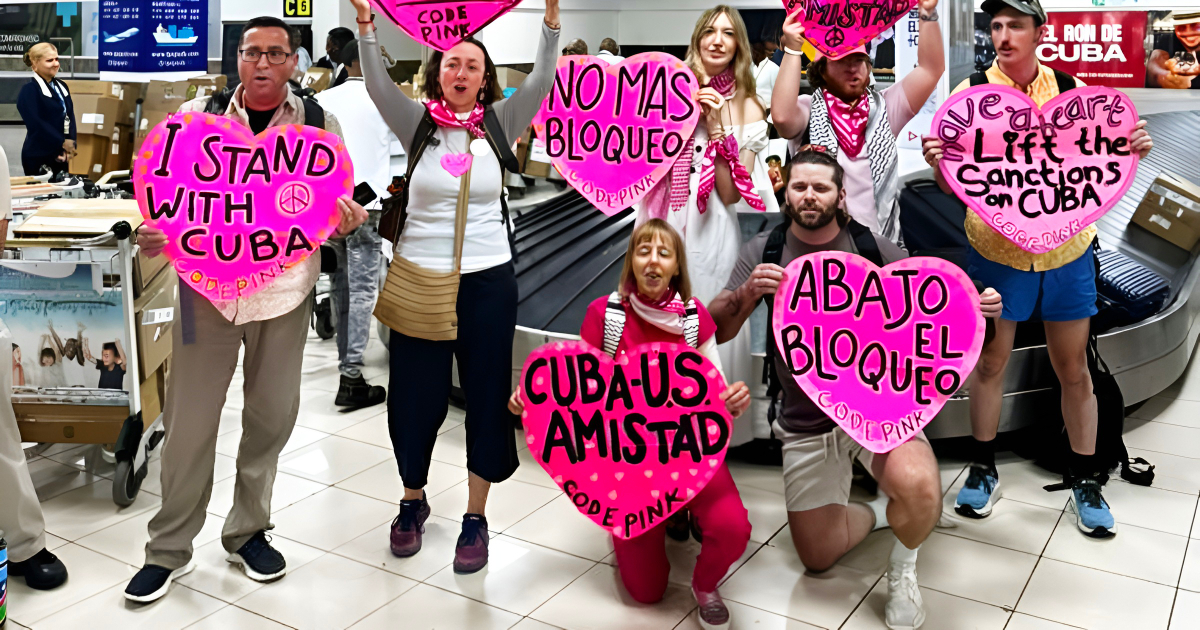
While much of Cuba endures endless blackouts, shortages of water, food, and medicine amidst its worst socioeconomic crisis in decades, a group of activists and political figures from Europe and the United States has sparked a wave of international criticism with their arrival in Havana under the name 'Convoy Nuestra América.'
Critics, both in Anglo-Saxon media and Spanish-language outlets, agree that the presence of these visitors is seen as a blatant disconnection from the reality experienced by the majority of the Cuban population, and as an act of performative activism or political spectacle that benefits the regime more than those who are suffering through the crisis.
A shocking contrast: Luxury amidst blackouts
Conservative journalists and commentators in the United States have described the presence of activists in Cuba as an example of “champagne socialism”.
In that sense, they point out that while the country's electrical grid collapses for the third time in a month, members of the convoy stayed in luxury hotels like the Gran Hotel Bristol Meliá Collection in Havana, equipped with air conditioning and electricity guaranteed by generators, in stark contrast to millions of Cubans enduring prolonged power outages.
In those same news reports, participants like the streamer Hasan Piker were seen streaming from Havana with a stable internet connection and high-end accessories, such as designer glasses valued at thousands of dollars, which fueled accusations of class hypocrisy among certain sectors of public opinion on social media.
Out-of-context events: Concerts and slogans
One of the most criticized moments was a concert organized by the Irish group Kneecap in Havana, which took place while the island was experiencing blackouts and had limited electricity supply.
Anglo-Saxon media reported that the event had low attendance and was perceived by opponents as disconnected from the priorities of a population lacking basic services, with slogans like “Free Cuba, f–k Trump, f–k Netanyahu” which, for many Cubans, are irrelevant in light of their day-to-day needs.
Voices of rejection from civil society and exiles
The criticism has not been limited to news outlets. Cuban citizens in exile, artists, and activists have expressed their outrage.
A Cuban resident in the United States described the arrival of the convoy as a "huge mockery of the Cuban people," denouncing that foreign activism consumes electricity in hotels while hundreds of homes are without power.
Salomé García Bacallao, a Cuban artist exiled in Miami, went further: she claimed that the left visits Cuba "as if it were a party in a zoo, admiring the misery from a luxury hotel," and denounced the structural contradiction between those who demand sacrifices from the people and those who enjoy comforts on the island.
Manuel Cuesta Morúa, an opposition activist in Cuba, also described the convoy as a "political circus" driven by supporters of a regime that has caused the current economic crisis, emphasizing that the structural problems of the island will not be resolved by international delegations visiting five-star hotels.
Criticism of propaganda and the legitimization of the regime
Furthermore, critical voices have pointed out that the convoy has been used as a tool of political propaganda by the Cuban government.
In public events, the leader Miguel Díaz‑Canel has praised international solidarity and has warmly welcomed figures such as Jeremy Corbyn, Pablo Iglesias, and other delegates, reinforcing an official narrative of global support for the so-called "revolution," even as the population faces severe shortages.
For many exiles and analysts, this official reception is part of an effort to counter international criticism and project an image of external support, although much of the material aid from the convoy—20 tons of supplies, solar panels, and medicines—faces skepticism regarding whether it will truly reach those who need it most outside of official channels.
A further reflection of a complex crisis
The controversy surrounding the 'Nuestra América Convoy' adds to an already extremely critical context for Cuba, where blackouts, protests over shortages of water and food, and geopolitical tensions characterize the daily lives of millions.
The presence of foreign delegations has sparked an intense international debate about solidarity vs. political spectacle, privilege vs. real suffering, and the ethical responsibility of social movements traveling to the island at this time.
Filed under: