
Related videos:
The director of the Provincial Center for Hygiene, Epidemiology, and Microbiology of Matanzas, Dr. Andrés Lamas Acevedo, confirmed this Saturday the existence of active hepatitis cases in several areas of the province, including Versalles, the Plácido area, La Cumbre, and isolated cases in all municipalities.
In an interview with the newspaper Girón, the official specified that the most concentrated hotspots are "well controlled" and that transmission has occurred from person to person, not through water, unlike an outbreak that took place about twenty years ago in Versalles.
As a containment measure, the authorities temporarily closed establishments in the Plácido area. "When a group of people concentrated in a specific area, such as Plácido, becomes ill, we have to close establishments, including the guarapera and the cafeterias serving prepared drinks like coffee and juice; because there is no evidence that they are safe," explained Dr. Lamas Acevedo.
The specialist warned that hepatitis is a disease that is difficult to control due to its period of silent transmission. "It begins to be transmitted 10 days before symptoms appear and continues for up to 15 days afterward. Therefore, I could have it now, feel fine, and be spreading it," he noted.
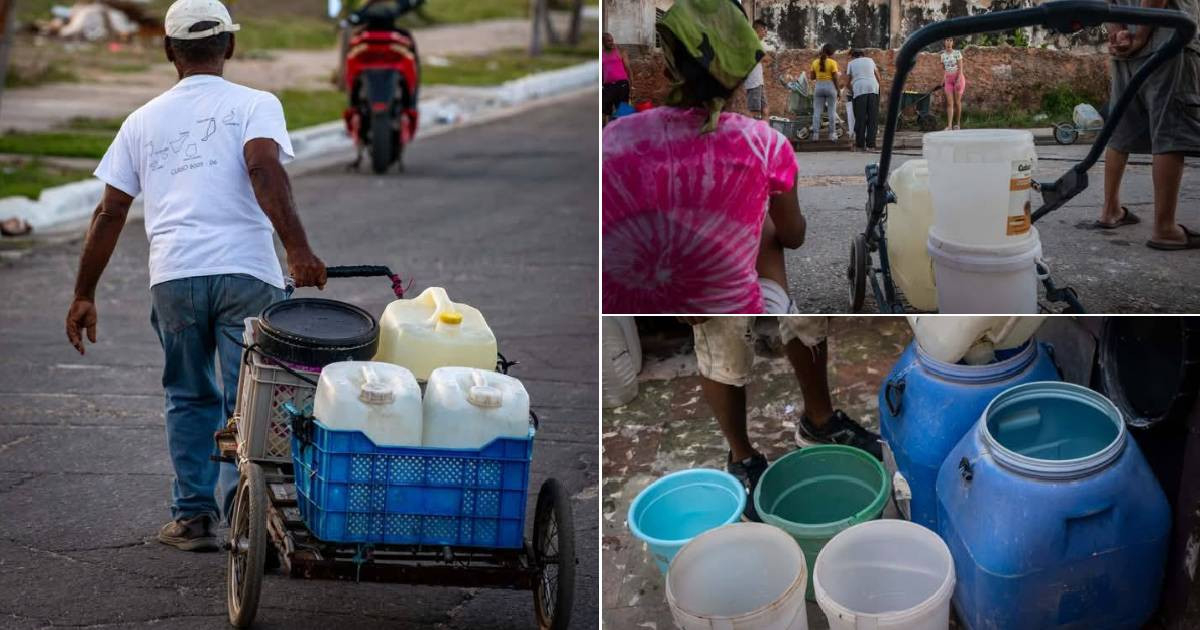
As the primary preventive measure, the authorities urged people to boil or chlorinate water using hypochlorite. However, the official himself acknowledged the material limitations of the population: "Not everyone has the means to boil water, be it because they lack gas or need to use charcoal."
The situation is not new. Since early April, 18 active cases had been confirmed in Versalles and seven in La Marina, a municipality of Cárdenas, while the outbreaks in Pálpite and Cidra— the latter having detected 11 cases around March 20—were nearing closure.
The health context in Matanzas is particularly fragile. The province is the most affected by blackouts in Cuba, with outages lasting between 30 and 48 hours in some circuits, hindering the operation of water pumps. Informal wells have multiplied in Matanzas neighborhoods, increasing from 20 to over 40 between October 2025 and March 2026, and water from private trucks costs between 6,000 and 8,000 pesos. In February 2025, authorities detected fecal contamination in supply networks in the Bello area.
The pattern is repeating on a national scale. MINSAP confirmed in December 2024 a significant increase in hepatitis A across the country, with Cienfuegos surpassing 5,000 infected that year due to water contamination with sewage. In April 2026, Camagüey also raised alarms with an increase in suspected cases, although authorities formally denied an outbreak.
Alongside the hepatitis situation, Dr. Lamas Acevedo announced measures to tackle the arbovirus season that begins in May: the elimination of breeding sites across 100% of the urban areas in the province within two months, and the deployment of 25 fumigation machines using technology that employs water instead of oil as a diluent, a method never before used in Cuba. The anti-vector workforce is currently operating at 50% capacity, so individuals from other sectors and medical students will be mobilized.
"Today there is no transmission of dengue or chikungunya, but we must wait for the rise of the mosquito, because it is a tropical country and every year there will be some type of these diseases," warned the official.
Filed under: