
Related videos:
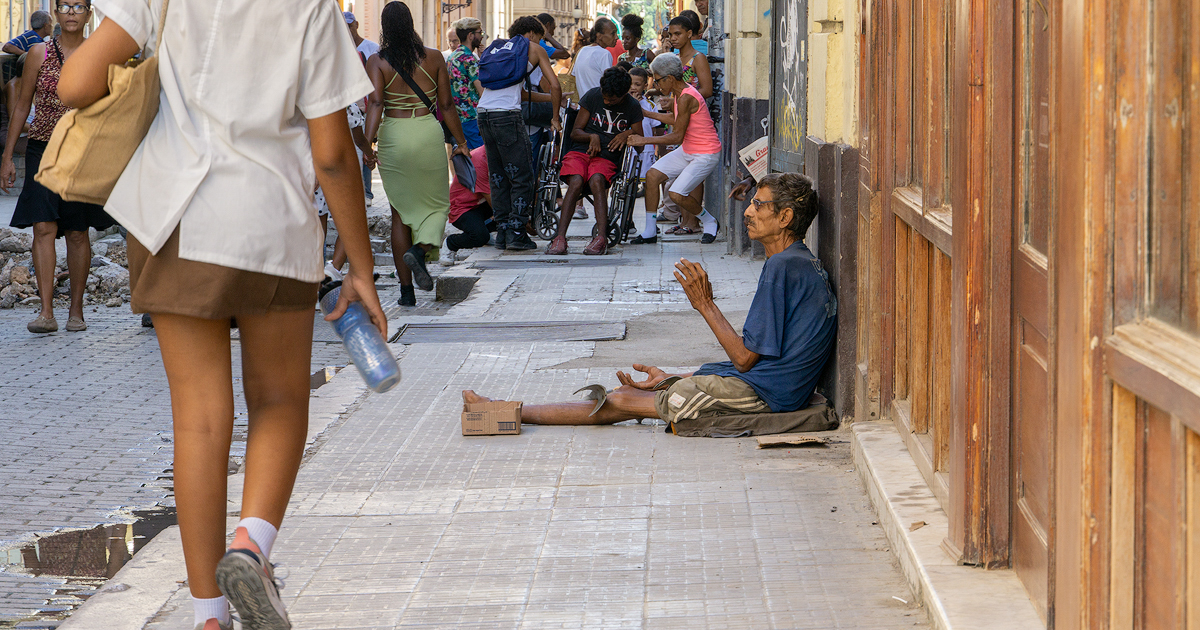
Emaciated elderly people wandering the streets searching for food in the trash, retirees collapsing under the sun asking for a glass of water, and seniors dying alone in their homes until a neighbor discovers them: this is how a report describes the crisis of the elderly in Cuba, the unfortunate situation faced by the most vulnerable population on the island in 2026.
"The people are dying of starvation, they are corpses, zombies," said Irina Hung, 47, an accountant from Miami originally from Santiago de Cuba, after visiting the island in January.
Hung found Santiago overwhelmed by 20-hour blackouts and such insecurity that her 10-year-old nephew warned her not to take out her phone on the street.
Retiree pensions, though increased since September, average only about $9 per month, an amount that is insufficient to buy basic essentials.
Cuba is the most aged country in Latin America, with 25.7% of its population over 60 years old, and the exodus of nearly two million young people since 2021 has left an entire generation of elderly without a family support network.
The sociologist Elaine Acosta, director of the project Cuido60 and the Observatory of Aging, Care, and Rights in Cuba, warns that the collapse of the Cuban social assistance system has reached unprecedented levels: "Data from the 2024 Census indicated that the homeless population had tripled. We know that the majority are elderly individuals. Sometimes they are victimized."
Violence against the elderly is one of the most alarming issues. Pablo Vega, a blind retiree, was attacked by assailants on February 20 when he was returning from collecting his pension and died days later as a result of his injuries.
In Cárdenas, a homeless elderly man named Agustín, who had mental health issues, died that same month from burns inflicted by an 18-year-old.
"The situation of elderly individuals who live alone or are homeless is a collective punishment," said the Christian activist Rita María García Morris.
The case of Isabel Mendoza, a poet and member of the Union of Writers and Artists of Cuba (UNEAC) in Santiago, touched thousands as she was recorded begging for alms to feed her sick husband.
"I don't like doing that because I am a professional; I have received poetry awards, I am a member of UNEAC, a reciter, and look at where I am," said Mendoza, whose pension of 3,000 Cuban pesos—about $8—was insufficient for her to eat.
Odette Toledo, a 47-year-old nursing assistant living in Philadelphia who financially supports her parents in Cuba, summarizes the situation starkly: "The government holds them hostage; if we don't send them money and food, they will die."
Her parents, aged 76 and 74, live in Vedado —one of the best neighborhoods in Havana— unable to go out because the elevators are not working, the sidewalks are broken, and the wheelchair she sent is useless due to the ruined infrastructure.
Meanwhile, the regime is not short of resources: the Revolutionary Armed Forces, through the conglomerate GAESA, has accumulated $18 billion in liquid assets, a figure that exceeds the international reserves of Costa Rica, Uruguay, and Panama.
The human rights activist Janisset Rivero says it plainly: "They steal the nation's money, and they don't invest it where it's needed. It's for their personal coffers."
Starting in April, the regime plans to cut or eliminate the few subsidized food items still distributed through the ration book, worsening the harsh reality for the most vulnerable Cubans who can no longer afford the family assistance dining facilities or reach them due to a lack of transportation.
In February, the government authorized the opening of private residences for the elderly, but activists like García Morris and Acosta believe that the measure comes too late, as the situation is already critical.
"It breaks my heart to see how they are deteriorating and no one cares," Toledo concluded.
Filed under: