
Related videos:
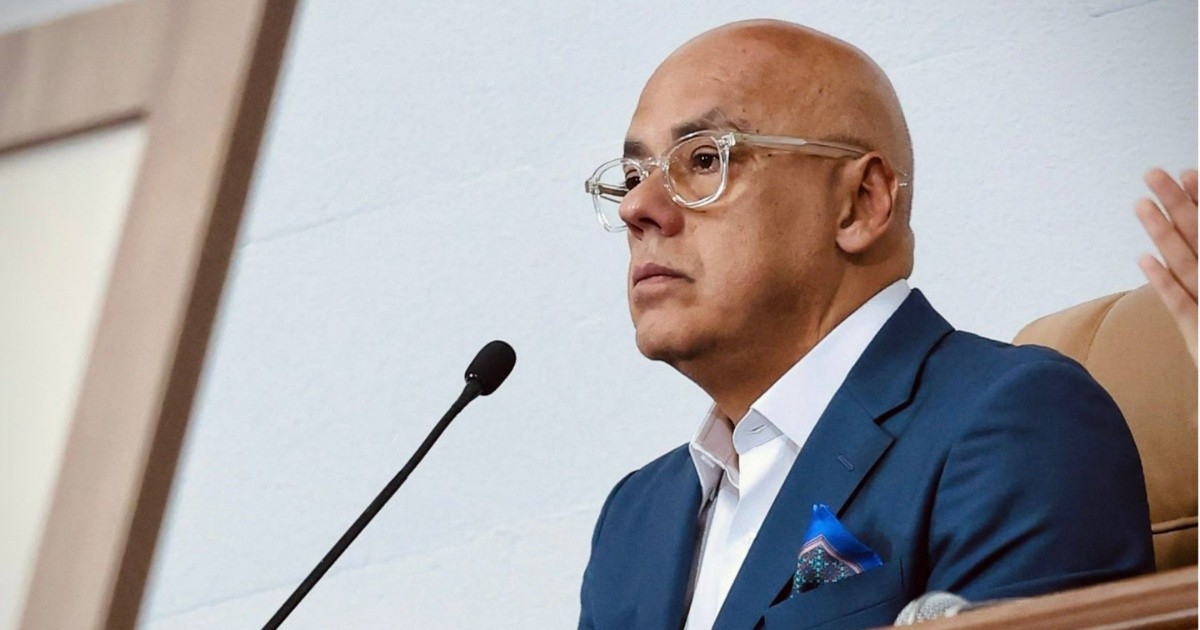
Jorge Rodríguez, President of the National Assembly of Venezuela, sparked a wave of outrage among the Venezuelan diaspora when he urged them last Wednesday to "overcome" their resentments, "forgive" chavismo, and return to the country.
The message was delivered during a meeting with social movements at the Santa María University in the state of Miranda, as part of the campaign "Venezuela fl ies free," which Rodríguez leads alongside his sister, the acting president Delcy Rodríguez, and the Minister of the Interior Diosdado Cabello.
"And if there is a Venezuelan abroad who harbors any form of resentment in their heart, we say: 'Get over it, forgive us, and come back.' You will always be better off in your homeland," said the deputy of the United Socialist Party of Venezuela.
Rodríguez also called to "turn the page on hatred, on sterile violence" and to leave behind "polarization," in an attempt to build a bridge with the more than 8.7 million Venezuelans who have left the country according to data from the R4V Platform of UNHCR and the International Organization for Migration.
The diaspora's response was one of widespread rejection.
Venezuelans in Colombia, Ecuador, Argentina, Mexico, Spain, and the United States responded with indignation, sharing on social media images of the repression during the protests of 2014 and 2017, as well as videos of the insurgent police officer Óscar Pérez, who was massacred in 2018 following a rocket attack even after he had communicated his surrender.
"I cannot forgive anyone who made me lose my youth abroad. I lost my career, I stopped seeing my nephews grow up, I couldn't be there for family gatherings," said to CNN Keymar Silva, a Venezuelan resident in Quito, Ecuador.
From Buenos Aires, an electronic engineer who emigrated in 2019 and preferred not to give his name for fear of reprisal was more blunt: “The cynicism of these people knows no bounds, it’s outrageous.”
Rafael Pérez, who has been in Colombia for ten years, noted that conditions in Venezuela have not changed: "My dad lives in the south, in Maracaibo. The electricity goes out every day for five hours. That's no way to live."
Pérez also rejected the call for return while chavismo controls the institutions: "The leadership of chavismo remains in power; therefore, calling on Venezuelans to return is not an option. I believe the most viable solution is new elections and having a new government."
Rodríguez's call comes in an unprecedented political context: Nicolás Maduro was captured in January 2026 by U.S. special forces and remains incarcerated in Brooklyn facing charges of narco-terrorism, while the Chavista apparatus remains intact under the leadership of Delcy Rodríguez.
Gustavo Lainette, founder of the NGO Resistencia Venezolana, summed up the feelings of many exiles: "After the bloodshed, the murdered students, the political prisoners, the persecution and the looting… now they ask for forgiveness as if nothing happened? Is this how they speak to a country they destroyed? No, Jorge Rodríguez… this cannot be overcome. This must be confronted and paid for."
The anonymous Venezuelan interviewed in Buenos Aires added a specific condition: "Before addressing the diaspora, they should first finish releasing all political prisoners as a gesture of goodwill."
A demand that gains significance in light of the data: Venezuela had over 400 political prisoners as of April 27, according to Foro Penal, with 19,088 political arrests accumulated since the onset of Chavismo, and the trial against Maduro in the United States progresses without signs that the leadership that ruled the country for over two decades will hold itself accountable to its own people.
Filed under: