
Related videos:
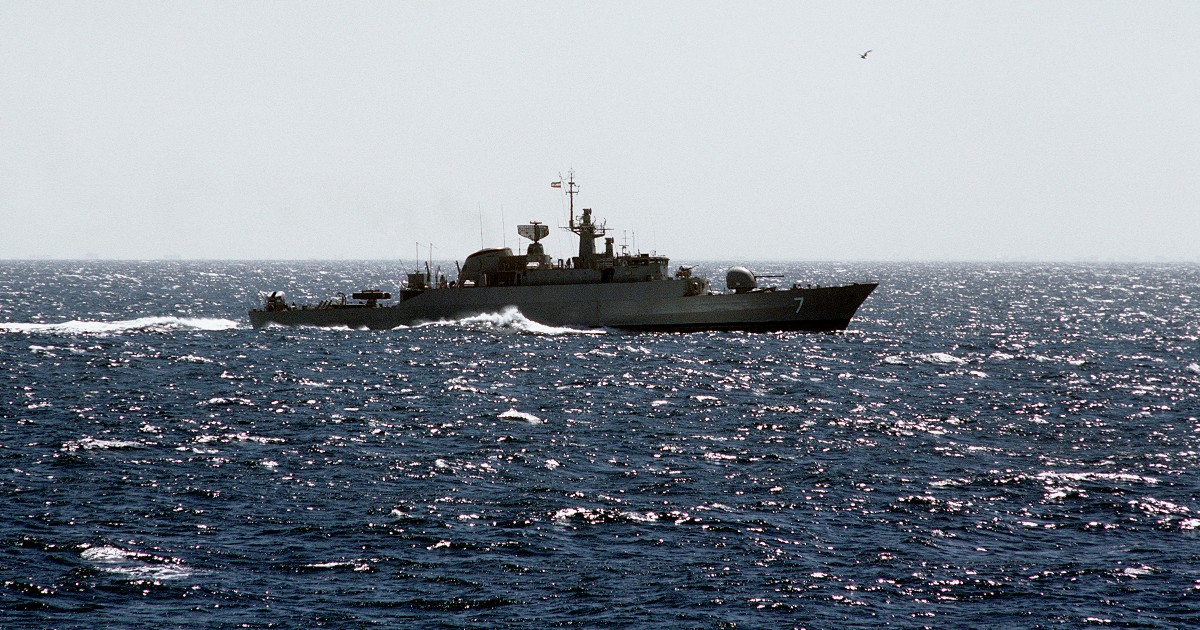
The Iranian Armed Forces claimed this Monday that they had blocked access for U.S. and Israeli destroyers to the Strait of Hormuz through what they described as a "firm and swift warning" from their Naval Force, in a escalation that Washington did not confirm and which comes just hours after the launch of the U.S. military operation "Project Freedom."
"With a firm and swift warning from the Naval Force of the Army, the entry of enemy American-Zionist destroyers into the area of the Strait of Hormuz was prevented," noted a statement from the Iranian Army's public relations, reported by the Tasnim agency, affiliated with the Revolutionary Guard.
Simultaneously, the Revolutionary Guard published a map that outlines the areas of the strait under Iranian control: to the east, a line between Mount Mubarak, in Iranian territory, and the city of Fujairah, in the United Arab Emirates; to the west, from the Iranian island of Qeshm to the Emirati city of Umm al Quwain.
The division general Ali Abdolahi, commander of the Khatam al-Anbiya Unified Operations Command, was even more explicit in his threats: «We warn that any foreign armed force, especially the aggressive U.S. military, will be the target of our attacks if it attempts to approach or enter the Strait of Hormuz».
Abdolahi also demanded that commercial and oil ships refrain from passing through without prior coordination with the Iranian forces deployed in the area, warning that otherwise "their security may be compromised."
Tension escalated one day after President Donald Trump announced the "Freedom Project", an operation that mobilizes over 100 aircraft, destroyers, drones, and 15,000 military personnel to escort approximately 900 merchant ships with around 20,000 stranded crew members in the strait since the onset of the conflict.
Trump justified the mission as a humanitarian gesture following requests from "countries around the world."
The president of the Iranian National Security Commission, Ebrahim Azizi, warned the day before that "any U.S. interference in the new maritime regime of the Strait of Hormuz will be considered a violation of the ceasefire," and added that "the Strait of Hormuz and the Persian Gulf will not be governed by Trump’s delusional statements."
The conflict originated from the Operation Epic Fury, the joint air offensive by the U.S. and Israel that started on February 28, 2026, which destroyed Iran's main nuclear facilities and eliminated the supreme leader Ali Khamenei along with 49 high-ranking military commanders.
In retaliation, Iran blocked the Strait of Hormuz —through which 20% of the world's oil passes— causing the price of Brent crude to jump from $67 to over $126 per barrel. A fragile ceasefire was established on April 8, but the negotiations in Islamabad failed after 21 hours without agreement, led by Vice President JD Vance.
Last Friday, Iran sent the U.S. a 14-point peace plan in three phases through Pakistani mediators, which includes the gradual reopening of Hormuz and guarantees of non-aggression. Washington responded, but Tehran is still evaluating the counterproposal, as confirmed by the spokesperson for the Iranian Foreign Ministry, Ismail Bagaei.
In parallel, Iran is negotiating with Oman a secure transit mechanism and has proposed a toll system in the Strait, which has been publicly rejected by Muscat, arguing that Hormuz is a natural passage and not an artificial canal like those of Suez or Panama.
Abdolahi warned that U.S. actions to "alter the current situation will only result in further complicating the scenario and jeopardizing the safety of vessels in this area," as the "Liberty Project" began to unfold this Monday with neither side showing signs of backing down.
Filed under: