
Related videos:
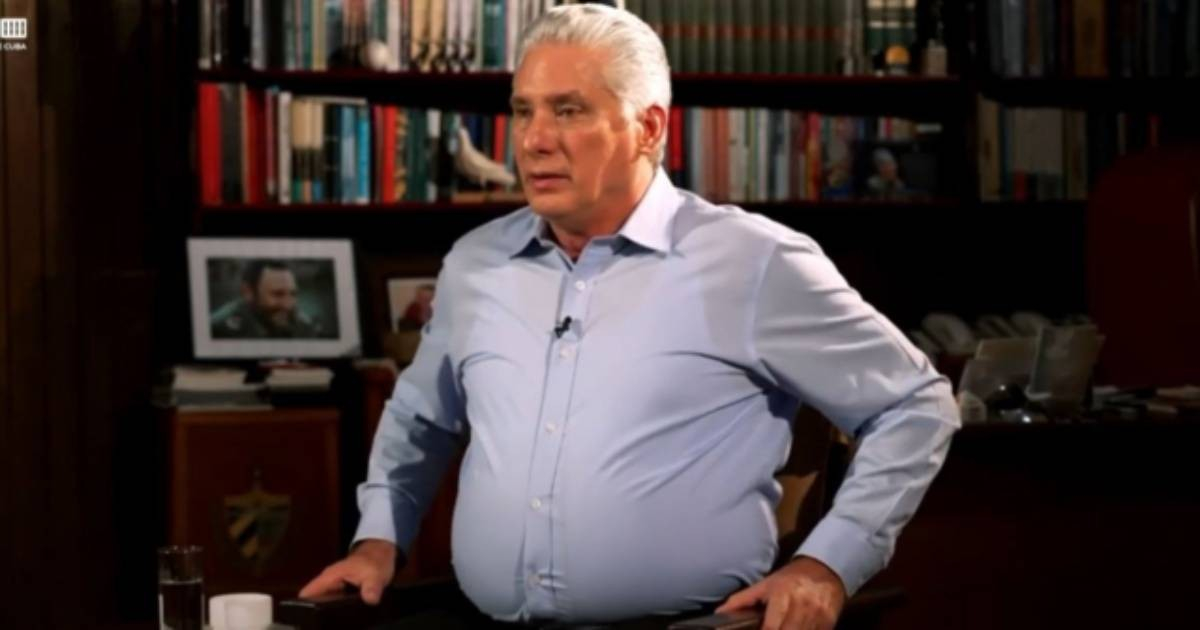
Miguel Díaz-Canel published a message on his Facebook account this Monday, thanking Colombian President Gustavo Petro for his statements in defense of Cuba and adopting the thesis that "an attack on Cuba is an attack on Latin America", amidst escalating tensions with Washington following military threats from President Donald Trump.
The message from the Cuban leader comes days after Trump stated, on May 1 during a private dinner in West Palm Beach, that the United States "would take Cuba almost immediately" after concluding operations in Iran, and described the deployment of the USS Abraham Lincoln aircraft carrier to just 91 meters off the coast of Cuba to force the regime's surrender.
Petro responded on May 2nd on X: "I do not agree with a military aggression against Cuba because that is a military aggression against Latin America. The Caribbean is a zone of peace and that must be respected. Only Cubans are the rightful owners of their country."
Díaz-Canel embraced those words and anchored his argument in the thoughts of José Martí, quoting his famous letter to Manuel Mercado—written on May 18, 1895, a day before his death in combat at Dos Ríos—about the effort to "prevent, in time, with the independence of Cuba, the United States from spreading throughout the Antilles and exerting even greater force on our lands in America."
The Cuban regime had already responded to Trump's threats on various fronts. Díaz-Canel himself stated on May 2 that "no aggressor, no matter how powerful, will find surrender in Cuba," while the foreign minister Bruno Rodríguez Parrilla mocked the possible deployment of an aircraft carrier and assured that Cuba "will not be intimidated."
On May 1st, Trump signed a new executive order that expands sanctions against Cuba in the energy, defense, mining, and financial services sectors, with secondary sanctions on foreign banks linked to the island.
Since January 2026, the Trump administration has imposed over 240 new sanctions, intercepted at least seven oil tankers, and reduced Cuban energy imports by between 80% and 90%, aggravating a crisis that was already causing blackouts of up to 25 hours a day.
Petro, for his part, published a second message on Sunday in which he attributed hunger in Cuba to the U.S. embargo and warned: “Those who wish to invade Cuba will only ignite political violence throughout Latin America and extinguish its nascent democracy.”
The stance of the Colombian president contrasts with those who argue that it is 67 years of communist dictatorship — and not the embargo — that is the main obstacle to the freedom of the Cuban people, who endure shortages, repression, and an unprecedented structural crisis.
The alignment pattern of Petro with Havana is consistent: he boycotted an international summit in October 2025 following Cuba's exclusion, he urged Trump to restart dialogue with the island in February 2026 and referred to the embargo as "genocide" in April of that same year.
Filed under: