
Related videos:
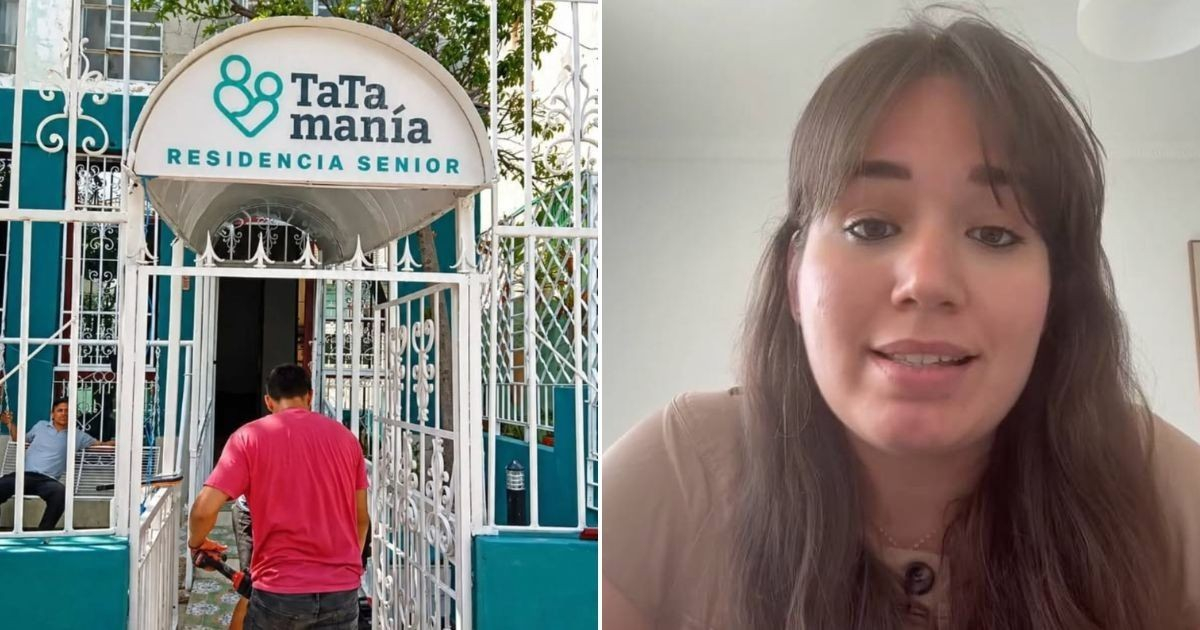
The Cuban activist and opposition figure Amelia Calzadilla published a passionate text on Facebook denouncing the regime's contradiction in allowing the opening of the first private elderly care residence in Cuba, at a minimum cost of 1,080 dollars per month, after decades of prohibiting private property and criminalizing the accumulation of wealth.
"I have just read with indignation, but I confess not with astonishment, about the opening of private residences for the elderly that will operate on payments in dollars," wrote Calzadilla, who went into exile in Madrid in November 2023 due to pressures from the regime.
The facility in question is the Senior Residence of TaTamanía, located in El Vedado, Havana, the first permanent private nursing home in Cuba, operated by the small and medium-sized enterprise founded in Guantánamo in 2023 by pediatrician Yadira Álvarez and her husband, computer engineer Rolando Pérez.
Calzadilla highlighted the brutality of the economic gap revealed by this opening: a Cuban doctor earns between 6,500 and 17,000 pesos per month, which is equivalent to between 12 and 31.50 dollars according to the exchange market reported by elTOQUE, while Cuban retirees' pensions do not exceed 4,000 pesos —less than ten dollars at the informal exchange rate—.
“Who can afford that amount in Cuba?” the activist wondered, answering herself that only those with family abroad who can cover the service through remittances.
The core of his critique targets the ideological hypocrisy of the Communist Party: "The same party that banned private property, whose sole struggle was the elimination of private capital... today, with a Cuba poorer than in 1959, shows no shame in neglecting the vulnerable and presents private alternatives as the only viable solution to its incompetence; and yet, it does so without relinquishing power."
The opening of TaTamanía was made possible thanks to the Agreement 10249/2025 of the Council of Ministers, published on February 26, which for the first time in decades authorized the private sector to manage nursing homes in Cuba. A complementary resolution will come into effect on May 21.
The text of the agreement itself acknowledged that, "due to the accelerated process of aging of the Cuban population," it is necessary "to authorize the provision of such services by non-state economic actors," an implicit admission of the failure of the state model.
This aging is critical: 25.7% of the Cuban population is over 60 years old, making the Island the most aged country in Latin America, while the massive emigration of young people exacerbates the shortage of caregivers.
Calzadilla, who recently founded the Cuban Orthodox Liberal Party (PLOC) from Madrid, has gained increasing visibility within the exile community precisely for highlighting these contradictions in straightforward language.
The activist summed up the entire cycle of revolutionary failure with a question that offers no comfortable answer: "Abolishing private property with the promise of better managing and distributing wealth; making citizens vulnerable and dependent to purchase their political loyalty; demonstrating your incompetence after more than 60 years of failing to save the poor and impoverishing the rich; and now finally declaring loudly and contrary to all imposed dogma that only capitalism is competent and functional, yet after taking control of the nation, you have no intention of relinquishing power. Really?"
Filed under: