
Related videos:
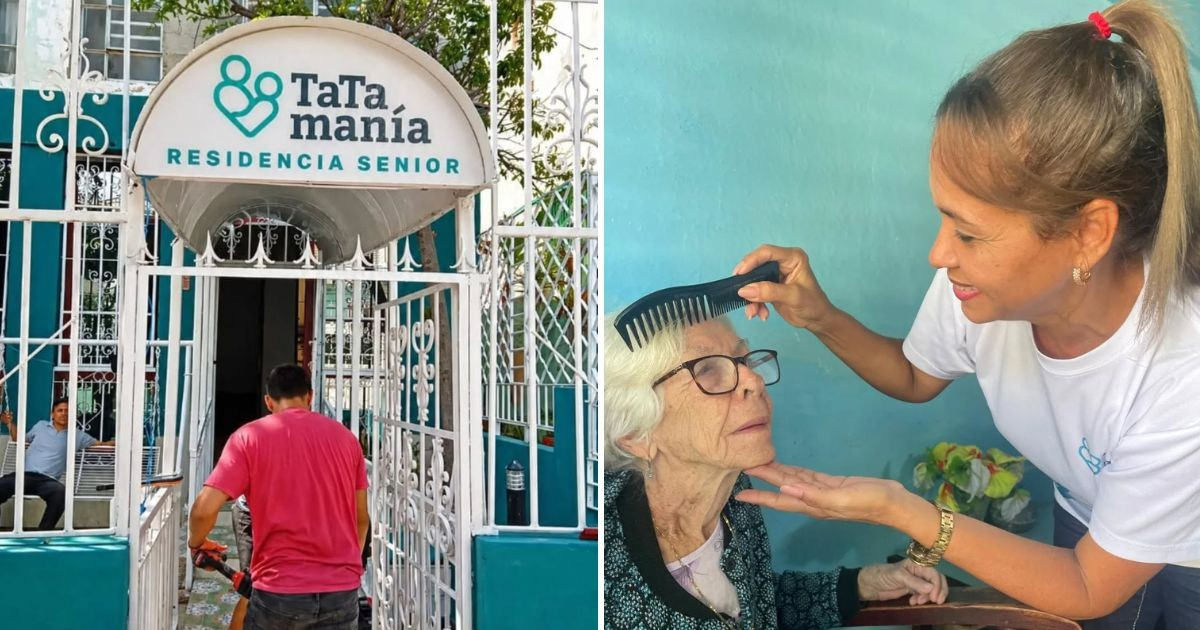
The Senior Residence of TaTamanía, located in El Vedado, Havana, opens its doors as the first permanent private nursing home in Cuba, with a minimum price of 1,080 dollars per month for a spot in a double room, an amount unattainable for the vast majority of elderly people on the Island.
The cost corresponds to a rate of $1.50 per hour in a double room, although prices vary: from $1.35 per hour in a triple room to $1.75 in a private room.
The opening was made possible thanks to a regulation approved on February 26 that, for the first time in decades, authorizes the private sector to manage nursing homes in Cuba, breaking the state monopoly that had existed up to that point.
A complementary resolution published in April, which comes into effect on May 21, establishes the operational, construction, and health requirements that these centers must meet.
TaTamanía is a small and medium-sized enterprise founded in Guantánamo in 2023 by pediatrician Yadira Álvarez and her husband, computer engineer Rolando Pérez.
It was one of the first private Cuban companies to offer elderly care services, although up to now it could only operate at home and in hospital centers.
"We are an agency that has been operating for four years. This permanent home care is going to be a new experience for us, as we just received the authorization for it; however, we have been working in homes and hospitals for some time now. All of us are healthcare professionals. Those who are not doctors are nurses, and those who aren't are rehabilitation specialists. That’s why we are in demand," explained an employee of the company.
The Vedado residence has ten beds distributed across five double rooms, and the law mandates that 10% of the spaces—one bed, in this case—be reserved for individuals deemed "of social interest due to their vulnerable status," who would pay the state rate of 1,260 pesos per month.
That figure stands in stark contrast to the 535,680 pesos that the private sector represents at the floating official exchange rate.
The target audience is, inevitably, those who have relatives abroad capable of affording the service through remittances, given that Cuban retirees' pensions do not exceed 4,000 pesos per month —less than ten dollars at the informal exchange rate— following the latest increase approved by the regime.
The gap is so extreme that even the text of the law itself acknowledged that "given the accelerated aging process of the Cuban population, which demands an increase in attention, and the need to expand the reach of social care services for older adults or those with disabilities, it is necessary to authorize the provision of such services by non-state economic actors."
The company highlights in its advertising that part of its staff consists of "doctors and nurses no longer affiliated with the public sector," who in the private sector can earn between 20,000 and 30,000 pesos monthly, compared to the 5,000 or 7,500 they receive in the State; for aides, the private salary can be up to five times higher.
The opening of TaTamanía occurs in a critical demographic context: 25.7% of the Cuban population is 60 years or older, making Cuba the most aging country in Latin America, while the massive emigration of young people worsens the shortage of caregivers.
Images of a 78-year-old Cuban grandfather cleaning the streets in Matanzas to survive illustrate the reality faced by thousands of elderly people on the Island, for whom a private residence like TaTamanía is, for now, an unreachable luxury.
The Vedado residence, with its ten beds, is just the beginning: the needs of an island where rapid aging combines with the mass exodus of young people overwhelm not only the state sector but also some emerging private entities operating amid a deep economic crisis.
Filed under: