
Related videos:
The Ministry of Foreign Affairs of Cuba issued a statement this Thursday, rejecting "in the strongest terms" the Executive Order signed by President Donald Trump on May 1, and condemning the new sanctions from the Department of the Treasury that added GAESA and Moa Nickel S.A. to the List of Specially Designated Nationals, accusing Washington of attempting to "subdue the entire Cuban population through hunger and desperation."
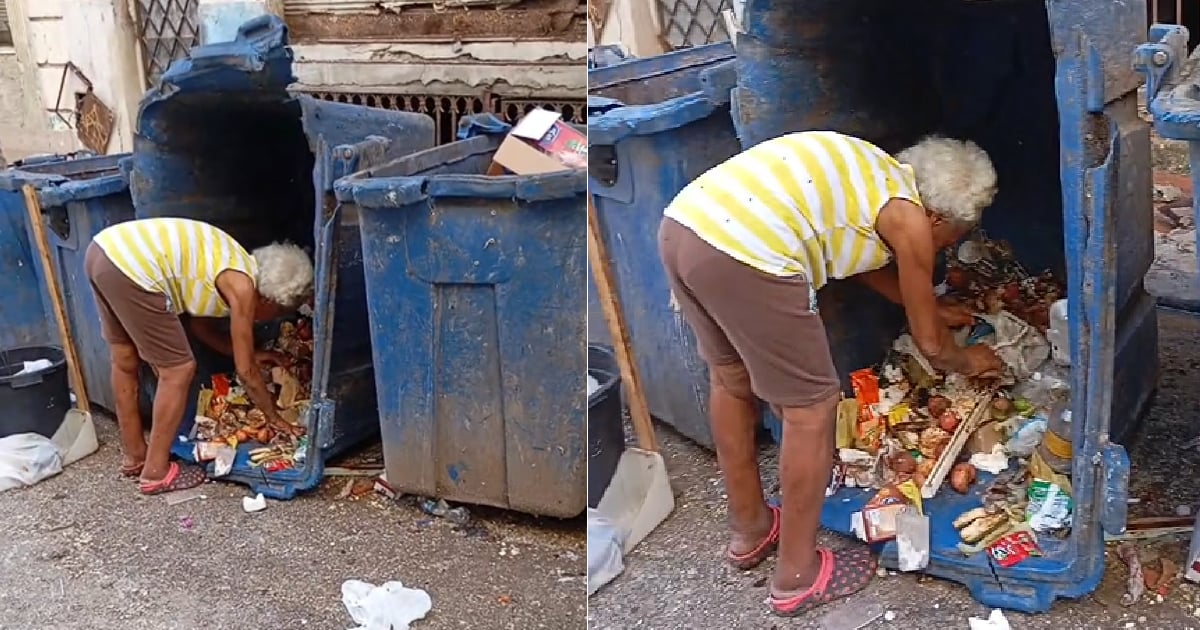
What the regime omits in its statement is that hunger in Cuba did not arise with Trump's sanctions: it is the direct consequence of more than six decades of communist dictatorship and a centralized economic model that has devastated national agricultural production.
"The measure will further hinder the functioning of the national economy, which has already been facing, since January 29, 2026, the disastrous effects of the oil blockade imposed on that date that paralyzed fuel exports to the country," the statement emphasized.
The text "denounced" also "the criminal nature of these aggressive measures aimed at starving and despairing the entire Cuban population," as if the Cuban economy had not been in collapse beforehand, "and sought to create a social, economic, and political catastrophe on a national scale."
They also emphasized: "It rejects the intention of the United States government to create a humanitarian crisis scenario to justify more dangerous actions, including military aggression against Cuba," seeking an external justification for the regime's unpopularity.
According to a survey on hunger in Cuba published yesterday, 33.9% of Cuban households reported hunger in 2025, before the Executive Order was signed in May 2026, marking an increase of 9.3 points compared to 2024.
The Food Monitor Program reported in April 2026 that 96.91% of the Cuban population lacked adequate access to food due to inflation and a decline in purchasing power.
Deaths from malnutrition increased by 74% between 2022 and 2023, from 43 to 75 cases, according to the National Office of Statistics and Information of Cuba.
Cuba imports between 70% and 80% of the food it consumes, a reflection of the collapse of agricultural production under the collectivized model imposed by the regime since 1959.
The Cuban prime minister himself, Manuel Marrero Cruz, acknowledged in October 2024 —months before any new measures from Trump— that "the shortage of fuel is the biggest factor" in the economic collapse.
In December 2024, the Communist Party of Cuba acknowledged the shortcomings of the socialist model in food production, and in April of that same year, the regime requested help from the World Food Program for the first time to provide powdered milk for children.
80% of Cubans believe that the current crisis is worse than the Special Period of the 1990s, according to a survey conducted in March 2026.
Regarding the new sanctions, Secretary of State Marco Rubio described GAESA as "the heart of Cuba's kleptocratic communist system," noting that the military conglomerate controls between 40% and 70% of the island's formal economy and generates more than $1 billion annually for the regime.
The new sanctions against GAESA announced by Rubio are the first coercive measure resulting from the Executive Order signed by Trump on May 1, which expands the economic, financial, and commercial sanctions against the island.
The MINREX also warned that the U.S. seeks to "create a humanitarian crisis scenario to justify more dangerous actions, including military aggression against Cuba," and called on the international community not to yield to what it termed "blackmail and intimidation."
The regime's strategy of blaming the U.S. for hunger on the island is not new, but the data contradicts it: the Cuban food crisis is structural, predating any recent sanctions, and originates from the very system that today issues the protest statement.
Filed under: