
Related videos:
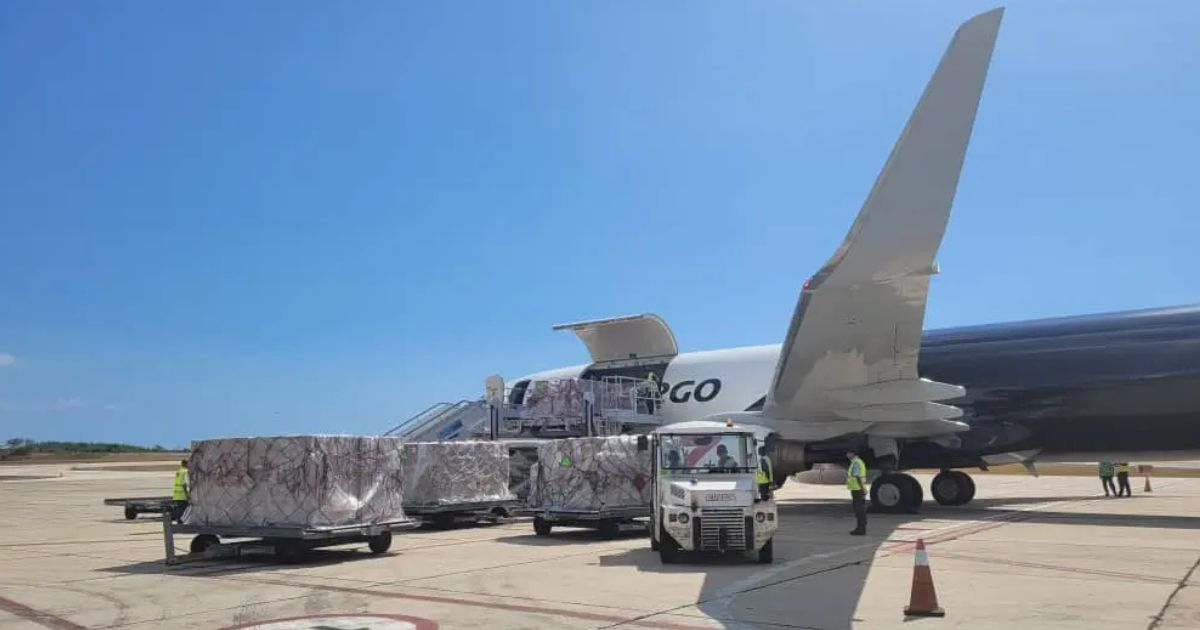
Carlos Fernández de Cossío, Deputy Minister of Foreign Affairs of Cuba, described this Wednesday the humanitarian aid sent by Estados Unidos after Hurricane Melissa as "individual bags of food and hygiene items along with other materials that are always appreciated," in what appears to be a direct response to the statements made by Secretary of State Marco Rubio the previous day.
In the post, Cossío states that of the 3 million dollars promised by Washington in October 2025 —after the passage of the category 3 hurricane through eastern Cuba— goods "valued at 2.5 million dollars" have arrived in the country, and that "the rest will be completed soon."
The official also mentions that the U.S. has increased its aid to Cuba by another 6 million dollars, announced "months ago", bringing the total committed to 9 million, all to be distributed equally through the Catholic Church.
What stands out is the precision with which Cossío handles the figures: he claims to know that the amount received is equivalent to 2.5 million dollars, even though all aid goes directly to Cáritas Cuba and the parish network, without passing through the government.
The tone of the text is not one of gratitude, but rather of calculated condescension. Cossío concludes by demanding that the distribution be carried out "with the necessary coordination with national authorities and respect for the laws of our country, without politicization and focusing on those most in need in the most vulnerable areas."
The post comes a day after Rubio stated in the White House that the U.S. wants to send more aid to Cuba, but the regime must allow it: "They won't let us provide more humanitarian assistance to their own people, and we are willing to do so through the Church."
Rubio also announced that he will bring up the issue of humanitarian aid at his meeting with Pope Leo XIV in the Vatican, scheduled for this Thursday.
Cossío's strategy seems to be to reframe the official narrative: presenting the regime as cooperative and receptive, while semantically reducing the shipments to mere "small bags," in contrast to the 9 million dollars committed by Washington.
It is not the first time that the regime has adopted this ambivalent stance. Since the Cuban government denounced the opportunistic motives behind U.S. aid in January 2026, the MINREX has accepted material goods while questioning the distribution method and accusing Washington of "political manipulation."
The aid, distributed across the dioceses of Holguín-Las Tunas, Bayamo-Manzanillo, Santiago de Cuba, and Guantánamo-Baracoa, has benefited around 6,000 families —up to 24,000 people— in a region that is still struggling to recover from Hurricane Melissa, amid a humanitarian crisis that even the Church cannot contain due to power outages of up to 25 hours a day and economic collapse.
The State Department was explicit in February: "The regime will be held accountable to the United States and its own people for any interference."
Filed under: