
Related videos:
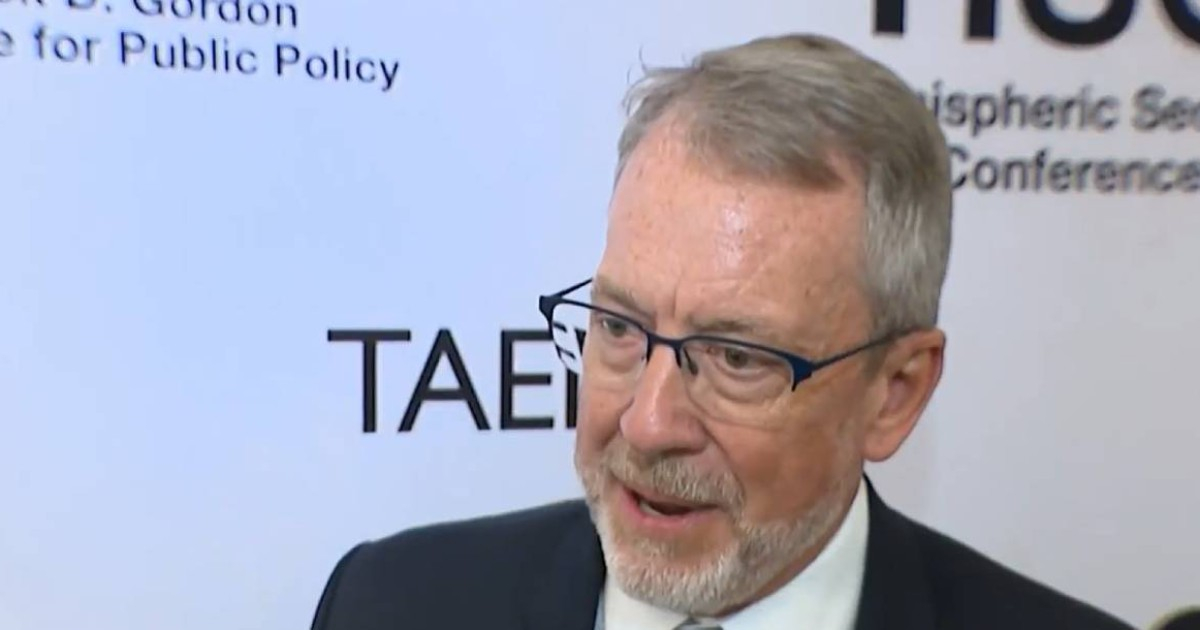
The former United States ambassador to Venezuela, James Story, acknowledged on Wednesday the immense difficulties faced by the democratic opposition in Cuba and openly questioned what strategy can be applied against a regime that, unlike the Venezuelan one, does not allow any internal political space for the opposition.
Story made the statements during a forum on the political situation in Latin America held at Florida International University (FIU) in Miami, where he shared the panel with Cuban activist Rosa María Payá and analyst Frank Mora.
Telemundo 51 reported on the debate that addressed both the Venezuelan and Cuban cases. The references to Cuba highlighted one of the most revealing moments of the meeting.
«At least in Venezuela there was a space for the democratic opposition... so I ask myself: What can we do in Cuba?», said Story.
The former diplomat, who was one of the key figures in shaping U.S. policy toward Venezuela during the administrations of Donald Trump and Joe Biden, thus highlighted a fundamental difference between the two countries.
While in Venezuela there were certain margins for political participation and visible opposition leadership, in Cuba the repressive apparatus maintains a much tighter control over the dissenting population. They imprison them, exile them, and allegedly even eliminate them.
This idea connects with a reflection that other analysts have recurrently made: There is no sign in the Cuban case of a figure like Delcy Rodríguez who could facilitate a political transition in Cuba through peaceful means.
The debate also highlighted differing positions on how to pressure the Cuban regime to move towards political system change.
Frank Mora stated that economic sanctions alone have never produced the desired political change on the island and pointed out that the true driving force of pressure comes from internal discontent and popular protests such as those on July 11, 2021.
Rosa María Payá defended the need to economically impact the power structure of the regime.
"«The interests of the criminals in power in Cuba must be affected to force them to submit to the will of the Cuban people, which is a willingness for change», he stated."
The activist also denounced the recent distribution by the regime of a family guide to cope with a possible military aggression, a measure she described as part of a strategy to instill fear among the population.
"The Cuban regime is, as always, intensifying its rhetoric, attempting to sow panic, while the only ones who have been and continue to be violent to this day are the criminals in power," he stated.
Filed under: